Washington D.C. Finalizes Plan for $100M in Federal Broadband Funding
District officials say ‘all’ remaining unserved locations will be connected through fixed wireless technology.

Jericho Casper

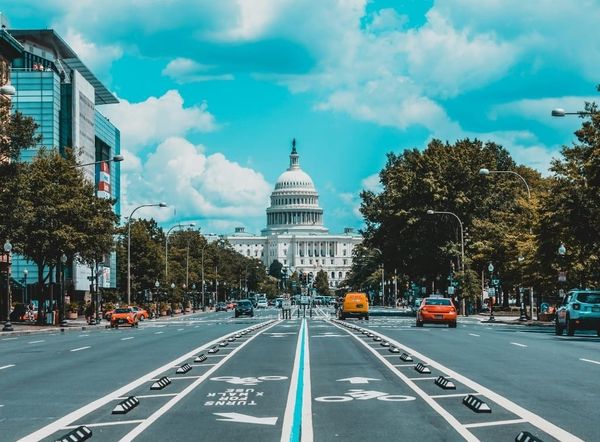
WASHINGTON, Oct. 17, 2025 – The District of Columbia has become the latest jurisdiction to finalize a plan to eliminate Internet access gaps utilizing $100.7 million the city was allocated under the federal government’s Broadband Equity, Access and Deployment program.
A cornerstone of the District’s proposal is a plan to use fixed wireless access technology to deliver gigabit-speed Internet to nearly 60 schools, healthcare facilities, and long-term care units, “transforming these vital community resources into high-speed Internet hubs for the communities they serve,” according to a release Friday from D.C.’s Office of the Chief Technology Officer.
The Office published its final BEAD proposal for public comment, taking the next step in joining 49 states and three U.S. territories that have submitted their broadband deployment plans for approval to the National Telecommunications and Information Administration, so far.
“The FWA solution provides a scalable, future-ready foundation designed to meet evolving bandwidth demands and seamlessly support next-generation wireless technologies, including 5G and emerging standards,” the release states. “This forward-thinking approach ensures the District's digital infrastructure remains competitive and responsive to community needs for years to come.”
According to the District’s initial BEAD proposal, the Office initially identified just 109 locations that remained unserved or underserved with broadband service in Washington, among the fewest in the nation.
The remaining unserved locations were clustered in Wards 3, 5, and 8, a mix of areas that range from neighborhoods west of Rock Creek Park to communities east of the Anacostia River.
The community anchor institutions to be served include approximately 10 health care facilities, 25 early childhood and education centers – the largest segment – along with six senior and long-term care providers, five substance use and mental health treatment facilities, and a handful of charter and independent schools across the District.
The District selected Constituent Services Worldwide Public Benefit Corporation, a D.C.-based consulting and workforce development firm, as its sole subgrantee to oversee implementation of the wireless broadband plan.
D.C. did not make public exactly how much of its $100.7 million allocation would be used for infrastructure deployment but said it intends to seek NTIA approval to redirect remaining funds toward adoption, workforce, and digital literacy efforts.
“These investments will pay dividends not only in bringing communities online faster, they will also more meaningfully target programs that develop broadband workforces, upskill our communities, and improve digital literacy,” the Office wrote in its final proposal.
The District’s proposal will remain open for public comment until Oct. 23. District officials certified that its plan will bring broadband service to “all” remaining unserved and underserved locations.
After the NTIA’s June 2025 BEAD program restructuring notice, the Office refined its list of eligible locations, removing three institutions that did not meet the Infrastructure Investment and Jobs Act definition.
Prior to the issuance of the restructuring notice, the Office had made changes to the listing of eligible institutions by removing mobile units, major university campuses, served locations, permanently closed locations and sites already connected to DC-Net, the District government’s enterprise fiber network operated by the Office of the Chief Technology Officer.
According to the NTIA’s BEAD progress tracker, last updated Oct. 17, three U.S. territories – American Samoa, the Northern Mariana Islands, and Guam – have submitted their final proposals for federal approval, while Puerto Rico and the U.S. Virgin Islands have yet to do so.