
Whether from Biden or Trump, Politics Has Displaced Reason in Antitrust Enforcement
Experts said economic analysis has been thrown out the window

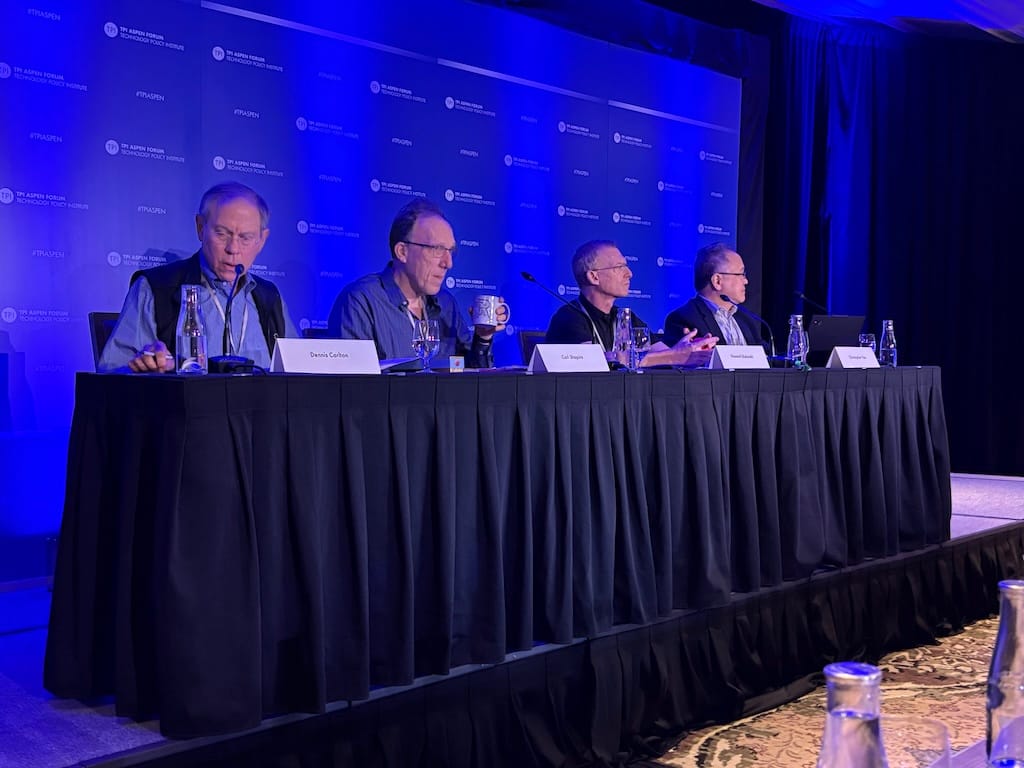
ASPEN, Colo., August 19, 2025 – Merger decisions and antitrust enforcement at the Federal Trade Commission have, unfortunately, been guided in recent years more by politics than by economic analysis.
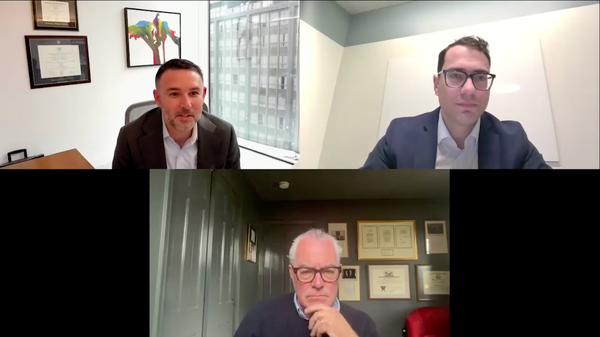
That was the message of a diverse group of panelists at a Technology Policy Institute panel here on Monday.
However, they couldn’t agree on whose politics was driving the change: The Biden administration’s politics, or the Trump administration’s politics.

Speaking of the four years under an activist Biden administration, Dennis Carlton, emeritus professor of economics at the University of Chicago, said: “It represented a demotion of economic analysis, and instead replaced it with what had gone on 40 years earlier—a reliance on common sense notions, but common sense notions that sometimes didn’t pan out.”
Carl Shapiro, a distinguished professor at the University of California, Berkeley, who described himself as a more interventionist voice than Carlton, echoed the critique – to a point.
While he said the Biden team’s merger policies were ineffective and left companies uncertain about the rules of the road, he contrasted his experience at the Justice Department during the Obama administration, where he observed no political interference from above.
The traditional norm of separation between the White House and the Justice Depatment on antitrust matters "has fallen away" and has been "breached...in a big way, in a visible way."
He spoke just hours before former fired Deputy Assistant Attorney General Roger Alford’s luncheon speech recounting his experience. Decisions are being overruled "not even based on the work within the antitrust division," said Shapiro, but rather on "blatantly political" grounds rather than the rule of law.
Shapiro also specifically criticized the Federal Trade Commission’s pursuit of "censorship" claims against tech platforms, describing this as using antitrust "for obviously the political purpose" without legitimate legal basis.
The result, both agreed, was much less certainty about what mergers will actually be challenged by the federal government.
“There’s some evidence that that populist view of antitrust may be a little more skin deep in the Trump administration, given some recent events, but certainly there’s a little bit more of a pro-business counterpoint,” said Howard Shelanski, professor of law at Georgetown and former FTC official. “That does not signal a return to careful, economically analytic antitrust, because you can be just as unprincipled in a more pro-business approach as you can in a populist approach.”
Christopher Yoo, professor at the University of Pennsylvania, warned that the broader politicization of antitrust threatens the foundations of enforcement.
“One of the reasons we adopted consumer welfare standards is to get politics out of this,” Yoo said. “The White House intervention, to me, is incredibly problematic.”




Member discussion