White House Wants Portions of 7 GHz Band for Licensed Use

New Street’s Blair Levin said the memo suggested CBRS was less likely to be auctioned.

White House Wants Portions of 7 GHz Band for Licensed Use
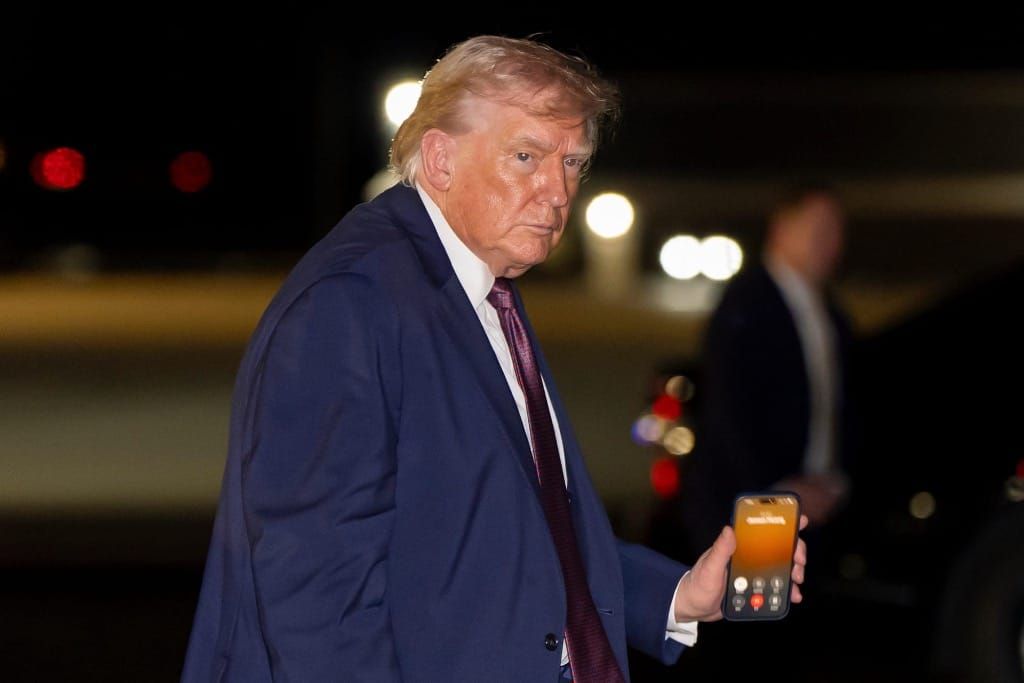
Photo of President Donald Trump holding a cell phone with a call to Nvidia CEO Jensen Huang by Alex Brandon/AP

WASHINGTON, Dec. 22, 2025 – The Commerce Department has one year to complete a study on how to free up 275 megahertz of federal spectrum for licensed commercial use.

Late Friday the White House published a memo directing Commerce's National Telecommunications and Information Administration to “immediately begin the process of identifying the band of spectrum frequencies at 7.125-7.4 GigaHertz (GHz) for reallocation for full-power commercial licensed use cases.”

The memo said incumbent federal users had to collaborate and produce plans to relocate their systems elsewhere, including to the 7.4-8.4 GHz band. It also directed the agency to study the 2.69-2.9 GHz and 4.4-4.94 GHz bands, but didn’t provide a deadline.


The One Big Beautiful Bill Act passed this summer directed NTIA to find at least 200 megahertz of federal spectrum for commercial use by July 2027, and another 300 by July 2029. The bill had also told the agency to continue studying 7.25-7.4 GHz, but didn’t give a deadline.

“It is the policy of the United States to lead the world in 6G development.  Certain steps are necessary to achieve the goal of this policy, including steadfastly advancing American interests in the international standards bodies that will play a crucial role in 6G development, and identifying a significant volume of radiofrequency spectrum that can be harmonized for 6G networks internationally,” read the memo, which was signed by President Donald Trump.

The memo said the directive to open up 7.125-7.4 GHz came in response to “the preliminary conclusions” of early evaluations. The Biden administration’s spectrum strategy had previously directed NTIA to look into the band, and funds for doing so were secured in December 2024.

Good news for CBRS?

Blair Levin, policy advisor at New Street Research, said in a Monday investor note that the memo was likely good news for users of shared Citizens Broadband Radio Service spectrum. 

CBRS, which sits at 3.55-3.7 GHZ, was not blocked from being auctioned by the OBBBA. 

That led users and proponents of the band to fear the Federal Communications Commission, with its own mandate to find another 300 megahertz of spectrum for auction, would look to sell off some of the band. AT&T and the Pentagon had each also floated selling some CBRS spectrum to the wireless industry.

There’s been consistent advocacy before the FCC on the issue, with wireless ISPs and the cable industry staunchly defending the band. They’ve marshalled support from GOP lawmakers in both chambers of Congress.

But by directing NTIA to look elsewhere, the memo in Levin’s view suggested the administration was looking elsewhere for more airwaves to sell to the wireless industry.

“That is not a 100% guarantee, but it does provide some comfort to the CBRS community that its band is not on the priority roadmap for reallocation,” he wrote. “And the longer the current allocation is in place, the more difficult it will be, in the future, to reallocate that spectrum band.”

It’s still possible the FCC raises power levels for CBRS, Levin wrote, which users have also strongly opposed. They say the move, favored by Verizon, which also has priority CBRS licenses, would create too much interference for their existing equipment to handle.

Carriers happy, cable not

Despite the cable giants owning priority CBRS licenses, the industry’s trade group wasn’t pleased

“The Administration’s statement regarding the lower 7 GHz band slows American innovation and risks missing the opportunity to deliver faster, better Wi-Fi for consumers,” NCTA said in a statement. “We urge the Administration to move quickly to identify additional unlicensed spectrum to keep pace with surging consumer demand for Wi-Fi, which currently carries nearly 90% of mobile traffic.”

The cable industry, Levin noted, had been hoping to see 7.125-7.4 GHz made available on an unlicensed basis for Wi-Fi, but the memo makes clear the administration wants it for the exclusive licensed use favored by mobile carriers.

CTIA, the major wireless industry grade group, was indeed happy to see the announcement.

“The wireless industry commends President Trump’s clear direction today to identify a ‘significant volume’ of spectrum to lead the world in wireless, AI, and emerging technologies,” CTIA CEO Ajit Pai said in a statement. “We also applaud today’s action to ensure the timely and focused study of two additional key bands – 2.7 GHz and 4 GHz.”

Pai led the FCC during Trump’s first presidency and served on his transition team in 2024.

NTIA also eyeing 4 GHz

NTIA had also previously been interested in the 2.7 GHz and 4 GHz bands, with existing plans to produce study plans for each soon. The agency and wireless industry are interested in the 4 GHz band because it provides a large, contiguous swathe of airwaves.

Umair Javed, senior vice president and general counsel at CTIA, said at an event last month that the industry was especially interested in 7.125-7.4 GHz if some of the 6 GHz band below it, currently used for Wi-Fi, could be opened up too.

But administration officials, including NTIA Administrator Arielle Roth, have suggested they’re not interested in seeing that band altered.

Giulia McHenry, AT&T’s senior vice president of public policy, said at the same event that commercial access to 7 GHz would be more of a long-term goal. She said it would require new equipment and likely take years to deploy.

Levin said the same, and added existing national security concerns or characteristics of the lower 7 GHz spectrum could complicate the plan to put the airwaves to use for mobile networks.

The 7.4-8.4 GHz band, where the memo said existing 7.125-7.4 GHz users could have to be relocated to, was blocked from auction by the OBBBA as part of a compromise with GOP senators concerned about disrupting military systems. 

One of those senators, Deb Fischer, R-Neb., included a provision in a draft of a defense policy bill that would have allowed the Pentagon to veto any changes at all to the block bands, including the addition of new federal users.

Fearing that would interfere with plans to clear federal airwaves for the wireless industry, CTIA and Sen. Ted Cruz, R-Texas, came out against the amendment, and the White House ultimately joined them. The bill was signed into law Dec. 18 without the veto provision.

Member discussion

Popular Tags