
29% of Minnesota Locations Received No Bids For BEAD
Minnesota Broadband Director Bree Maki cited decreased participation from fiber providers

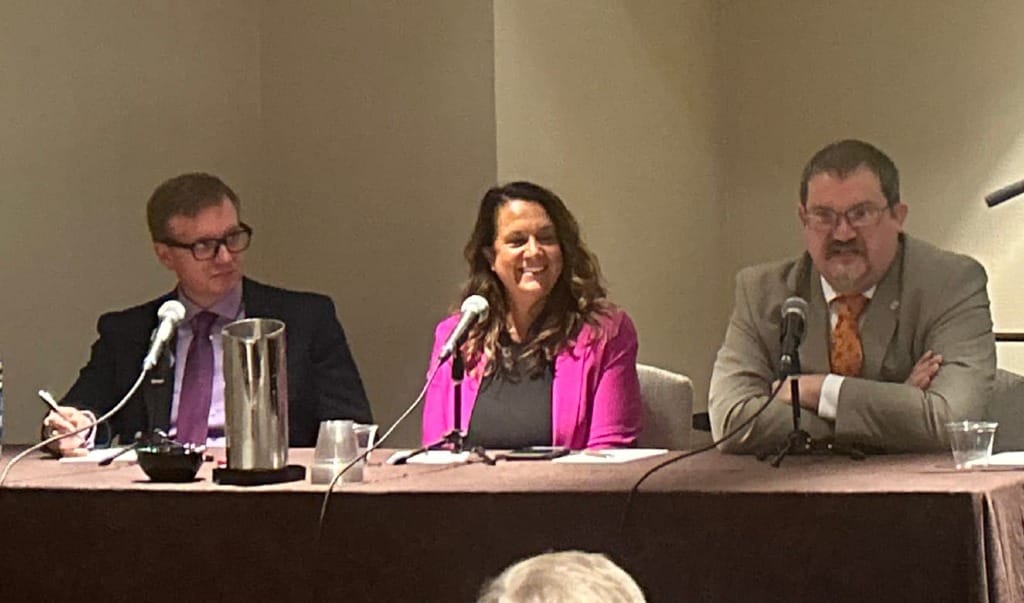
DENVER, Aug. 5, 2025 — Minnesota’s “Benefit of the Bargain” round received ten fewer applications from fiber providers and left 22,000 locations without any bids.
Bree Maki, executive director of Minnesota’s Office of Broadband Development, told attendees at Mountain Connect on Tuesday that the state had seen a significant drop in participation from the fiber industry.
“There are about 22,000 of the 76,000 eligible locations that did not receive a first-round bid,” Maki explained. “We lost ten applications from fiber providers because of it—and rightfully so. This is confusing.”

Maki told Broadband Breakfast after the event that, although she knew what proportion of the applications came from satellite providers, she was unable to disclose that information publicly at this time.
In contrast, Eric Frederick, director of Michigan’s Broadband Office, told attendees that Michigan had received 803 applications during its Benefit of the Bargain round—400 more than it had initially expected. Frederick told Broadband Breakfast after the event that he had not yet had the opportunity to review all of the applications but that, based on the names of the applicants, he believed most came from fiber providers.
The stark divide between the states highlights how changes to the Broadband Equity, Access, and Deployment program have affected states differently. However, despite differences in provider participation, many states face similar challenges following the National Telecommunications and Information Administration’s new guidance.
One of those challenges is the possible rescission of non-deployment funds. Peter Voderberg, chief of BroadbandOhio at the Ohio Department of Development, spoke passionately about the impact such rescissions would have.
“Now it’s like, ‘Hey, be as cheap as possible,’” Voderberg said. “So all of us states went, ‘Okay, we’ll be as cheap as possible, and that means we’ll have non-deployment dollars.’ And then they’re like, ‘Oh, no, no, we’re going to take all the non-deployment dollars back.’ You’ve forced me to make it cheap, so now I have to go to all my Appalachian regions and say, ‘Guess what? You’ve got the cheapest thing I could possibly get for you. Aren’t you happy?’”
Voderberg concluded by stating that he does not believe Ohio will receive any non-deployment funds.
“Am I still going to say this is what I want to do with non-deployment dollars? Yes,” he said. “But am I going to bank on any non-deployment dollars actually coming to the state of Ohio? No.”




Member discussion