African Tower Infrastructure Faces Fourfold Data Surge by 2030
Helios Towers calls Africa the world's top tower growth market.

Akul Saxena, Drew Clark
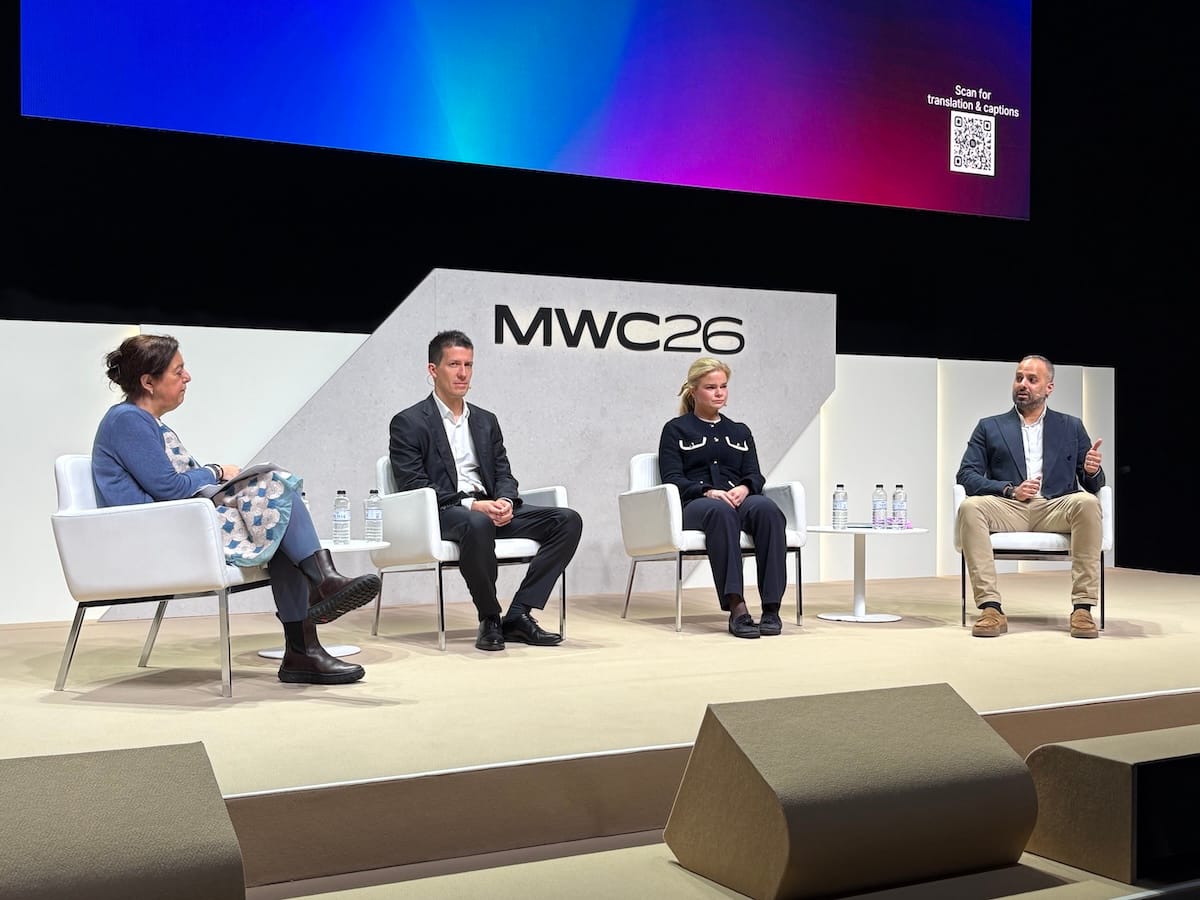
BARCELONA, March 6, 2026 – Tower infrastructure companies operating across Africa face a quadrupling of data consumption by 2030, requiring significant new investment in sites that often lack reliable power, roads, and grid connectivity, a telecom infrastructure executive said on Thursday at Mobile World Congress here in Barcelona.
Manjit Dhillon, group chief financial officer of Helios Towers, the London-based tower infrastructure company operating across Africa and the Middle East, said the Democratic Republic of Congo illustrates the scale of the challenge. The country is 10 times the size of the United Kingdom but has 1 percent of its tarmac road coverage, making site construction and maintenance among the most logistically complex operations in the industry, he said.
Power remains the most critical infrastructure constraint, Dhillon said. Large portions of Helios Towers' markets lack reliable grid connectivity, forcing reliance on diesel generators that require repeated site visits to refuel.
Solar technology is improving, Dhillon said, but is not a universal solution. "Africa isn't always sunny," he said. "The DRC has less sun cover than the UK, and the UK is not known for being a sunny place." Battery storage and diesel remain necessary across many markets, he said.
Helios Towers currently hosts an average of 2.2 mobile operators per tower and expects that figure to rise above 3, Dhillon said. The company competes for new tenants by offering lease rates cheaper than what operators would spend building their own sites, and by managing on-site power infrastructure more efficiently than operators can independently, he said.
Ingrid Sofie Øvrum Sem, chief executive of Shapemaker, a Norwegian structural engineering software firm, said AI-powered structural analysis is revealing that towers have significantly more load-bearing capacity than manual calculations had indicated. Operators using the technology are finding they can safely add 30 to 40 percent more equipment to existing towers than previously thought, she said.
Sem said Shapemaker is developing a modular tower infrastructure system, supported by European Union funding, that would allow tower components to be assembled and reconfigured over time rather than built to fixed specifications. "With that kind of modularity, you will be able to adjust the infrastructure in a better and more efficient way in the future," she said.
Data quality remains the primary obstacle to wider adoption, she said, as accurate structural analysis requires precise equipment records that many tower companies do not yet maintain systematically.
Nemanja Vucevic, a partner at McKinsey, the global management consulting firm, said infrastructure sharing is becoming more strategically important across the industry, with tower companies increasingly embedded in mobile operators' long-term network planning rather than serving purely as passive real estate providers. "You move from being a supplier to a partner," he said.
Dhillon said Africa's growth trajectory gives tower companies operating there a structural advantage over European counterparts. Operators entering African markets can design for multi-tenancy from the outset, avoiding the legacy single-tenant tower constraints that limit infrastructure sharing across much of Europe, he said.
"Africa is the growth market in the world for normal bread and butter towers," he said. "If you like that, look at us."

Member discussion