Appalachian Power Fires Back at Comcast

The companies are in a long-running dispute over pole replacement costs in Virginia

Appalachian Power Fires Back at Comcast
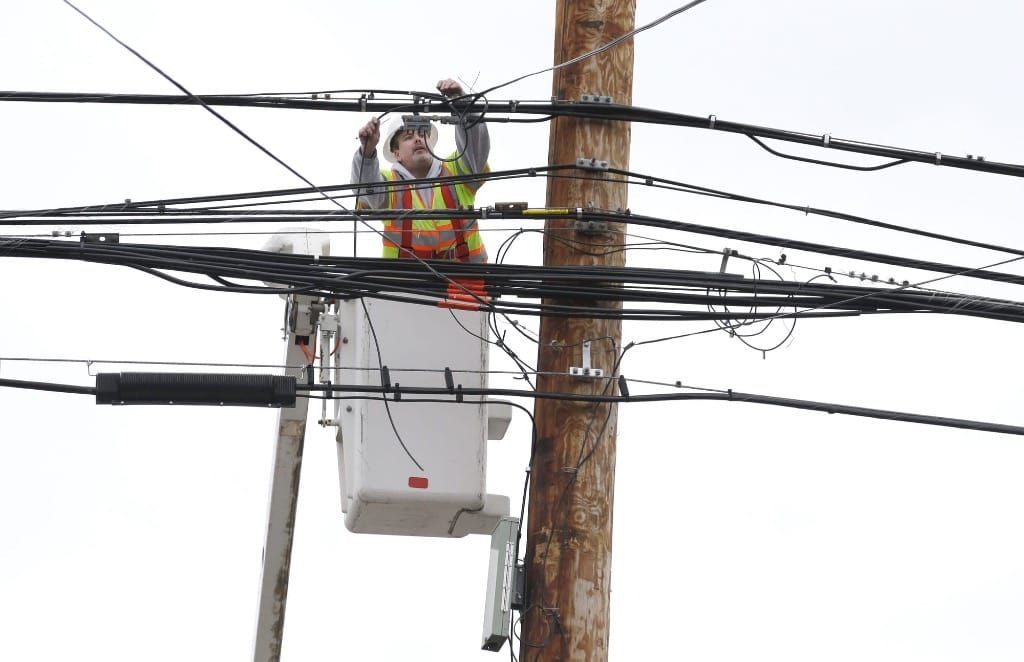
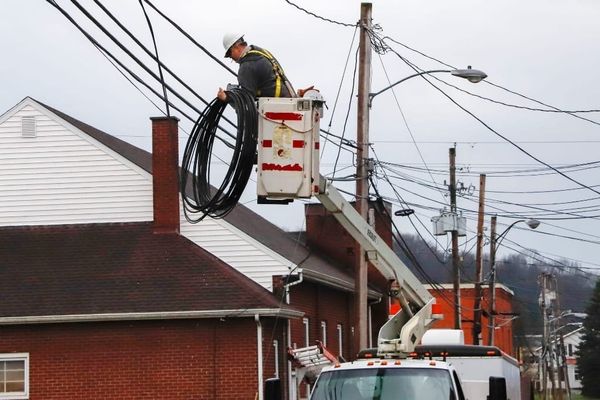
Photo of a utility worker working on a pole in Watertown, Mass. in 2018 by Elise Amendola/AP

WASHINGTON, Aug. 27, 2026 – Appalachian Power Company fired back at Comcast this week, urging federal regulators to make the cable operator pay more for pole replacements in Virginia.

Comcast, “having lost its argument that it should pay nothing towards the pole replacements at issue, now argues that it should pay next to nothing,” Eric Langley, an attorney representing APCo, wrote in a Monday filing.

APCo will have to replace some poles in the state to accommodate new gear from Comcast, and the companies have been fighting since last year over how much each should pay for those replacements.

In February, the Federal Communications Commission ruled that APCo couldn’t shoulder Comcast with the entire replacement cost for poles that already weren’t up to code. 

It was the first decision fast-tracked by the agency team tasked with resolving pole attachment disputes, called the rapid broadband assessment team or RBAT. The FCC said that Comcast only had to pay incremental extra costs tied to a stronger or taller pole.

But pole attachment disputes can be difficult to resolve, and the companies can’t agree on how to interpret the decision. Comcast filed a new complaint in July.

In Comcast’s view, it should only pay the incremental extra cost of buying a bigger pole, $200 per pole at most given the extra height its equipment would require.

APCo argued it should be closer to $1,600 per pole. On average, it said a pole needed to be 10 percent taller and have 13 percent more loading capacity to handle new gear, which it rounded down to 20 percent of the full replacement costs for Comcast.

The utility said it wasn’t fair for Comcast to pay just 2.5 percent of a pole’s replacement cost, even if it were already slated for replacement on a future timeline. 

ISPs sometimes say utilities force attachers to chip in for already necessary replacements, effectively getting new poles at a discount. APCo turned that around and accused Comcast of seeking a free ride by attaching on already red-tagged poles.

“The real question, here, is the extent to which Comcast should be allowed to freeload from the fortuity of requesting access to a pole with a preexisting violation,” APCo wrote.

Failed negotiations

Comcast did not immediately respond to a request for comment, but said in its July complaint that APCo was trying to levy fees obviously blocked by the February order. The 20 percent of replacement costs APCo was seeking was a blanket fee, something Comcast said was clearly not allowed.

“Enough is enough: The Bureau should take prompt and decisive action to declare APCO’s pole attachment charges unlawful, direct APCO to follow the 2026 Order and Commission rules, and order refunds for the overcharges imposed on Comcast to date,” Comcast attorney Matthew Brill wrote last month.

Comcast said in its complaint that its attempts at negotiation earlier this year got nowhere. APCo countered Monday that Comcast was simply trying to force the lowest possible payment by signalling it would challenge any cost allocation methodology.

The FCC can set the terms of pole attachment deals between investor-owned utility companies and telecommunications providers. That authority is preempted by local rules in 23 states and D.C., although the agency has an open proceeding asking whether it should scrutinize or preempt state rules.

Comcast won $126 million in funding under the Broadband Equity, Access, and Deployment program in Virginia — the program RBAT was designed to bolster — and told the FCC that those projects were imperiled without a swift resolution. The company said it paid the 20 percent fees under protest in some cases, and wanted them recovered.

Popular Tags