Broadband Industry Likes New Non-Deployment Bill
The SUCCESS for BEAD Act would allow more spending on infrastructure, but didn’t specify adoption or affordability efforts.

Jake Neenan
WASHINGTON, Dec. 19, 2025 – Broadband industry groups are excited about a new Senate bill that would ensure states spend their full allocations under the $42.45 billion Broadband Equity, Access, and Deployment program.
The Commerce Department estimates about $21 billion of the program won’t be used for broadband deployment projects, a result of Trump administration efforts to push down spending and rural networks expanding since money was allocated in 2023.
The remaining cash has been called non-deployment funding, as states were planning to use the cash in large part on efforts to ensure people adopted and effectively used the new broadband connections enabled by BEAD-funded networks. The Trump administration rescinded approval for any non-deployment activities in June, saying more guidance would be forthcoming.
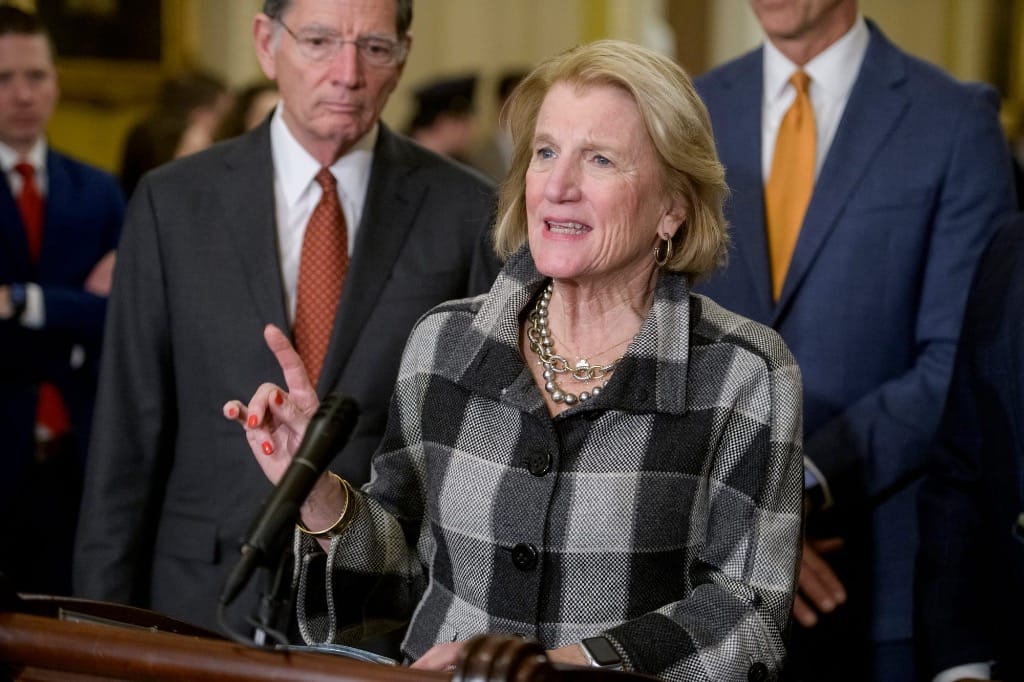
Many of the non-deployment uses outlined by Sens. Roger Wicker, R-Miss., and Shelley Moore Capito, R-W. Va., would be for broadband infrastructure, albeit not last-mile connections to homes and businesses.
Their SUCCESS for BEAD Act include wholesale fiber lines, mobile wireless infrastructure, and submarine cables and landing stations, among other things. States would have to hold another round of bidding for each of those.
The bill would also allow states to fund workforce development programs, another common Biden-era plan, and efforts to improve mapping or improve permitting processes.
“Importantly, the bill explicitly connects advanced telecommunications infrastructure and workforce capacity to the deployment and scaling of AI technologies – positioning fiber networks as the backbone of AI-driven innovation, productivity, public safety, and long-term economic competitiveness,” Fiber Broadband Association CEO Gary Bolton said in a statement.
INCOMPAS, which represents major software companies and ISPs of varying size, was also happy about the bill’s finding that boosting infrastructure and workforce capacity for AI was “critical for maintaining United States leadership in emerging technologies.”
“By taking decisive action to ensure American leadership and strategically directing remaining BEAD funds towards the infrastructure that will power our AI future, Senators Wicker and Capito recognize what INCOMPAS members understand from building networks every day: the AI race and the broadband race are inseparable,” INCOMPAS CEO Chip Pickering said in a statement.
Data centers not explicitly eligible uses
Data centers needed by AI companies, which can be unpopular on the local level, are explicitly not eligible uses of funding in the bill.
For its part, the Competitive Carriers Association was glad wireless infrastructure was included, as was the Wireless Infrastructure Association.
WIA, along with major broadband trade group USTelecom, actually joined Wicker and Capito’s statement announcing the bill, each including praise from their CEO.
Observers and states have feared Commerce’s National Telecommunications and Information Administration would claw back the non-deployment funding entirely. NTIA Administrator Arielle Roth said earlier this month that the agency was still “operating under the assumption” states could use their full allocations, although no final decisions had been made, and suggested she would support putting some of it toward permitting reform.
That, and Wicker and Capito’s bill, could be complicated by President Donald Trump’s recent executive order seeking to discourage state-level AI laws. The order directs Roth to produce a policy notice telling states they’re ineligible for non-deployment funds if they have “onerous” laws on AI companies.
Wicker and Capito were some of the first Republicans to publicly say they wanted their states to hang on to their full BEAD allocations. Earlier this week several more signed letters urging NTIA to preserve state control over the money.
Adoption, affordability?
The bill did not include as an eligible use efforts to promote broadband adoption or subsidize plans or devices for low-income households, things many states had been planning on supporting with their left over money before the restructuring in June.
“All of the stated uses for the non-deployment funds in the bill are worthy goals that we support,” Ellis Scherer, a policy analyst at the Information Technology & Innovation Foundation, said in an interview. “But I think ultimately we’re disappointed that there was no language specific to affordability in the bill.”
He noted that in an NTIA survey from 2023, 15 percent of households without internet access said that was simply because the service was too expensive.
The Trump administration also canceled $2.75 billion in Digital Equity Act funding aimed at similar issues, a move that’s currently being litigated. NTIA is requiring states not to enforce laws capping broadband rates for low-income households for BEAD participants.
Connected Nation, a nonprofit that promotes broadband adoption and is helping multiple states implement BEAD, was unreserved in its support.
“The SUCCESS for BEAD Act aligns directly with the White House’s AI Action Plan and demonstrates the kind of bipartisan foresight needed to meet the moment,” the group said in a statement. “We urge swift passage and stand ready to support its implementation nationwide.”
Louisiana Gov. Jeff Landry (R) had first suggested in September tying non-deployment funds to AI as a means of convincing Commerce Secretary Howard Lutnick not to claw back the money.
Doug Adams, head of broadband marketing firm Broadband Marketers, called the bill “really good” in a post on message board Broadband.io.
“I’ve been a long-time proponent of building broadband infrastructure for tomorrow’s needs versus saying that an X speed connection is ‘good enough’ or ‘the Y connection is all that households need for current broadband tasks,’” he wrote. “This is a really good first step and a good way to deploy the ~$21B that has been sitting in limbo, waiting for direction.”

Member discussion