Brookings Panelists: AI Stack Already Showing Signs of Market Concentration
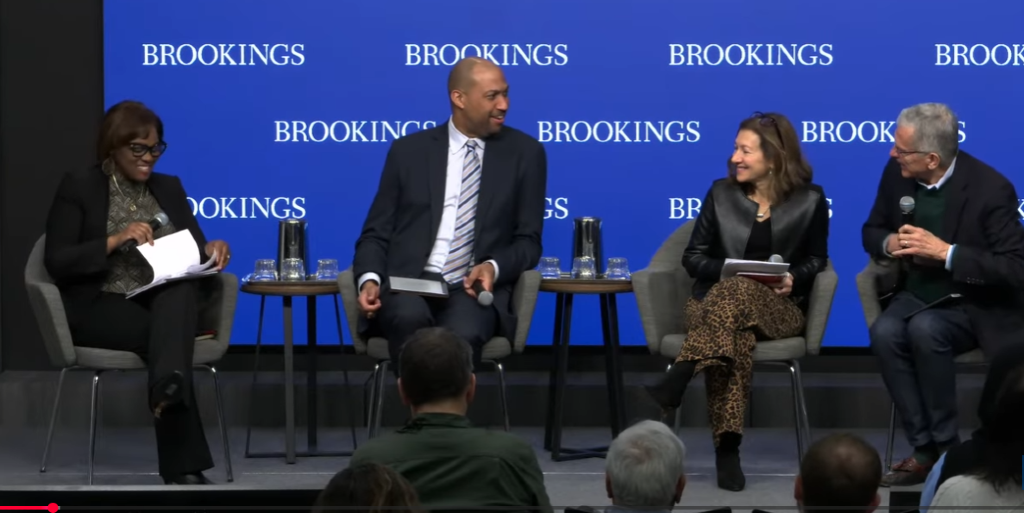
Former FCC Chair Tom Wheeler warned that two-thirds of AI compute is controlled by three companies.

Akul Saxena
WASHINGTON, Dec. 9, 2025 — Brookings scholars said Monday that artificial intelligence risked repeating the internet’s consolidation cycle and urged Congress to adopt modern rules as control over compute, data, and large models becomes increasingly concentrated.
Nicol Turner Lee, director of Brookings’s Center for Technology Innovation, said the United States faced “another digital divide, an AI chasm” unless policymakers updated rules governing access, safety, and participation. She said AI’s growth lacked “the regulatory cadence” that shaped telecom and the early internet, producing uneven benefits across regions and income groups.
Turner Lee said the future internet would be defined not only by traditional network infrastructure but also by access to compute power, the cloud-based processing required to run large AI models. Without intervention, she said, the country risked “a bigger chasm” in which communities without strong network infrastructure would be shut out of emerging AI tools.
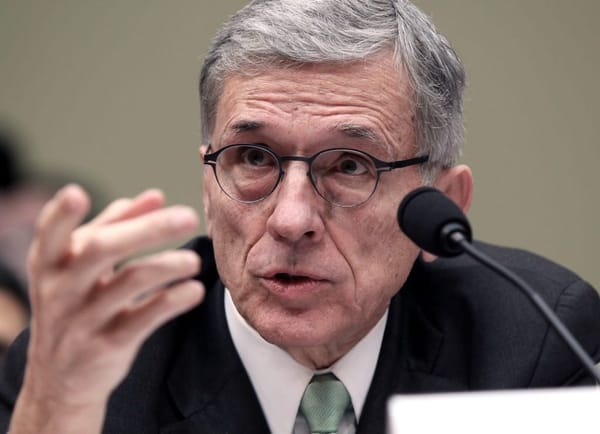
Former FCC Chairman Tom Wheeler said the open, distributed internet had already been “closed and centralized by a handful of dominant players,” and warned that the same pattern now extended across the AI stack, the layered system of chips, cloud compute, model development, and applications. He said “two-thirds of all the cloud compute capacity in the United States is controlled by three companies,” arguing that broad AI access cannot occur when control over compute and model training is concentrated at the bottom layers of the system.
‘Small window’ to avoid consolidation of foundational layers
Wheeler said Congress had a “small window” to keep consolidation in these foundational layers from determining who can compete across the entire ecosystem. He said regulation should shift from industrial-era rules toward expectation-setting frameworks that define obligations and manage system-wide risks.
Karen Kornbluh, former U.S. ambassador to the OECD and now senior fellow at the German Marshall Fund, said the United States allowed early “light-touch” oversight, the limited regulatory approach used in the internet’s early decades, to evolve into “a giant loophole” as platforms scaled.
She said AI must not become an “exception” to norms governing privacy, professional accountability, and consumer protection. She cited industry claims that reducing labor costs by “10 percent” would financially support major AI investments, saying the projection underscored why policymakers must scrutinize the incentives shaping deployment.
Kornbluh said the projection showed why policymakers must update social insurance, workforce standards, and rights-based safeguards. AI could deliver “real abundance and new cures for rare diseases,” she said, but only under a modernized and up-to-date regulatory regime.
Chris Lewis, president of Public Knowledge, said federal inaction stemmed from “a lack of political will” to apply long-standing telecom principles such as universal service, privacy, open access, and competition to digital platforms and AI. He said consumers experience the internet “as all the layers together,” meaning infrastructure, protocols, and applications required a unified policy framework.
Lewis said communities lacked protection from the local impacts of compute infrastructure, including data-center siting, energy demand, and information harms. He said AI systems should not expand without “a framework and a long-term regulatory solution” ensuring benefits extend beyond major cloud providers. “We should not be helpless in the face of innovation,” he said.
Panelists also pointed to geopolitical risks. They said global AI investment continues without shared norms on privacy, safety, or human rights, allowing authoritarian models to influence international standards. They urged Congress to restore its leadership role and give expert agencies authority to govern digital markets.
Member discussion