
California Public Utilities Commission Approves Verizon-Frontier Merger
The deal is now expected to close on Jan. 20, and diversity policies issue resolved.

Jake Neenan
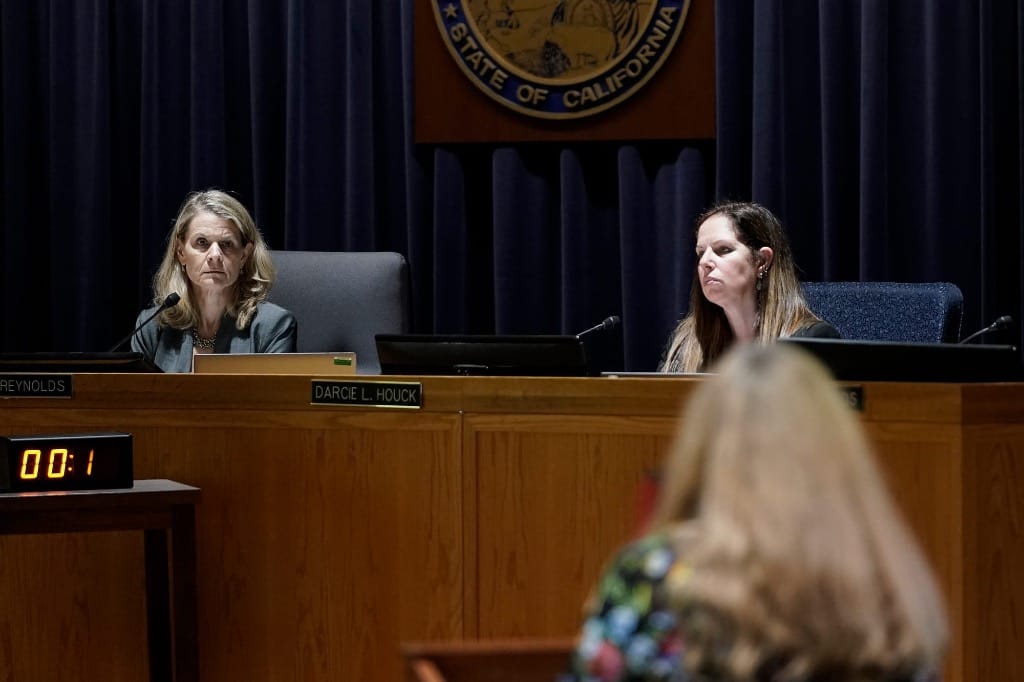
WASHINGTON, Jan. 15, 2026 – California’s telecom regulator approved Verizon’s $20 billion acquisition of Frontier Thursday, clearing the way for the deal to close next week.
The adopted decision still required Verizon to deploy broadband to all locations served by 88 rural wire centers, something the company had opposed after seeing the draft decision, but included some changes the company had suggested to make the requirement less expensive.
Those included exemptions for locations already served by broadband or “to which no customer has requested broadband service,” the ability to deploy lower speeds or partner with a satellite provider at locations where it would cost more than $10,000 to lay fiber, and the ability to apply state and federal grant funding to those locations.
“This does propose a major shift in the competitive landscape of communications services for California,” California Public Utilities Commissioner President Alice Reynolds said. “The hope is that Verizon will bring substantial new capital and resources that will not only expedite, but also increase the magnitude of” upgrades to Frontier’s copper infrastructure in the state.
The decision approving the deal was adopted unanimously by the five CPUC commissioners. Verizon and Frontier had been urging the agency to issue a decision before Justice Department approval of the deal expires on Feb. 13 because the companies would then have had to undergo another lengthy review before closing.
Verizon said in a release that it expects that to happen on Tuesday, Jan. 20.
“Upon closing, we will be uniquely positioned to offer our customers the best combined mobility and fiber experience for mobile, home internet, and other essential services across a significantly expanded footprint,” Verizon CEO Dan Schulman said in a statement. “After the transaction closes next week, our greatly expanded footprint will enable us to provide more value to more households and businesses in more regions, driving our growth and benefitting our customers and our shareholders.”
The CPUC also adopted settlement agreements Verizon reached to prevent other parties from opposing the deal, including commitments to deploy additional fiber passings and cell sites, spend $500 million with California small businesses over five years, and preserve a $20-per-month low-income plan, among other things.
“While Verizon may not have gotten 100% of what it sought, on the critical issues of deployment, employment, and supplier contracts, it appears that Verizon got nearly everything that we thought material,” New Street Research Policy Advisor Blair Levin wrote in a Thursday research note ahead of the CPUC meeting.
Verizon is trying to expand its fiber footprint as fast as possible in a bid to offer bundled fixed and mobile broadband, a main motivator of the Frontier acquisition. Verizon said the comobined company would have about 30 million fiber passings.
The company has a long-term goal of between 35 million and 40 million passings. It’s looking to pass more than 1 million locations annually once the Frontier deal closes.
On Wednesday, Verizon had a major network outage affecting several major cities. The company said the issue had been addressed by Thursday morning.
Diversity policies
While rural deployment became the biggest issue once the CPUC judge overseeing the deal released a draft decision in December, Verizon’s diversity policies had been a point of contention in the agency’s review of the deal.
In order to secure Federal Communications Commission approval, Verizon committed to end efforts to increase spending with minority-owned suppliers and to hire more people from underrepresented groups. That was a problem for the CPUC, which requires large utilities and telecom providers to submit annual plans for increasing diverse procurement spending.
“These events created a real problem for the commission,” CPUC Commissioner John Reynolds said. The programs’ “elimination represented a harm to California’s interests and a conflict with California law and policy.”
He said the extra conditions the agency imposed outweighed the harm of Verizon ending its programs. Those included a $10 million investment in workforce development programs, a recruiting pipeline “aiming to recruit from underrepresented populations” at California state universities and community colleges, and the $500 million small business investment.
Verizon also committed to submit annual employee surveys and reports on the effects of ending its diversity programs. The company will have to pay for a compliance monitor hired by the CPUC to ensure the company makes good on its slate of commitments.





Member discussion