
Carr Advisor Wants More Study on CBRS Usage
‘How do we gauge success in a way that’s quantitative?’

WASHINGTON, Feb. 18, 2026 – A top advisor to Federal Communications Commission Chairman Brendan Carr wants more data on how a shared band is being used, he said in a Feb. 11 webinar.
Citizens Broadband Radio Service sits at 3.55-3.7 GigaHertz (GHz) and uses a tiered licensing system. Users of the band like wireless ISPs have worried the FCC might raise power levels in the band or consider auctioning off some of the spectrum as it looks to meet congressional spectrum auction targets.
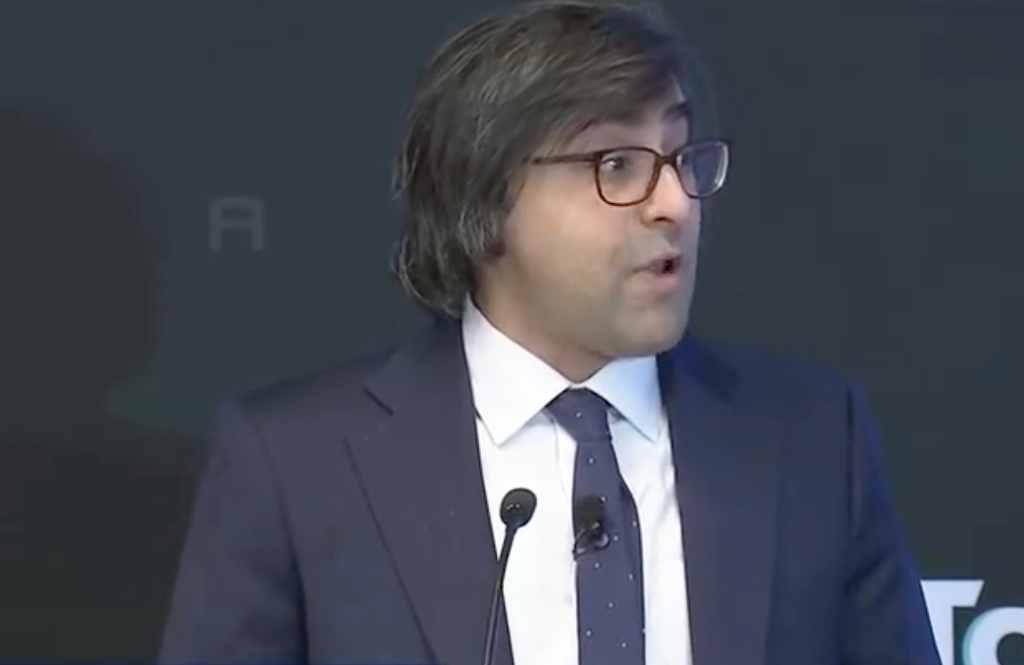
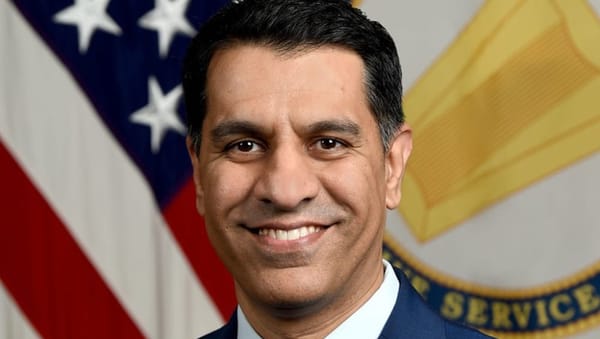
“I think it’s healthy going forward that there be a more productive conversation about: What does success look like in this band? And how do we gauge success in a way that’s quantitative, in a way that isn’t just pointing to our favorite examples but actually gets to the heart of the matter?” said Arpan Sura, a senior counsel to Carr on wireless and other issues.
He said he wanted to “interrogate” whether the number of deployed CBRS devices – there are over 400,000 – was a good indicator for utilization and asked fellow panelists how they would quantify success for the band. He spoke at a webinar hosted by the Technology Policy Institute.
Mary Claire York, a VP and top attorney at cable industry group NCTA, said “success is going to look different than a carrier deploying a macro tower,” and pointed to coverage in rural and Tribal areas that didn’t see deployments until smaller operators stepped in using CBRS.
Tom Power, former CTIA general counsel and former FCC and National Telecommunications and Information Administration official, said drive tests to see how much capacity was being used would be helpful.
CBRS users and license holders like the cable giants, which use the spectrum for their mobile service in some denser areas, have opposed higher power levels for CBRS, citing interference concerns. Verizon, which spent billions on priority licenses in 2020, has supported higher power while AT&T has proposed auctioning off the band and moving users elsewhere.
Power said the lower CBRS power levels were less favorable than the exclusively licensed spectrum surrounding it, but said the AT&T plan “has not got a lot of momentum behind it.”
“If you were to do something like the AT&T plan, you’d have to accommodate [current users] either by compensating them for moving or even grandfathering them in under the existing rules,” he said.
Sura said that ultimately the agency was more focused on other spectrum issues in the short term. The agency has to hold its upper C-band auction by July 2027 – the wireless carriers and airline pilots appear to have some disagreement on how much interference nearby airplane components will be able to tolerate – and is set to reauction AWS-3 licenses this June.
He also said he expected the 2.7 GHz, 4.4 GHz, and lower 7 GHz bands “will be part of the pipeline in the upcoming years.” The NTIA is studying those airwaves, currently used by government agencies, and whether they could be opened up for commercial use.
“We’re very busy on the spectrum front. CBRS is always a good conversation to have and I’m glad to be part of it, but in the grand scheme of things, we have more immediate goals on the horizon,” Sura said.


Member discussion