Carriers, Airlines Say 180 Megahertz of Upper C-band Could be Auctioned Safely
Satellite video distribution services would need to be compressed or relocated.

Jake Neenan
WASHINGTON, Oct. 22, 2025 – The 5G and aviation industries have found some common ground on a future upper C-band auction, several trade groups and companies told the Federal Communications Commission.
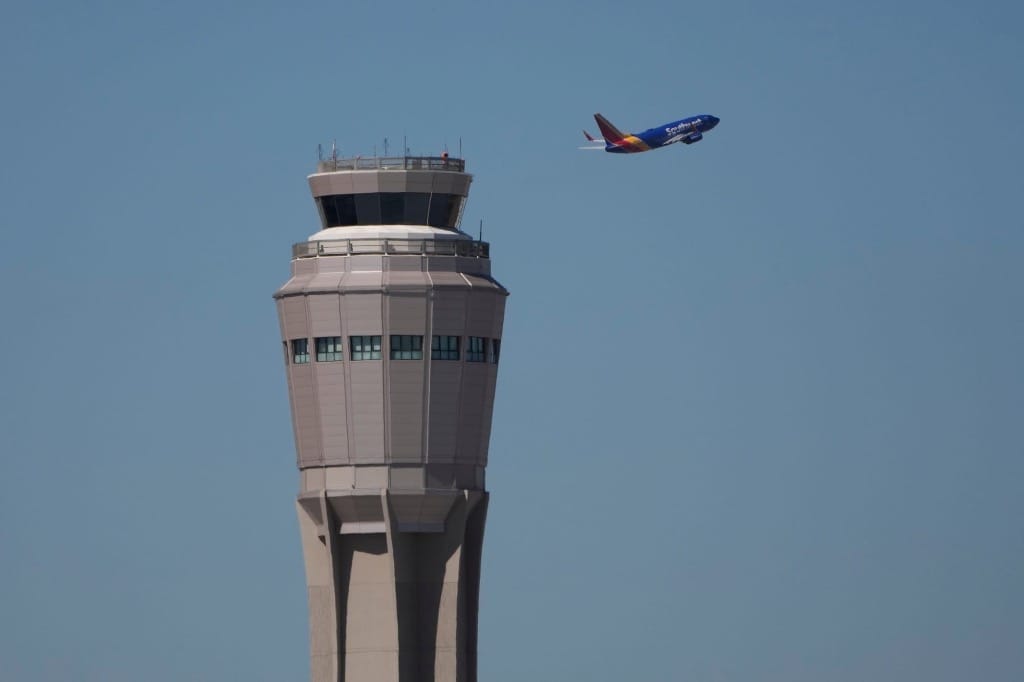
In a presentation to 17 agency staff members, officials from both industries said at least 180 megahertz of the band could be opened up for full-power use without interfering with critical airplane components.
“Monthly working sessions have now resulted in substantial common ground for mobile/[radio altimeter] coexistence,” trade groups said in a filing posted Wednesday.
Altimeters measure an airplane’s height above sea level, essential information for pilots and air traffic controllers. They operate in the 4.2-4.4 GigaHertz (GHz) band, just above the 3.98-4.2 GHz upper C-band that the FCC is looking into opening up for wireless carriers.
The industry groups said models produced by altimeter manufacturers showed full-power mobile use from 3.98-4.16 GHz would be safe, at least for the next generation of devices that will be more able to mitigate interference. The carriers and airlines were still working on an agreement for another 20 megahertz above that, which they said would likely require some restrictions to protect airplanes.
Under the One Big Beautiful Bill Act signed into law in July, the FCC has to auction at least 100 megahertz from the upper C-band. Concerns about altimeters, like those being worked out now, created much consternation in the aviation industry when the agency held its first C-band auction in 2020.
Satellite companies that distribute video content had occupied the airwaves, and, in exchange for hefty cash incentives, repacked their operations into the upper C-band. Those systems will have to be further compressed or relocated to accommodate another auction there.
It’s not yet clear whether the full 180 megahertz that airlines are ok with could be vacated. SES, which after acquiring Intelsat controls much of the band, has said 100 megahertz could be quickly vacated, but that relocating from the band entirely would be more time consuming and complicated.
Eutelsat, which also operates in the band, said it could likely clear up to 130 megahertz within three years of an FCC order.
It will also take time for the aviation industry to prepare. No current altimeters can handle any mobile operation in the upper C-band, and standards for new ones that better mitigate interference won’t be finished until 2027.
The National Telecommunications and Information Administration estimated that for the auction to work, the 10,400 airline planes that regularly fly routes in the U.S. and thousands of additional aircraft would need their gear replaced once the new altimeters are in production.
Broadcasters have been a bit uneasy about the prospect of an auction and have consistently told the FCC to ensure the video distribution they rely on isn’t degraded in an effort to clear as much of the upper C-band as possible.
Member discussion