
Carriers and Satellite Companies at Odds on Millimeter Wave Spectrum
Satellite operators want easier access, which mobile providers fear would upend licenses they purchased.

Jake Neenan

WASHINGTON, Jan. 26, 2026 – The mobile industry and satellite companies are still at odds on how best to share spectrum the carriers use for extra capacity in crowded venues and urban centers.
Satellite operators like Elon Musk’s SpaceX want easier access to the airwaves, something the carriers say would upend the licenses they collectively spent billions acquiring.
The Federal Communications Commission sought comment last month on new sharing rules for Upper Microwave Flexible Use Service (UMFUS) spectrum, which encompasses the airwaves sold in the agency’s millimeter wave auctions. It’s in the 24 GigaHertz (GHz), 28 GHz, upper 37 GHz, 39 GHz, 47 GHz, and 50 GHz bands and currently allocated for sharing between terrestrial mobile operators and fixed-satellite service.
The satellite industry said the current licensing requirements are too burdensome for satellite operators to make use of the spectrum though, and advocated for a “light-licensing” system that would make it easier to register earth stations.
“To provide consumers in rural or underserved areas with low-latency satellite broadband, satellite operators must deploy gateways close to data centers or Internet hubs in and around urban areas,” the company wrote. “Yet, these are the same areas in which the current rules impose strict operational limitations on FSS operators with no offsetting benefit for urban users of the Upper Microwave spectrum.”
The major wireless carriers said they worried a light-licensing system would decrease the utility of licenses they already paid for. The three national carriers each spent about $2 billion in the FCC’s millimeter wave spectrum auctions, and Verizon is in the process of acquiring Starry and its proprietary millimeter wave technology.
“Imposing changes to licensees’ priority, exclusivity, and certainty after the auction would unfairly transfer risk and unmanageable costs to UMFUS licensees, potentially harming existing service, thwarting additional investment and deployment, and diminishing the rights and capabilities bidders valued when participating in UMFUS auctions,” the group wrote.
Airwaves have proved hard to put to use
Those airwaves have proved harder to put to use than originally anticipated, which the FCC said partly motivated the rulemaking. Millimeter wave spectrum can carry lots of data, making it useful for high-traffic areas like sports venues, but doesn’t travel long distances or punch through obstacles well.
The agency had proposed allowing mobile license holders and satellite companies to negotiate the terms of satellite use in the licensees' areas themselves. That the mobile industry was on board with, saying satellite earth stations should count toward their build out requirements for the spectrum, which is most useful to them in dense areas.
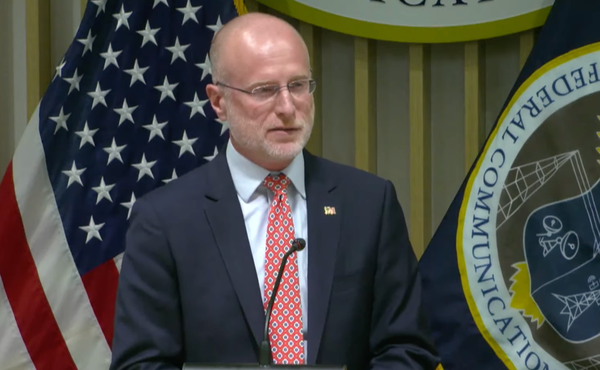
“We view these efforts as a win-win, not zero-sum,” FCC Chairman Brendan Carr said at the agency’s October meeting. “We’re confident the changes we propose in this item will help earth station and 5G terrestrial operators use these frequency bands more intensely while living side by side in their operations.”
The agency unanimously approved the proposal in October, but the government was shut down at the time and the Federal Register publication was delayed.
Consumer advocacy groups and smaller wireless providers sided with the satellite industry.
“The current sharing framework limits both the capacity and quality of emerging Low Earth Orbit (LEO) satellite services while supporting the continued warehousing of mmWave spectrum by licensees whose promises of widespread deployment never bore fruit,” Public Knowledge and New America’s Open Technology Institute wrote in a joint filing.
The Competitive Carriers Association said the agency should consider whether a light-licensing framework “could make certain UMFUS spectrum more readily accessible to competitive and smaller carriers without the need for additional auctions.”
The FCC is undertaking a number of proceedings aimed at fostering satellite connectivity, either by increasing access to spectrum or streamlining the licensing process.





Member discussion