
Charter, Cox Defend Merger to FCC
The companies argued they don't compete with each other and have been buffeted by subscriber losses.

Jake Neenan

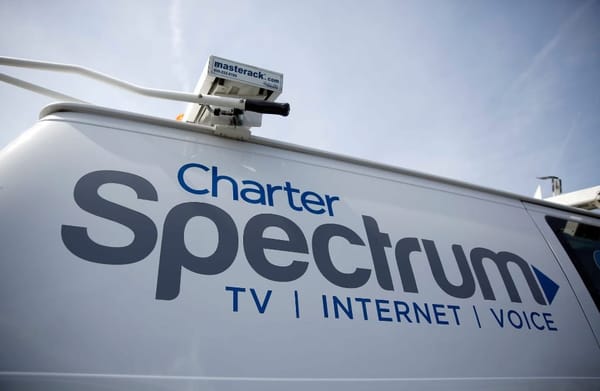
WASHINGTON, Dec. 5, 2025 – Cable companies Cox Communications and Charter Communications sought to defend their $34.5 billion merger from allegations the deal would create an internet giant with excessive market power.
The “portrayal of Charter and Cox as dominant Internet access ‘gatekeepers’ simply does not match today’s marketplace realities,” the companies wrote in a Thursday filing with the Federal Communications Commission.
“Instead, faced with declining video and broadband subscribers, Charter and Cox entered into the proposed Transaction to ensure that the combined company’s products remain attractive to customers in the highly competitive marketplaces in which it will operate.”
The resulting ISP, to be called Cox Communications despite Charter being the buyer, would be the largest broadband provider in the country with about 36 million broadband subscribers and nearly 70 million homes and businesses passed. The FCC needs to approve the deal.
That, according to consumer advocacy groups including Public Knowledge and the telecom union Communications Workers of America, would create a behemoth with less competition than either company currently faces. They asked the agency to deny the deal or impose conditions on it, arguing the resulting company could use its vast subscriber base to impose unfair terms or fees on companies looking to interconnect with its network, and would drive up prices for consumers in addition to a host of other public interest harms.
Overlap in footprint is minimal
Charter and Cox’s footprint overlap is minimal, but the groups said removing Cox, the third largest cable operator in the U.S., from the situation would ease the competitive pressure in the industry by making it easier for the combined company and cable giant Comcast to simply copy each other rather than aggressively compete.
For Charter and Cox, that would do little to ameliorate a broadband market that has been rough for cable ISPs in recent years. Fixed wireless and fiber have both been gaining subscribers while cable companies across the board are hemorrhaging broadband customers, something analysts don’t expect to fully reverse this decade.
The companies said that they lost a combined 780,000 residential broadband subscribers between the fourth quarter of 2023 and the third quarter of 2025. They also noted that, according to FCC data, other ISPs claim to offer gigabit service at more than 50 percent of both Cox and Charter’s current footprints.
“The companies do not meaningfully compete with each other, and each company’s position has been declining in the highly competitive broadband marketplace,” Cox and Charter wrote. “Consumers could readily punish the combined company for price increases by shifting to FWA, satellite, or fiber competitors.”
On the interconnection front, the companies said it would be “foolhardy to try” acting as a gatekeeper to its 36 million subscribers for the same reason. Customers don't need an additional reason to ditch cable companies, they said, and disrupted access to online content would likely provide one.
In May, when the deal was announced, analysts said the deal was likely to be approved by the FCC and Justice Department. New Street’s Blair Levin wrote that geographic expansion deals like this one, where the companies involved operate in different markets, are usually allowed.
It appears likely that Charter will have to disavow any diversity initiatives, as AT&T, Verizon, and T-Mobile have now all done so in exchange for deals getting approved by FCC Chairman Brendan Carr.
In a recent report, New Street analysts estimated the major cable ISPs wouldn’t return to subscriber growth through 2030. The mobile carriers’ fixed wireless service is still expanding, and gains for fiber have also been steady in a broadband market still recovering from the Affordable Connectivity Program’s shut down.
“The challenge we have is the operating environment remains competitive with new competitors, and a macro environment that hasn’t gotten better,” Charter CEO Chris Winfrey said on the cable operator’s earnings call.





Member discussion