Companies Might Consider Nonpayment After Supreme Court Upheld FCC Fine Powers: Experts
The court preserved the agency’s power to issue fines, but said those forfeiture orders were nonbinding.

WASHINGTON, June 15, 2026 — The Supreme Court upheld the Federal Communications Commission’s ability to issue fines earlier this month. But companies might weigh nonpayment as an option going forward, according to experts and analysts.
AT&T and Verizon had argued the agency’s forfeiture process violated a previous Supreme Court case from 2024, SEC v. Jarkesy, which said the Securities and Exchange Commission had to provide a jury trial before forcing entities to pay fines.
The FCC argued its forfeiture orders are nonbinding, and companies are not forced to pay unless the Justice Department pursues the FCC’s fine in court. That was enough to preserve the agency’s ability to issue fines, but ultimately reduced the agency’s leverage somewhat, according to Blair Levin, New Street Research’s policy advisor and former FCC chief of staff.
“The Court made clear that parties have a right to ignore the preliminary steps and proposed penalties that the FCC may take. In this way, in the future, T, VZ and others can simply take the route of ignoring the Enforcement Orders, not paying the penalty, and taking their chances in court, which is essentially the right T and VZ were trying to clarify,” he wrote in a Monday investor note, referring to AT&T and Verizon by their stock tickers.
The case stemmed from fines the FCC issued to all three major mobile carriers in 2024, months before the Jarkesy decision. The agency found they did not adequately vet third parties before selling them subscriber location data.
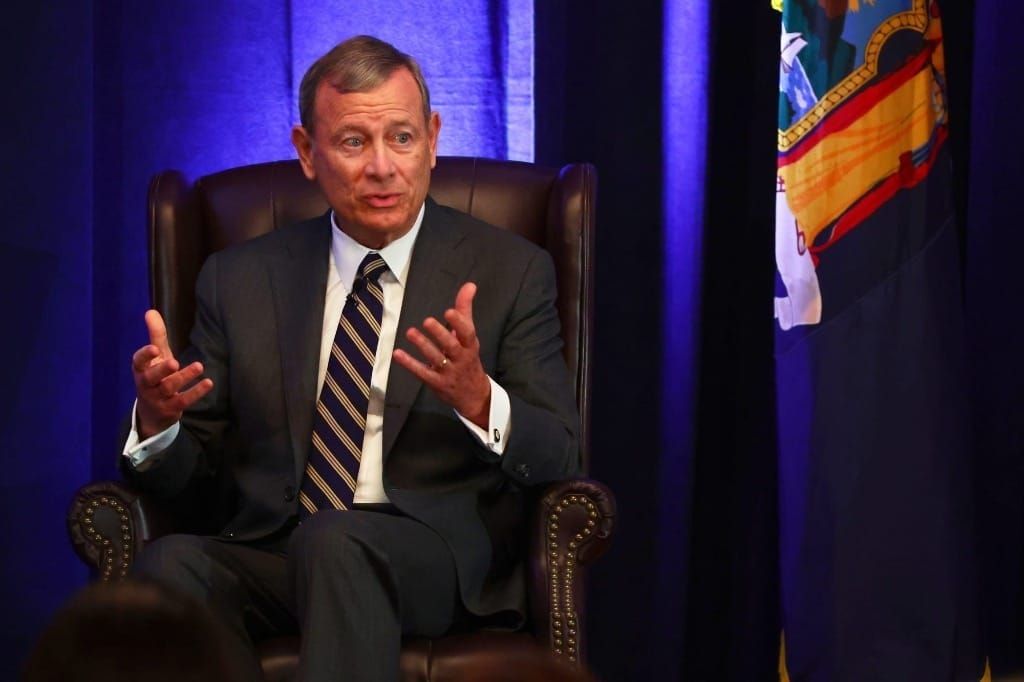
The carriers each paid their fines, nearly $200 million in total, partly because they understood the orders to compel payment, and because they feared a poor reputation with the public and before the FCC if they didn’t. (Companies have also understood payment as a necessary step before they could appeal a fine before an appellate court, but Chief Justice John Roberts wrote that justices didn’t have an opinion on whether that was actually the case.)
The Supreme Court found 8-1 that the reputational damage was irrelevant and that the FCC couldn’t legally hold an unpaid fine against a company in future proceedings.
“That forfeitures are non-binding was not widely understood by the regulated industries, as evidenced by AT&T’s and Verizon’s payment under protest,” Brownstein attorney Michael Pryor wrote in a blog post. “Carriers subject to enforcement proceedings will have to weigh withholding payment against the uncertainty of a future DOJ collection action and the possible adverse consequences that arise from a forfeiture order making findings of unlawful conduct.”
Although those adverse consequences, like reputational damage, aren’t enough to be a real barrier to exercising the carriers’ rights from the high court’s perspective, they might still cause a carrier to think carefully about refusing to pay, he wrote.
HWG attorneys Rakesh Patel, Jason Neal, and Jocelyn Aqua wrote in a client update that companies shouldn’t treat FCC fine orders as definitive obligations to pay.
“For companies subject to FCC oversight, the decision counsels against treating a forfeiture order by itself as the end of the road,” they wrote. “A recipient must still evaluate business, reputational, regulatory, and litigation risks, including the possibility that DOJ will pursue collection and that nonpayment may prolong public uncertainty.”
Peter Hyun, deputy chief of the FCC’s enforcement bureau when Jarkesy came down, said earlier this month that while it would be interesting to see how companies responded to future forfeiture orders, the decision returned influence to FCC enforcers in their settlement negotiations with companies.
Hyun said companies had been able to point to Jarkesy and the carriers’ pending case for leverage.
Levin agreed the decision was still in that sense positive for the agency. If the court had sided with the carriers, he wrote, “the decision might have led to a practical evisceration of the FCC’s enforcement powers.”
The HWG attorneys noted that other FCC enforcement tools, like withholding subsidies or modifying or revoking licenses, were not affected by the Supreme Court decision.
Levin also wrote that for companies with deals pending before the FCC, or with policies they particularly care about being considered at the agency, the chair could simply refuse to resolve those matters until the company came to the table and agreed to pay a fine.
The carriers’ attorney, former Acting Solicitor General Jeff Wall, had asked for a refund if the court sided with the FCC, arguing the companies did not see the fines as optional. The Supreme Court did not grant the request.
“The carriers also argue that the specific forfeiture orders in this case misled them into paying, and that a refund is therefore appropriate,” Roberts wrote. “We express no view on the merits of this argument, what relief may be available to the carriers, or in what proceeding.”