Supreme Court Appears Open to FCC Fine Orders Being Nonbinding
That would preserve the agency's fine powers, but reduce the force of its forfeiture orders.

WASHINGTON, April 21, 2026 – The Supreme Court wrestled Tuesday over whether the Federal Communications Commission’s process for fining telecom companies violates the U.S. Constitution.
Verizon and AT&T are asking the court to find that the agency is improperly compelling payment without providing companies their right to a jury trial. The FCC has countered the carriers had the option of refusing payment and waiting for a Justice Department collection suit, which does involve a jury.
Justices sought to poke holes in both sides’ arguments, but multiple appeared receptive to the idea that, in the absence of a jury trial, the wireless carriers weren’t legally forced to pay the more than $100 million they were fined.

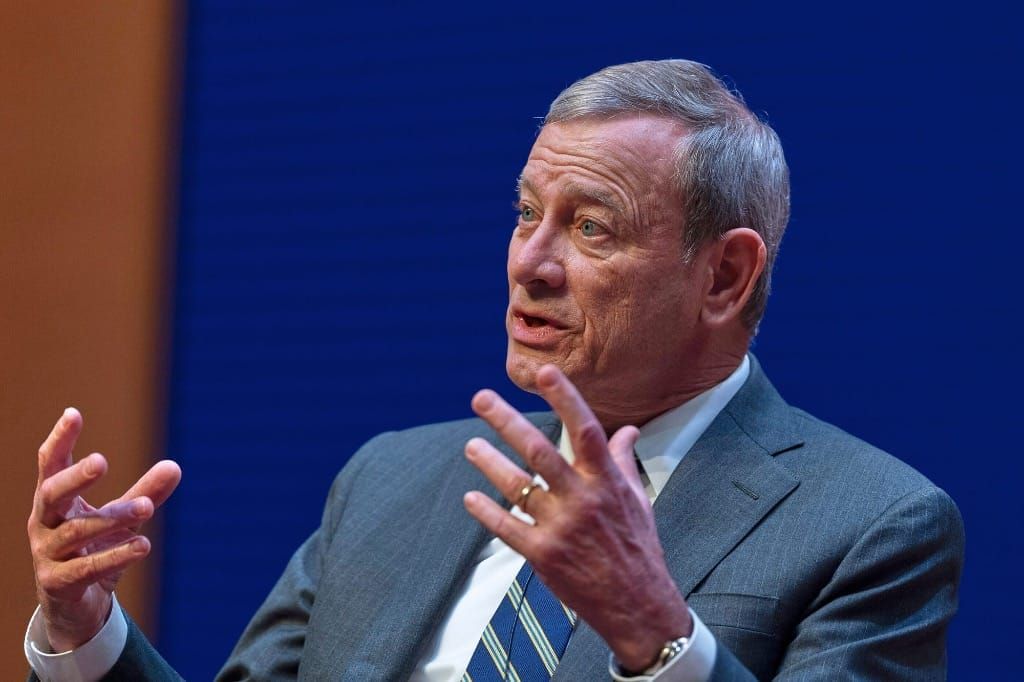
“You’re saying, ‘They’re big letters, the language said we did something bad, and so everybody has to pay so they don’t get bad PR,’” Chief Justice John Roberts said to the carriers’ attorney. “In terms of the substantive legal issue though, you are not obligated to pay until you get a jury.”
Jeff Wall, the former Acting Solicitor General representing the companies, insisted companies couldn’t afford to wait for the DOJ to bring a suit – the timeline isn’t defined and a suit might never come – while a $100 million fine calling them egregious lawbreakers remained unresolved. That meant companies were effectively forced to pay the fines, a prerequisite for challenging the legal determinations before appeals court judges.
But Justices Amy Coney Barrett, Sonia Sotomayor, and Kentanji Brown Jackson also appeared receptive to the idea the FCC’s orders don’t create an improper mandate to pay.
A ruling to that effect would be a legal victory for the FCC in the sense that its statutory authority to issue fines would be preserved, but most companies have historically paid their fines right away. Justices seemed open Tuesday to the idea companies could instead wait for a DOJ suit and jury trial to conclude before handing over any cash.
“It seems like you’ve won on the law going forward, one way or the other,” Justice Brett Kavanaugh said to Wall. “Your reply brief begins, ‘The government is in retreat.’ That’s absolutely correct.”
Wall pushed justices to go as far as possible if they chose to side with the FCC and find its forfeiture orders were nonbinding. He wanted justices to ensure companies couldn’t have unpaid fines held against them in future FCC dockets – that’s something companies say they fear and the agency insists it doesn’t do.
“If we’re going to remake this scheme, then let’s remake it where it is not even a paper tiger, it’s truly just a piece of paper,” he said. “These orders shouldn’t be worth anything more than the paper they’re printed on. And we ought to get our money back.”
The FCC
The agency has told justices that fines are its most important enforcement mechanism, and that without the ability to levy them many of its consumer protection rules would go “effectively unenforced.”
Justice Elena Kagan asked Vivek Suri, the DOJ attorney representing the FCC, whether fined entities needing to wait for a DOJ collection action amounted to their jury trial rights not being guaranteed.
Suri said they don’t have to do so, that companies can file a declaratory judgment and initiate the proceedings themselves.
“If the government’s conceding it, fair enough,” Wall said, though he questioned whether it would fit with Supreme Court precedent.
Suri insisted FCC forfeiture orders have always been nonbinding, pointing to language in the documents that says the fined entity has the right to a jury trial.
As to why most repeat players opted to pay the fines quickly, he said some may have been worried they would forfeit the chance to challenge the agency’s legal conclusions if they committed to challenging the underlying facts. A June 2025 Supreme Court decision on a similar issue, McLaughlin v. McKesson, should eliminate those worries, he said.
“That’s probably why they decided to play it safe and go to the court of appeal,” he said. But he denied it had anything to do with the FCC punishing nonpayment.
Justices Barrett and Sotomayor said they weren’t sure that companies even had to pay before going to an appellate court. The requirement to pay the fine before appealing stems from a D.C. Circuit decision, but the two justices noted the Supreme Court hadn’t weighed in on the issue.
“That’s settled only by the circuit courts. We’ve never said that,” Sotomayor said. “And we have our McLaughlin decision that calls that into question.”