Constitutional Watchdog Joins Suit Over Canceled Digital Equity Grants
Legal group challenges Trump’s cancellation of $2.75 billion digital equity program.

Jericho Casper
WASHINGTON, May 11, 2026 – A constitutional law group argued Friday that President Donald Trump violated the Constitution in his effort to cancel the Digital Equity Act.
The Constitutional Accountability Center said that the president cannot unilaterally terminate a congressionally created and funded federal grant program, saying the move violates the Constitution’s separation of powers and Congress’s exclusive authority over federal spending.
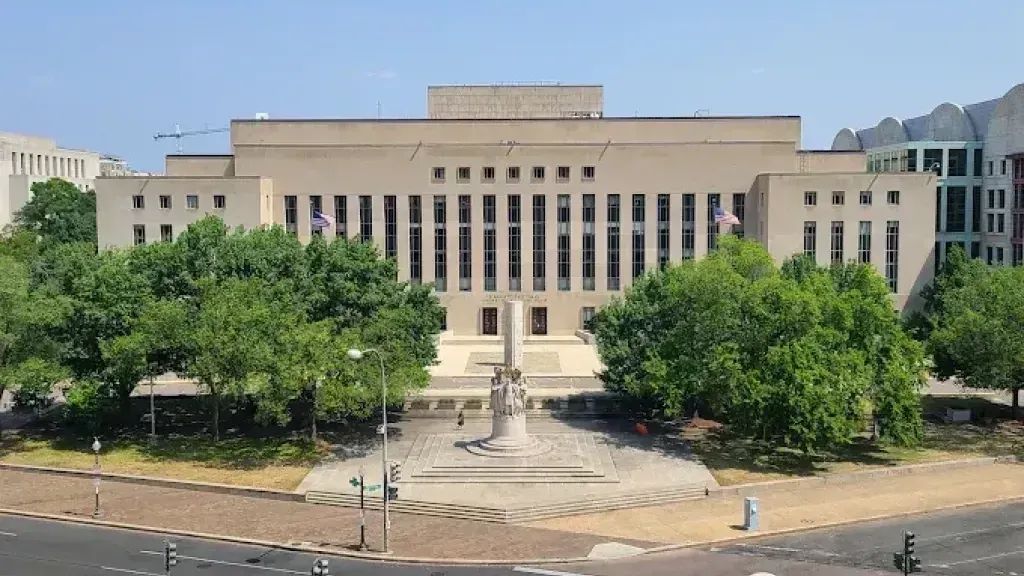
The group filed an amicus brief in support of plaintiffs in NDIA v. Trump with the U.S. District Court for the District of Columbia, and urged the court to deny the government’s motion to dismiss the case.
The filing came precisely one year after Trump moved to terminate the $2.75 billion digital inclusion program.
“There is no provision in the Constitution that authorizes the President to enact, amend, or repeal statutes,” the brief states. “Absent congressional authorization, the executive branch may not redistribute or withhold properly appropriated funds in order to effectuate its own policy goals.”
Senior appellate counsel Miriam Becker-Cohen will represent the Constitutional Accountability Center in the litigation. The center has intervened in numerous lawsuits against Trump.
The filing comes on the heels of a separate decision involving executive cuts to grants. In a ruling Thursday, U.S. District Judge Colleen McMahon found that the executive branch lacked authority to cancel more than $100 million in National Endowment for the Humanities funding.
McMahon wrote that Congress had conferred no authority on the U.S. DOGE Service to cut congressionally appropriated funds, and said it remained the president’s “duty to execute the laws Congress has enacted.”
The case is before U.S. District Judge John Bates. Bates, a senior judge appointed in 2001 by President George W. Bush, is known for a procedural, statute-focused approach to cases involving federal agencies and executive authority.