CostQuest Describes How It Handles Unexpected Hurdles
The company creating the nation’s broadband location database confronts recurring data challenges.

Jericho Casper
WASHINGTON, Jan. 8, 2026 – Even one of the nation’s leading broadband mapping vendors, CostQuest Associates, runs into unexpected challenges.
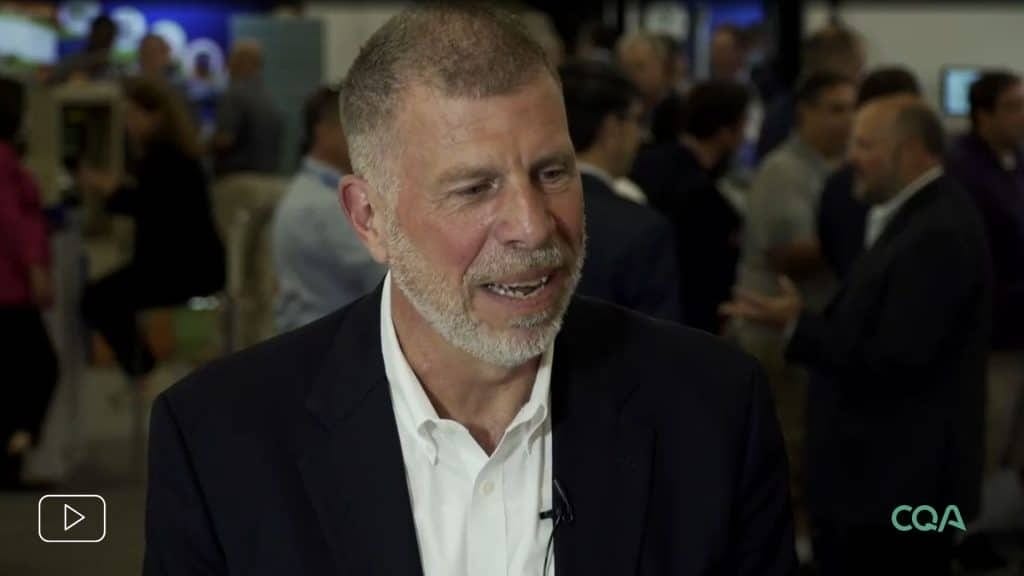
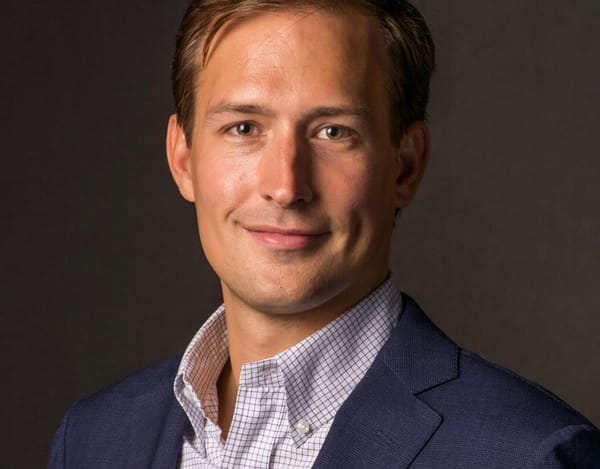
That’s the message that CostQuest President and CEO Jim Stegeman delivered on Thursday as he addressed concerns from stakeholders who had successfully challenged the classification of locations within its Broadband Serviceable Location (BSL) Fabric, only to see the issues reappear in subsequent data releases.
The fabric is the foundational location database used across several federal broadband expansion programs.
“There have been issues in the past where a challenge wasn't retained,” Stegeman said during a CostQuest webinar. “We've addressed that in the most recent releases, so the challenges are retained. But there is a process by which, if enough information comes through, a challenge can be overridden.”
Typically, that is for new locations, Stegeman said.
Describing CostQuest’s internal process for cross-analyzing datasets, he explained: “If we identify a new building footprint and we identify a new tax assessment, then our building counting score is 99 percent and we're pretty confident that something new has been built there.”
“But typically that challenge should maintain,” Stegeman said.
Building the nation’s broadband map
As billions of federal dollars for broadband infrastructure hinge on accurate location data, the company is working to determine which U.S. locations still lack access to broadband.
The effort requires stitching together satellite imagery and a variety of data sources, to create the resulting fabric of BSL locations.
The fabric guides the Federal Communications Commission’s broadband data collection and national broadband maps.
It’s used for Universal Service Fund obligations, will guide the Rural Digital Opportunity Fund’s true-up process in 2027, and was used for Affordable Connectivity Program obligations, as well.
The fabric also underpins programs run by the U.S. Department of Agriculture and the Treasury Department, and serves as the foundational location database for the federal government’s $42.5 billion Broadband Equity, Access, and Deployment program.
Stegeman explained more about the evolution and logic behind CostQuest’s location fabric, during the webinar Thursday.
“When we undertook this effort, we looked around to determine if there was actually a data set available that had all the broadband service locations in the country,” he said.
“We could not find one, so we had to build this,” he said. “What we found was there were certain data sets that could contribute great information – parcels, addresses, building footprints – but none individually provided the information that was needed.”
“We had to come up with a process that combined the information from all these data sources into a source that could be used for the FCC,” Stegeman said.
Challenges in maintaining data
Despite ongoing refinements, maintaining an accurate national broadband location database has presented persistent challenges.
CostQuest officials pointed to a range of locations that can be mistakenly identified as broadband serviceable structures, including military depots, solar farms, and temporary structures and sites, including those at Burning Man and the Coachella Valley Music and Arts Festival.
CostQuest also cited instances in which airplane shadows or other transient features were initially flagged as building footprints.
“These are learnings that we have come upon as we have developed the fabric, version over version,” Stegeman said.
Stegeman noted that counting locations in apartment buildings presents another challenge.
“There is always some uncertainty with MDU counts,” he said, referring to multiple-dwelling unit locations.
Stegeman attributed the miscount to the information sources used, which he said lack sufficient evidence to offer a precise location.
To improve accuracy, CostQuest considers building volume, including height and footprint, to help validate estimates.
“We’ve worked to refine this process, but if you have exact unit counts, that’s always helpful and can be submitted as part of the challenge process,” he added.
How CostQuest builds the broadband fabric
To create the fabric, CostQuest aggregates data from a wide range of sources, including road segment information, building footprints, Census address data, tax assessor records, land ownership information from county governments, and more.
Satellite imagery is also processed using artificial intelligence to extract polygons that represent buildings. Those results are analyzed using machine learning and statistical models developed by CostQuest to determine whether a structure qualifies as a BSL.
In some cases, satellite images alone are inconclusive, Stegeman said.
He pointed to locations where aerial imagery suggested no structures were present, while tax assessor data showed evidence of home improvements.
“We're always in constant improvement and constant scouring of additional data sets that can help us improve this data set over time,” Stegeman said.
In its most recent release, CostQuest’s fabric identifies 116 million BSLs across the United States.
Member discussion