CPUC Finalizes California’s BEAD Plan
Advocates in the state are wary of strings attached to accepting federal broadband funds

WASHINGTON, Sept. 17, 2026 – California regulators voted to finalize the state’s billion-dollar broadband expansion plan Thursday.
Members of the California Public Utilities Commission unanimously ratified the plan at the agency’s voting meeting, giving staff the ability to sign California’s award agreement with the Trump administration and start drawing down money to support broadband employment projects.

California is planning to spend $1.4 billion of its Broadband Equity, Access, and Deployment program allocation to get service to 270,000 rural locations in the state.
In a Tuesday letter, more than two dozen consumer advocacy groups had urged the CPUC and the governor’s office to be wary of signing that agreement and accepting the cash. They opposed a Trump administration rule that requires grant recipients to be exempt from state net neutrality and broadband rate laws.
California has a net neutrality law on the books, meaning any ISP taking BEAD funding would no longer be bound by the law for up to 14 years; BEAD gives four years for construction and requires monitoring for another 10 years.
The exemption applies throughout an ISPs entire in-state footprint. Major ISPs that won BEAD money in California include Comcast, AT&T, and Verizon.
CPUC commissioners didn’t address the advocates’ concerns, which was raised by two callers during a two-hour public comment window at the start of the hearing.
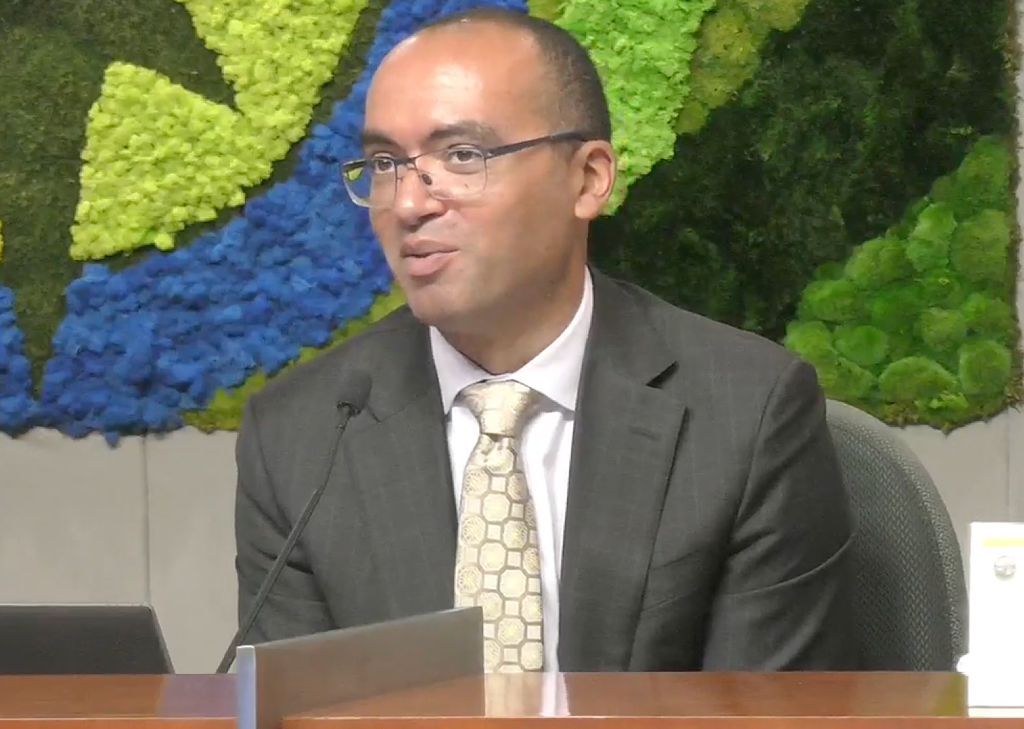
Maria Ellis, director of broadband initiative at the CPUC’s Communications Division, presented the plan and said the agency was acting “singly and very narrowly” on ratifying the plan.
She emphasized that would simply allow staff to begin implementing the plan. With CPUC approval in hand, agency staff now have the ability to sign the state’s grant agreement with NTIA, the step the advocates were concerned about.
In a separate letter to the CPUC and California Gov. Gavin Newsom (D), five of the advocacy groups said the BEAD condition in question could be read broadly to apply beyond the typical examples of disfavored state laws.
They said it could potentially block the state from enforcing Verizon-Frontier merger conditions or allow ISPs to opt out of state affordability programs. They also pointed to California’s copper retirement rules, which are more stringent than federal regulations, as another potential target if California agreed to accept its BEAD money.
The provision, general term and condition 50, “would give telecom providers carte blanche to challenge any consumer protection measure designed to protect California residents across BEAD and non-BEAD infrastructure and services,” wrote the groups, led by Mark Toney, executive director of The Utility Reform Network.
Toney and the other advocates argued the National Telecommunications and Information Administration could use the provision to de-obligate funding if the state took action the agency disagreed with.
They said that would likely fail in court, but funding would also likely be tied up during the litigation.
In a blog post Wednesday, Stanford law professor Barbara van Schewick said California could sue to have condition 50 removed from BEAD’s rules, but that that would become much harder after accepting the cash.
California was one of the last states to get its spending plan approved by NTIA. Every state except California and Illinois has signed its grant agreement and accepted the cash from NTIA.
Influencing state laws
The Trump administration has successfully used the restriction on BEAD funding to block at least one state law it would have opposed.
California legislators were crafting a law capping broadband prices for low-income households, similar to New York’s Affordable Broadband Act, but its lead sponsor, Assemblymember Tasha Boerner, D-Encinitas, stopped work on it earlier this year. She said NTIA told her BEAD participants would have to be exempt from the legislation.
Under an executive order from President Donald Trump, states with “onerous” AI laws are also set to be blocked from accessing remaining BEAD funds, which total $21 billion nationally and more than $400 million in California.
In the absence of a federal framework, states are considering hundreds of AI bills. Louisiana and Missouri lawmakers said in April they were concerned about proposed legislation jeopardizing their access to remaining BEAD funds.
As for New York’s ABA, the state said in April that BEAD “moves forward alongside” the law. The state at the time had not signed grant agreements with ISPs, where exemptions would be spelled out.
Soon after, NTIA circulated a notice to ISPs urging them to inform the agency if states were inserting provisions the agency wouldn't approve of into grant contracts.