Wireless ISP Seeking $777 Million From T-Mobile for Interference
Maryland-based Bloosurf told the FCC it had seen 2.5 GHz interference since 2020.

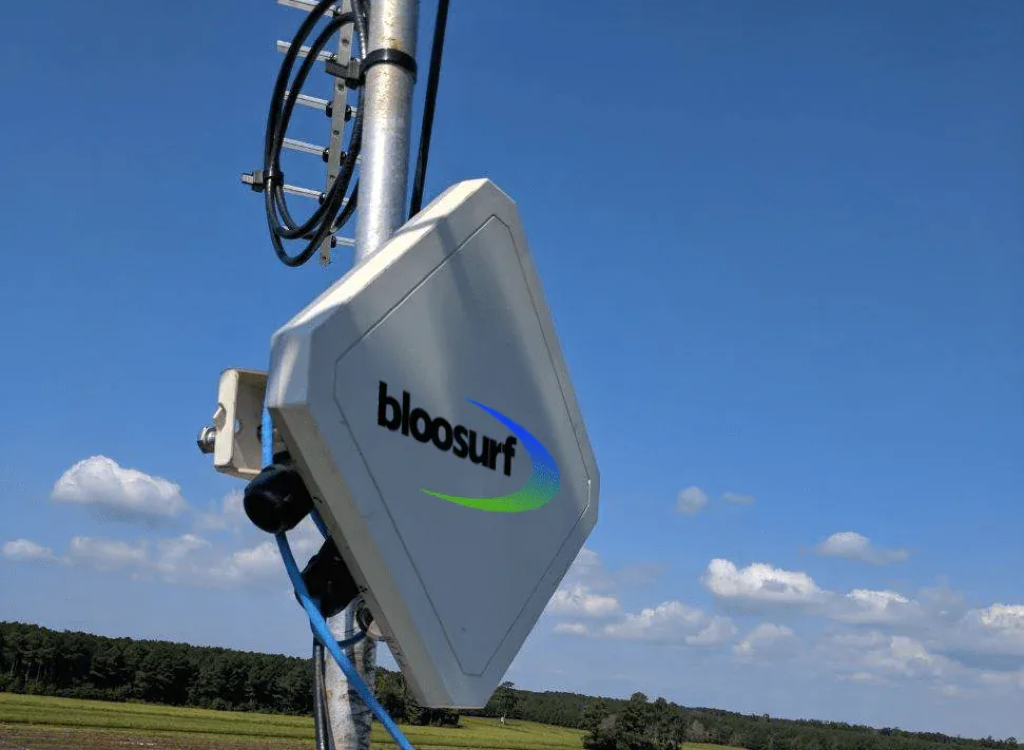
WASHINGTON, Sept. 17, 2026 – A wireless broadband provider says interference from T-Mobile is ruining its business, causing it to shed customers and operate at a loss.
Maryland-based Bloosurf told the Federal Communications Commission that interference with its 2.5 GigaHertz (GHz) licenses by T-Mobile cost the company at least $260 million since 2020. Founded in 2009, the company serves about 2,500 subscribers in Maryland, Virginia, and Delaware.

In a Monday filing, the company asked the FCC to award it $777 million in damages from T-Mobile, arguing an extra penalty was warranted by the carrier’s “malicious and wanton disregard” of the Communications Act.
T-Mobile did not immediately respond to a request for comment.
“T-Mobile’s goal is simple. It wants to control the entire 2.5 GHz Educational Broadband Service (“EBS”) band,” wrote Seth Williams, an attorney representing Bloosurf.
He cast the carrier’s alleged violations of spectrum interference rules as “part of a nationwide campaign of willful noncompliance by T-Mobile in an effort to displace other EBS license users and allow T-Mobile to monopolize the band.”
Bloosurf has previously complained to the FCC about 2.5 GHz interference from T-Mobile. Fellow WISP NextWave has also alleged the carrier interfered with its licenses in the band.
In response to NextWave, T-Mobile accused the company last year of being a spectrum warehouser with few to no real customers.
“T-Mobile engages cooperatively and effectively nearly daily with its closest competitors to resolve interference issues,” T-mobile wrote. “That is because those other companies and T-Mobile — unlike NextWave — are motivated to provide the most robust service possible to their customers.”
The FCC has issued two notices of violation against T-Mobile for 2.5 GHz interference, which Bloosurf was quick to point out, but has not resolved the NextWave complaint. The FCC also sided with Bloosurf in a previous informal complaint filed in 2020, but Bloosurf said nothing changed.
Bloosurf had also sued T-Mobile over the issue, but earlier this year federal judges said the company had to resolve the issue through the FCC.
On Monday, Bloosurf alleged T-Mobile was operating in 2.5 GHz channels wider than it was licensed for, and encroaching on Bloosurf’s spectrum in doing so. The company said it had been in contact with T-Mobile, but it claimed the carrier didn’t make serious efforts to end practices it said clearly caused interference.
On Wednesday, the FCC’s Enforcement Bureau said that after the issue had been briefed by both sides, T-Mobile and Bloosurf would have to meet and discuss settlement prospects, discovery, and other issues.
Bloosurf said that after expanding via federal and state grant funding, it had quickly grown customers in 2020 and reached total annual sales of $3.5 million. Late 2020 is when the company claims interference started, and since 2021 it has lost subscribers annually and is now operating at a loss with much of its enterprise value wiped out, the company said.
The WISP said the interference both prevented it from competing with T-Mobile for subscribers and prevented it from competing for spectrum licenses at auctions or in third-party transactions. The latter would have been possible if Bloosurf secured outside financing it had been considering, which was premised on the growth the company had seen before the alleged interference.