11 AI Bills Cleared Committee this Summer, But None Has Reached the House Floor
One measure would require transparency, incident-reporting and outside-audit requirements on developers advanced AI

Akul Saxena
MILPITAS, Calif., Sept. 17, 2026 – Eleven bills carrying most of a bipartisan artificial intelligence package cleared the House Science Committee in July, and a separate bill setting safety rules for the most powerful AI systems could get a hearing in November, Rep. Jay Obernolte, R-Calif., said Thursday.
He said the pieces could be combined into a single bill eligible for a floor vote in December.
The package started as the Great American AI Act, a 269-page discussion draft Obernolte released with Rep. Lori Trahan, D-Mass., on June 4. Filed as one bill, it would have gone to as many as eight House committees, since it reaches federal AI research funding, cybersecurity, classroom curriculum, teacher training grants, workforce programs and safety rules for the largest models.
11 bills, eight committees
The authors split the draft into 11 bills, each routed to the committee holding jurisdiction over its subject. The bills assigned to the House Science, Space and Technology Committee, which oversees federal research and technology programs, cleared it this summer. None has reached the House floor since.
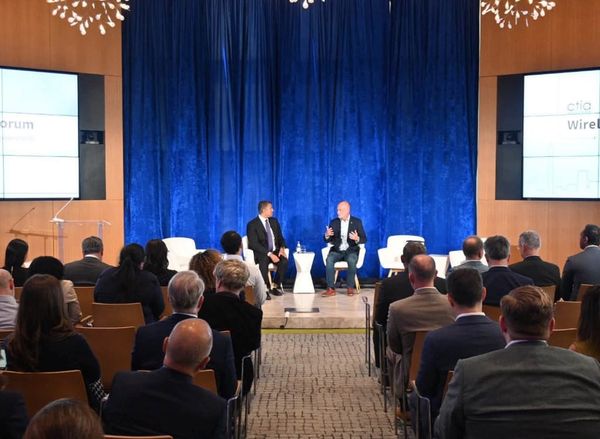
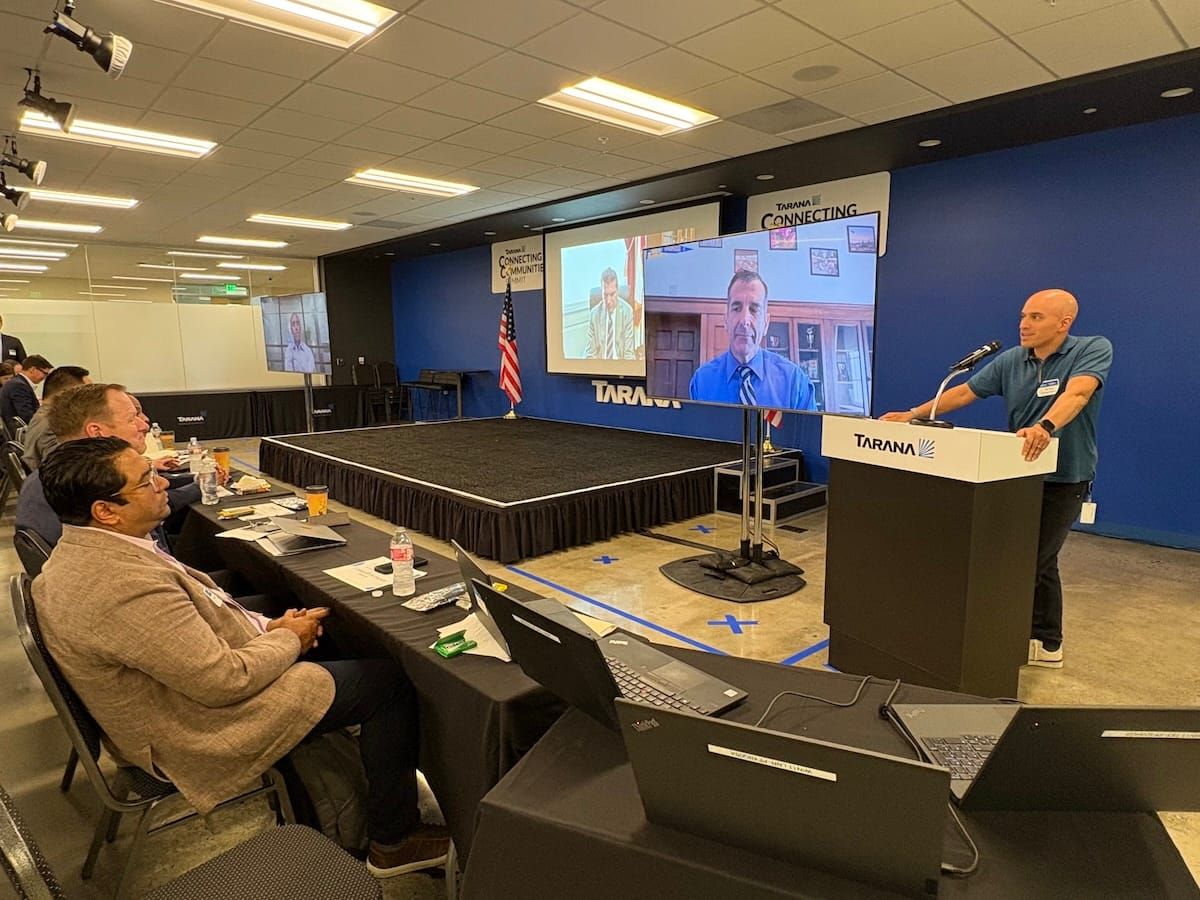
"It is a frustratingly slow process," Obernolte said at Tarana Wireless' Connecting Communities Summit, a broadband industry conference at the next-generation fixed wireless company's headquarters here.
A federal consumer protection bill?
The safety provisions went to a different committee. The FRONTIER Act, introduced July 23, sits with the Energy and Commerce Committee, which writes communications and consumer protection law, and Obernolte said he hopes for a hearing when the House returns in November.
The draft also carries the provision drawing the most opposition. Title I would preempt state laws governing how AI models are built, for three years unless Congress renews it, reaching what a developer does before deployment while leaving in place state rules on how AI gets used, along with privacy, consumer protection and civil rights statutes of general applicability.
Trahan's office named two California laws the preemption would reach: AB 2013, which requires developers to publish summaries of their training data, and parts of SB 942, the state's AI content watermarking statute. Frontier safety laws in California, New York and Illinois would be federalized under the bill, according to her office.
The bill aimed at catastrophic risk
What could replace those state rules sits in the bill aimed at catastrophic risk. The FRONTIER Act would set obligations according to what a system can do.
Companies training frontier models, the largest and most capable systems, would have to publish information about them, write plans for managing severe risks, report safety incidents and submit to review by independent verification organizations. Companies that only use AI tools built by other platforms would carry the lightest requirements.
Obernolte represents California's 23rd District, running from the outer edge of Los Angeles County across the High Desert and the Mojave. He is a computer engineer with a graduate degree in artificial intelligence and chairs the House Task Force on AI.
Across the aisle, Rep. Sam Liccardo, D-Calif., named disclosure, transparency and third-party auditing as already drawing support from both the large AI developers and the safety advocates. That overlap is the part of the debate that could move quickly, he said.
"I haven't seen a serious AI bill come to the floor yet," Liccardo said. "We need to get Jay's legislation done."
Liccardo's own priority is catastrophic risk, including cyberattacks and AI systems that pursue objectives their operators did not intend. He represents California's 16th District, covering much of Silicon Valley including Palo Alto.
The push for a floor vote
Congress repeated its social media pattern by waiting for documented harm before acting, Liccardo argued. He joined 106 other Democrats on Wednesday in asking Speaker Mike Johnson, R-La., to cancel a scheduled recess and vote on AI safeguards.
The argument he hears against safety rules is competition with China.
That makes international engagement part of the safety question rather than separate from it, he said, and he plans to introduce legislation letting AI labs, universities and think tanks work with Chinese counterparts on shared safety metrics, testing protocols and verification methods. He also plans a bill in November giving communities leverage to negotiate with data center developers.
Adoption hits a billion
OpenAI's chief global affairs officer Chris Lehane said more than 1 billion people use the company's products regularly, and that usage in rural areas is growing at about the same rate as in cities.
The company runs a free training program, OpenAI Academy, with rural sessions built around agriculture. The tools are widely available already, Lehane said, and what differs is skill, since people who use them heavily produce about seven times what occasional users produce.
That gap puts workforce training between an economy where the gains spread and one where they concentrate. Lehane proposed judging the result against a single number, the roughly $150,000 a year economists say a typical American family now needs for a middle-class life. The country could treat that as a national goal, he said, tracked the way the Federal Reserve tracks inflation and unemployment.