Cyber Nominee Warns U.S. Could ‘Cede Strategic Ground’ on Digital Infrastructure
Cassady called for coalitions of trusted partners to support secure U.S. digital ecosystems.

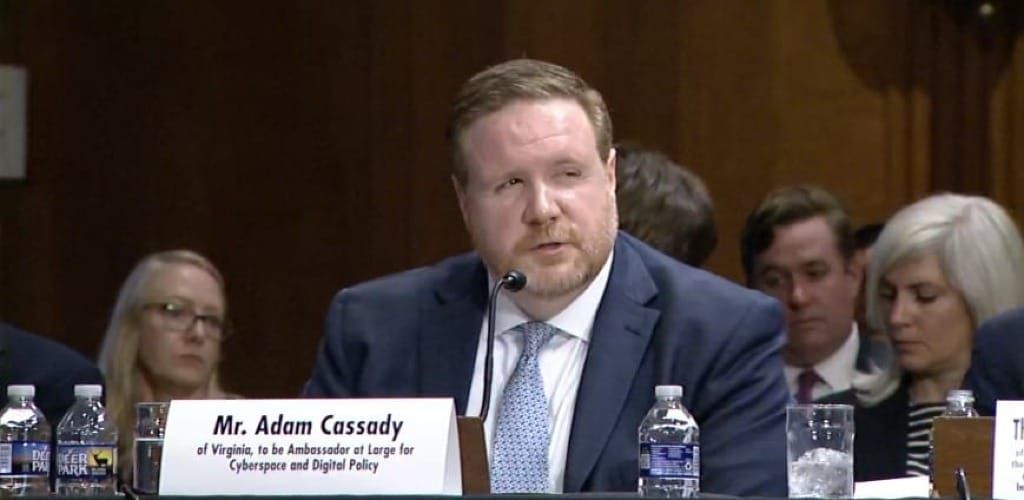
WASHINGTON, April 17, 2026 - Safeguarding digital infrastructure is central to U.S. national security and economic strength, Adam Cassady, President Donald Trump’s nominee for ambassador at large for cyberspace and digital policy, told senators Thursday.
“Economic security is national security,” Cassady said during his confirmation hearing before the Senate Foreign Relations Committee.
He pointed to subsea cables, telecommunications networks, data centers, semiconductors, and satellites as infrastructure “as strategically significant as sea lanes, airspace, and energy routes.”

U.S. competitors are investing heavily to dominate supply chains and influence global standards, Cassady warned.
He emphasized securing digital infrastructure and strengthening trusted networks, saying vulnerabilities could put the United States at a disadvantage.
“If digital infrastructure is built on insecure foundations, if trusted vendors are displaced by coercive actors, or if global standards are written without respect for our values, we risk ceding strategic ground,” he said.
Cassady is the principal deputy assistant secretary at the National Telecommunications and Information Administration, where he has worked on federal broadband and spectrum policy, including efforts tied to the $42.45 billion BEAD program.
He previously spent more than four years at the Federal Communications Commission as chief of staff and senior legal advisor to Commissioner Nathan Simington.
Cassady credited U.S. technological leadership to free enterprise, strong intellectual property protections, free speech safeguards, and close collaboration between government and the private sector.
If confirmed by the Senate, Cassady would move to the State Department’s Bureau of Cyberspace and Digital Policy, where he would shape U.S. international policy on digital technology, telecommunications, and internet governance.
The role includes coordinating cyber policy across federal agencies and representing the United States in global negotiations over digital standards and infrastructure.
Cassady said the position would focus on securing supply chains, promoting “trusted technology,” and defending an open and interoperable internet.
He also called for “coalitions of trusted partners” to support secure digital ecosystems.
“Our diplomacy seeks to keep the global digital economy open for business,” he said, adding that the United States should push back against discriminatory regulation, data localization requirements, and coercive trade practices.