Data Center Industry Slammed Over Messaging
Public misconceptions about data centers are fueling opposition, Rep. Jay Obernolte said.

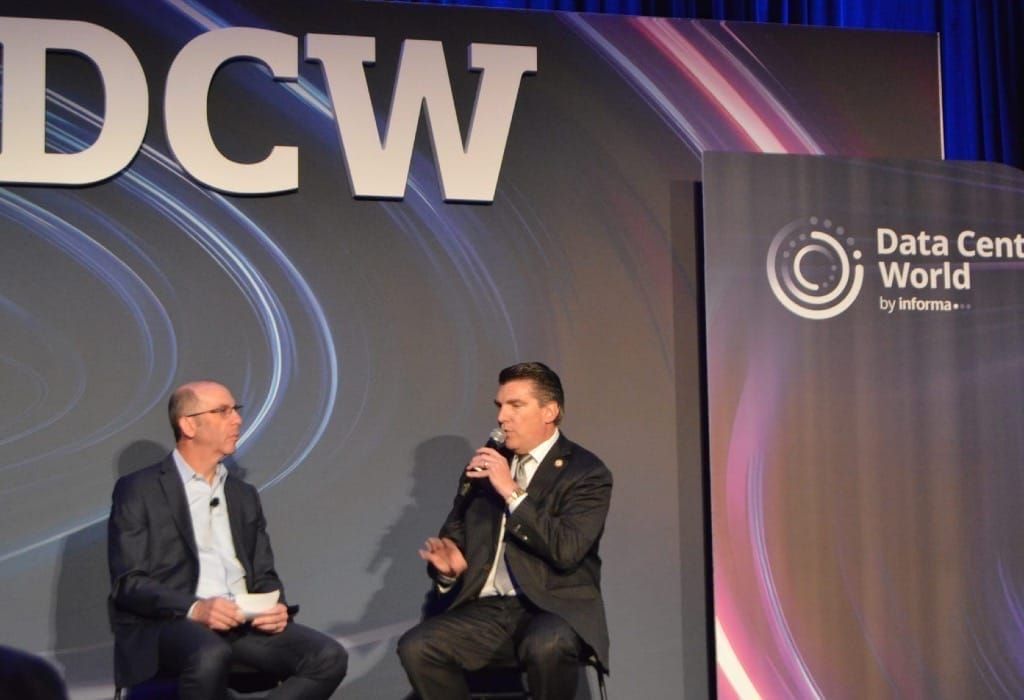
WASHINGTON, April 23, 2026 – The data center industry must better communicate with the public as concerns over energy use, water consumption, and local impacts drive growing political resistance, said Rep. Jay Obernolte, R-Calif.
“The tech industry is not terribly educated on public relations,” Obernolte said, speaking Thursday at the Data Center World conference. “You need to be proactively telling people, ‘we’re not raising rates, we want to be good neighbors.’”
Obernolte said public concern, not the underlying facts, is driving the congressional debate.

“The only reason politicians are talking about it is because that’s what their constituents are thinking about and worrying about,” he said. “I think if you look at the facts, really they shouldn’t be.”
He said fears around electricity costs are understandable but do not reflect how modern facilities operate.
“You can’t blame them for being concerned that the data center that is coming in their community might drive up those rates,” he said. “However, if that was ever true, it’s certainly not the case for data centers under construction now or in the future.”
Obernolte said large data center projects are typically backed by private investment and often include dedicated energy generation, limiting the burden on public resources.
“You’re going to overgenerate, which means that, by definition, rates actually go down, because you sell that energy back onto the grid,” he said.
Congress could play a role in ensuring costs tied to new infrastructure are not passed on to consumers, he added.
“We should make sure that when someone puts a data center in and builds new generation locally to support the data center, that those costs don’t get passed on to ratepayers,” he said. “Frankly, I don’t think any of the hyperscalers would oppose that.”
Water use has also become a flashpoint, though those concerns are based on outdated technology, he said.
Early data centers relied on evaporating cooling, which required significant water use, but newer facilities use recirculating systems and future designs are expected to eliminate water use entirely.
He urged companies to rely on trusted third parties to communicate the benefits of data centers and build credibility with communities.
The federal government should focus on streamlining permitting and transmission, while leaving siting decisions to local communities, Obernolte said.
“We can certainly do what we can to make it easier for people that want to do business,” he said, while adding he is “much more hesitant” to override local decisions.