
Dateline Ashburn: Data Centers Drive New Energy Disputes in Northern Virginia
Dominion projects peak power demand for data centers in Virginia could rise to 13.3 gigawatts by 2038, nearly a fivefold increase in 16 years.

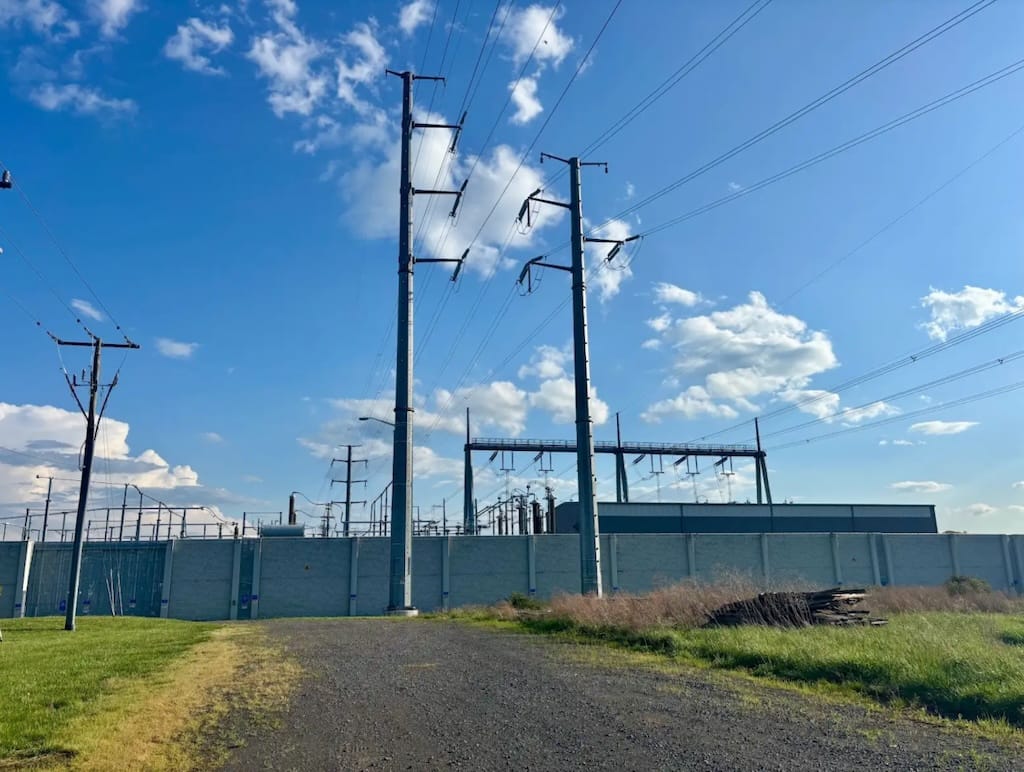
ASHBURN, Sept. 11, 2025 – Just outside our nation’s capital, thousands of metal boxes housing the computer servers that process cloud storage, e-commerce, and artificial intelligence applications sit behind wired fences.
 Broadband Breakfast
Loudoun County, home to unincorporated Ashburn, was famously known as “Data Center Alley” due to its high concentration of data centers. But the explosive growth of these data centers is placing a significant strain on the region’s energy infrastructure.
And as demand grows, it is raising questions of who will ultimately pay. Dominion has proposed a 14 percent rate increase for residential customers in 2026, citing data center growth and demand from AI expansion.
The scale of demand
Data centers consume enormous amounts of electricity to power servers and run cooling systems.
Loudoun County currently has 199 data centers, with another 117 in development, according to Michael Turner, vice chair of the board of supervisors transportation and land use committee and Ashburn’s district supervisor.
Dominion Energy, the regional utility provider, is at the center of this growing energy demand. In 2023, data centers accounted for 24 percent of Dominion’s electricity sales in Virginia.
For perspective, one data center can draw more than 100 megawatts of electricity at a given time – roughly the same as 80,000 homes. And those stats are ever increasing.
Nationally, the U.S. Department of Energy and Lawrence Berkeley National Lab estimate that data centers could consume up to 12 percent of the country’s total electricity by 2028. That’s triple their 2023 usage, which was about 4 percent.
To keep up with the energy demand, utilities like Dominion may lean on fossil fuels to create electricity. Already, many data centers rely on diesel generators for backup power.
In Northern Virginia alone, data centers hold permits for more than 4,000 diesel generators – totaling over 11 gigawatts of capacity, according to the Loudoun Climate Project. That is more than Dominion’s entire natural gas fleet.
Peak power demand
Dominion projects peak power demand for data centers in Virginia - the highest level of electricity being used at one time across a system - could rise to 13.3 gigawatts by 2038, nearly a fivefold increase in 16 years, up from about 2.8 gigawatts in 2022.
That's enough electricity to power about 3.3 million homes at once assuming ~4 kilowatt (kW) average household load.
At a July 2024 open house, Dominion officials said data center electricity use in Virginia had surged by 231 percent in just eight years.
“That load is driving new infrastructure, new substations, and new discussions about the changing energy landscape,” said Robert Richardson, electric transmission communications consultant for Dominion.
Grid capacity and reliability
To meet this growing demand, Dominion plans to invest $50.1 billion in capital projects, including transmission lines, substations, and generation resources, between 2025 and 2029.
The demand from Ashburn’s data centers was driving the need for new 500 kilovolt (kV) and 230 kV transmission lines into Data Center Alley.
“The data center industry has been growing dramatically in eastern Loudoun County since 2013,” the company’s website read. “This dramatic growth has led to a portion of the transmission grid in Loudoun County becoming constrained for very high energy use customers.”
Dominion’s solution is the proposed Golden to Mars 500/230 kV line, described by Dominion officials as the “third puzzle piece” in a bulk-power loop through Ashburn that will bring high-voltage electricity by 2028.
“We are bringing in bulk electricity into northern Virginia,” Richardson said.
Other major pending transmission line projects in Ashburn include the Evergreen Mills Project, which proposes to co-locate a short double-circuit 230 kV line in an existing right-of-way west of Dulles Airport.
Dominion is also pursuing a new substation near Edsall Road, with new overhead lines connecting to the existing Van Dorn Substation. The project would require a new 100-foot right-of-way in a densely populated area north of Interstate 495.
Dominion officials noted that costs associated with these projects will be split among all 2.7 million Virginia and North Carolina customers.
“That also includes data centers,” Richardson said. “Data centers do pay their fair share for these infrastructure projects. In fact, they probably pay a lot more because they are high-energy use customers.”
Who actually pays?
A public policy battle is brewing over who should foot the bill to pay for all the additional costs.
So far, the cost burden has fallen on Dominion ratepayers, with Dominion proposing a 14 percent rate increase for residential customers in 2026, citing data center growth and demand from AI expansion.
During the 2025 General Assembly session, Virginia lawmakers took up the issue directly through House Bill 2084, sponsored by Del. Irene Shin, D-Fairfax.
The bill initially called for the State Corporation Commission to create a separate rate class for data centers and other high-load customers, amid concerns that residential ratepayers were subsidizing the industry’s rapid expansion.
That provision drew heavy opposition from utilities and data center operators, who warned it could jeopardize investment in Virginia’s largest economic development sector. As a compromise, legislators stripped the mandatory language and instead directed the SCC to study whether current classifications are fair to all customer groups.
Experts say utilities must adopt specialized pricing structures – otherwise, residents could end up paying the bill for data centers’ massive energy consumption.
“We’re looking out for our constituents and making sure they’re paying their fair share and not more than that,” Del. Shin said. “It is up to industry to pay their fair share of what we know are the incredibly exorbitant costs to service data centers.”
Virginia’s next energy gamble
Looking ahead, Dominion is weighing whether new nuclear could help meet future demand. In October 2024, the company signed a memorandum of understanding with Amazon Web Services to explore building a small modular reactor near the North Anna site.
The project could provide roughly 300 megawatts of clean electricity, potentially dedicated to serving the data center corridor in Northern Virginia.
Dominion’s request for proposals that year pledged to cap additional costs to a typical residential customer at about $1.40 per month, supported by tax credits under the Inflation Reduction Act.
Dominion already operates two nuclear plants: North Anna in Louisa County and Surry Power Station in Surry County, each with two reactors. Together, they generate about 32 percent of Virginia’s electricity and nearly all of the state’s carbon-free power.
There is little sign the data center buildout will slow.
“We have not observed any evidence of slowing demand from data center customers across our service area,” said Dominion’s Chief Financial Officer Steven Ridge in a 2024 earnings call. Dominion CEO Robert Blue added, “They want to go fast, they always want to go fast. That’s their business. I don’t see any reason why that’s going to change in the future.”
First Dateline Ashburn story: How to Break the Internet
Second Dateline Ashburn story: How do IXPs contribute to infrastructure resiliency?
Third Dateline Ashburn story: What is the energy impact of data centers?
Fourth Dateline Ashburn story: What is the water impact of data centers?

Resilient Critical Infrastructure Summit
A one-day conference on securing America's vulnerable digital infrastructure
Learn About for Resilient Critical Infrastructure.






Member discussion