Developer Drops Plans to Build World's Largest Data Center Campus Outside Nation's Capital
The decision ends a yearslong legal battle between residents, the developers, and a county board of supervisors

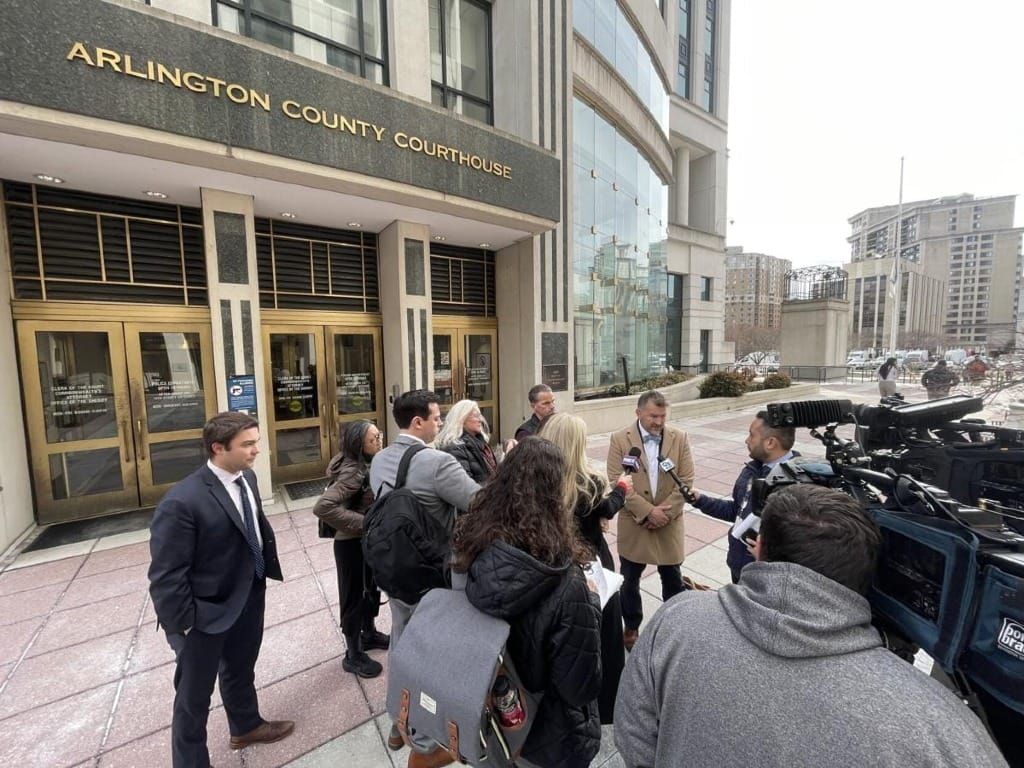
WASHINGTON, July 6, 2026 — The decision of data center developers QTS and Compass Datacenters to pull out of a massive 2,100 acre project in Prince William County may have marked an inflection point in Northern Virginia’s experience with data centers.
The project, which began in July 2021, would have put 37 data centers on land adjacent to historic Manassas National Battlefield, located about 30 miles from Washington, D.C. Each data center would have occupied about 150,000 square feet, an area roughly one football field wide and three football fields long, according to a Prince William Times article.

Development came to a halt this April after the Virginia Court of Appeals ruled that the county had not given adequate public notice ahead of its rezoning vote, which took place in a 27-hour public meeting on December 12-13, 2023. More than a hundred residents spoke at the meeting.
The other developer involved, QTS, initially appealed the decision to the Virginia Supreme Court, but dropped the case on July 2.
“QTS deeply appreciates the relationships it has built with community stakeholders throughout this process and remains grateful for the collaboration and dialogue that have shaped its engagement on the Digital Gateway project,” the company said in its court filing.
The project’s opponents were surprised but delighted.
"We stood up to some of the largest companies in the world, and we were able to pull off essentially a miracle,” former Virginia state senator Chap Petersen said. Petersen had represented the American Battlefield Trust, a battlefield preservation society, in one of two lawsuits brought against the project. The second was brought by the Oak Valley Homeowners Association, located in Gainesville, Virginia.
Texas-based Compass Datacenters and the county government withdrew their support for the project in April after the state court’s decision.
“While we still believe this project offered significant benefits for the region and our neighbors, recent legal actions and compounding regulatory hurdles have effectively closed a viable path forward,” Compass President AJ Byers said in a statement. “We are deeply grateful for the many wonderful relationships we have built in the community, and for the incredible patience and trust of our partners throughout this process.”
If completed, the project would have included 37 data centers occupying more than 22 million square feet — an area three times the size of the National Mall in Washington, D.C. and equivalent to 144 Walmart supermarkets. The project would have created the largest data center campus in the world at full buildout.
Developers said the project would have brought in several thousand jobs and $40-50 billion in private investment. More conservatively, the project would have generated $336 million in tax revenue for the county over the next 15 years, according to Prince William County Deputy Finance Director Tim Leclerc. Data centers brought Prince William County nearly $300 million in revenue in 2024, according to a county report.
A controversial project which divided residents
Reactions from landowners have been mixed. More than a hundred had agreed to sell their properties back in 2022, and 57 of them spoke in favor of the project at a planning commission hearing in September of that year, saying it would bring needed investment to the county. The land covered by the project has more than doubled in value since the data centers were announced, but residents living on the rezoned land have been stuck paying higher real estate taxes while the legal challenges have played out.
“With 100-some families here along Pageland Lane, they’re wondering, OK, what do we do right now? And I hear about 100 different ideas,” one landowner said in May 2026. Pageland Lane runs along the national park’s western edge.
Local historical societies and environmental groups had opposed the project from its inception, along with residents concerned by the noise and electrical consumption of the data centers.
The American Battlefield Trust, the historical preservation group, said the project would have blocked views of Manassas National Battlefield Park, the site of two major Civil War battles in 1861 and 1862. Multiple environmental groups such as the Sierra Club and the Piedmont Environmental Council warned of the project’s three gigawatts of required power — enough to power 750,000 homes — and potential pollution of the nearby Occoquan watershed.
Local fallout a harbinger of national political trends
Residents brought recall petitions against Supervisor Pete Candland, R-Gainesville, and Board Chair Ann Wheeler, D-At-Large, over their support for the project. Candland, whose property fell within the proposed data center zoning area, had asked the county to rezone his home to make way for the data centers. Candland resigned from his position on December 10, 2022, saying his need to recuse himself from any votes involving data centers county-wide prevented him from doing his duty.
“My ability to serve on the Board of County Supervisors has been greatly diminished. While I could continue as supervisor in a more limited role and still get many positive things accomplished, I do not feel this would be in the best interests of the citizens of the Gainesville District,” Candland said in an email to his constituents.
Wheeler survived the recall effort but lost the subsequent Democratic primary to Deshundra Jefferson, a communications professional and former CNN journalist.
The residents in opposition to the project won their legal fight on a technicality. The Virginia Court of Appeals ruled unanimously in February 2026 that the county’s Board of Supervisors did not run the required public advertisements in The Washington Post in a sufficiently timely fashion, thus giving the public too short of a notice. State law requires public notices to appear six days apart for two consecutive weeks before a hearing occurs.
County Attorney Michelle Robl told InsideNoVa that Wheeler and the developers were aware of the issue, but pushed ahead anyway.
“If the board proceeds with the December 12 public hearings on these rezoning applications and the board’s action on the application is challenged, there will likely be a legal argument that the legally required advertisement requirements were not met, and thus the board’s action would be invalid,” Robl wrote in a November 2023 memo to the Board of Supervisors.
The ensuing lawsuits cost the county more than $1.7 million.
“This case has never been just about Oak Valley,” said the Oak Valley Homeowners Association in a public statement. “The real victims were the citizens of Prince William County, who would have suffered – each in varying degrees – from the unchecked and predatory expansion efforts of a multi-billion-dollar global data center industry.”