
FBA: ‘The Fiber Industry Could Not Be Better’
Trade association elated by passage of OBBB

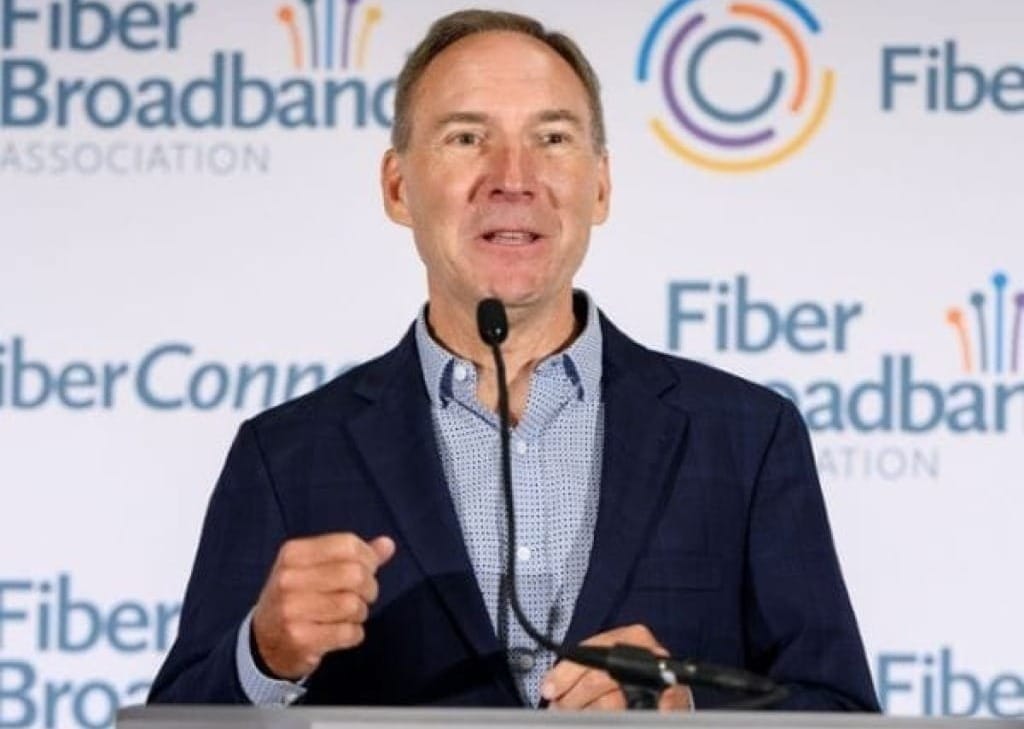
WASHINGTON, July 14, 2025 – Members of the Fiber Broadband Association were popping the proverbial champagne over the passage of the 'One Big, Beautiful Bill' Act.
In a Thursday newsletter, FBA President and CEO Gary Bolton extolled the benefits the recently passed OBBB will have on the industry.
“Congress and the Trump Administration has injected a significant shot of adrenaline into the economy with the implementation of tax policy that will result in a step function uplift in fiber broadband deployment and investment,” he said. “...This pro-investment tax policy could not have come at a better time.”

Bolton’s optimism stemmed from the law’s changes to the bonus depreciation rate.
Under the old regime, fiber providers could only deduct 40 percent of the cost of deploying fiber in the year they deployed it, with remaining deductions being spread out over a 24 year time period for fiber optic cables and a 7 to 10 year deployment for other electronics.
With the passage of the OBBB, providers can now deduct 100 percent of equipment purchases and capital expenditures during the year they deploy fiber, freeing up significant cash for them to spend elsewhere.
According to Wall Street Analyst John Hodulik, this freed up cash could total as much as $9.2 billion in 2026 and $11.3 billion in 2027 for network operators such as AT&T, Verizon, Comcast, and Charter.
Assuming that ISPs spend 15 percent of that freed up cash on deployment, that would result in an additional $4.2 billion in private broadband investment per year across the industry, enough to connect an additional 3.4 million homes.
The passage of the OBBB may already be having an effect. Bolton’s article noted AT&T’s announcement that it will invest in an additional one million fiber customer locations annually as a result of the passage of the Act.
When asked by Broadband Breakfast, Bolton explained that “the fiber industry could not be better.” He was even complimentary of Sec. Howard Lutnick’s recent revisions to the Broadband Equity, Access, and Deployment program, which many believed would hurt the fiber industry.
“Fiber providers will benefit from [National Telecommunications and Information Administration] eliminating the burdensome and non-statutory requirements from the previous NOFO,” Bolton told Broadband Breakfast. He went on to explain that “while there has also been a lot of rhetoric surrounding the Notice’s change from a fiber preference to technology neutral,” fiber providers would still be at an advantage because it “easily meets…statutory requirements and other technologies do not.”
Bolton expressed optimism that State Broadband Offices would continue to prioritize fiber over other technologies in order to meet the statutory requirements of the BEAD program.
“The Restructuring Policy Notice now puts the burden of evidentiary proof on the applicants and requires that the SBOs review each network design to determine if the proposed network meets the statutory requirements,” he said. “For fiber proposals, SBOs know they easily qualify.”
“The more risky the technology, the more proof the SBO will require,” Bolton said. “This puts the SBOs in the position of having to have a strong understanding of network design and capacity, especially with non-terrestrial network designs who’s performance will vary with weather, foliage, topology, and even the capacity demands from non-BEAD subscribers.”
Bolton’s newsletter urged policymakers to keep "fiber-first infrastructure at the forefront of American economic policy." When asked by Broadband Breakfast what specific policies he would like to see legislators implement, Bolton expressed his desire for the FCC to open a Copper Retirement proceeding.
“As our broadband provider members say, every dollar spent on the legacy copper network is a dollar not being spent on fiber,” he said.







Member discussion