FCC Approves SpaceX Request for 15,000 Direct-to-Device Satellites
A TD Cowen survey found 34 percent of respondents would consider switching to a mobile service from the company

WASHINGTON, Oct. 7, 2026 – Federal regulators cleared Tuesday SpaceX’s plan to launch 15,000 satellites for its direct-to-device service.
The company would have until Oct. 7, 2032, to have half of the constellation up and running, the Federal Communications Commission said in its order. The full system would have to operational by Oct. 7, 2035.

The company has said it's planning to begin launches late next year.
The new constellation would be able to use exclusive spectrum SpaceX is acquiring from EchoStar, which will allow the company to offer service without partnering with an established wireless carrier.
The agency said it expected SpaceX’s next-generation fleet would “lead to increased choices for mobile device users for communications networks, initially by supplementing service availability in hard-to-reach geographic areas of the country and ultimately through increased competition in the provision of retail wireless services to American consumers.”
SpaceX currently has 650 satellites supporting a basic direct-to-device service, offered in the U.S. through a partnership with T-Mobile using the carrier’s spectrum.
The new constellation was cleared to operate both in the U.S. and internationally. The FCC deferred on SpaceX’s requests to access certain spectrum bands, but was generally not swayed by interference concerns from other satellite companies.
SpaceX’s $19.6 billion spectrum purchase from EchoStar is expected to close next year, according to SpaceX’s IPO filings.
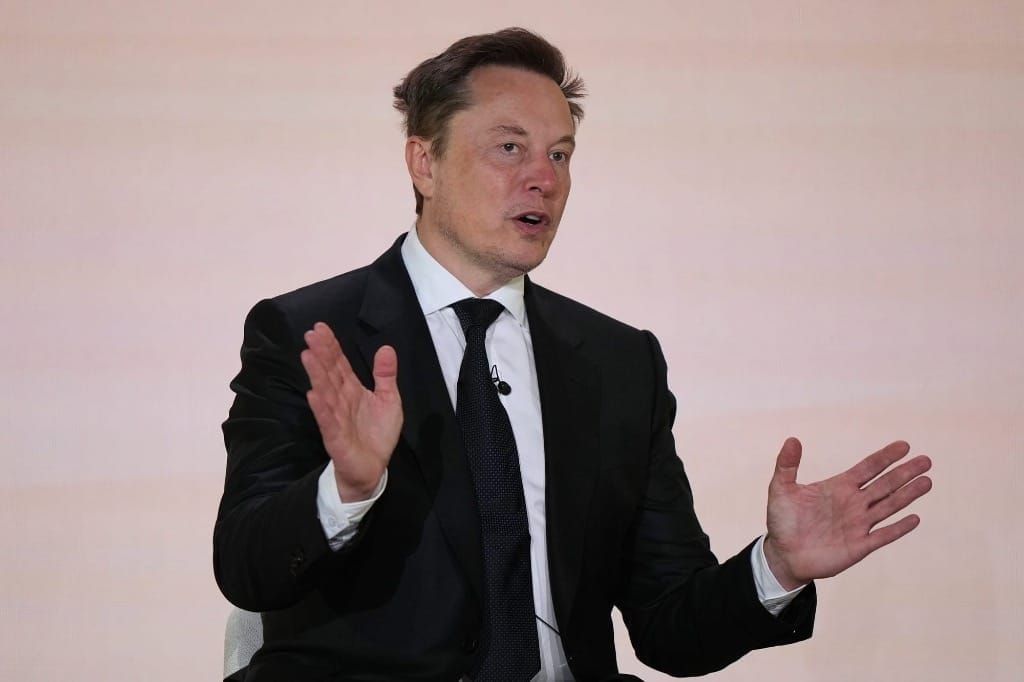
With the future constellation, the company is planning to provide speeds on par with terrestrial mobile service. CEO Elon Musk and other executives have said the company’s plan is to compete directly with the big three mobile carriers.
“If we need to, we can stand up terrestrial solutions to put the terrestrial piece in place, or we could work with existing carriers,” SpaceX CFO Bret Johnson said last month. “We’re open to a lot of different ways to do it, but we’re marching down that path.”
While the FCC’s order was optimistic about the prospect, telecom analysts have been skeptical of the company’s plan, which executives have said could entail a large number of tiny femtocell radios.
Analysts have maintained the best path for SpaceX to become a consumer mobile competitor would be a mobile virtual network operator (MVNO) deal to use an existing carrier’s infrastructure.
CEOs of each of the big three have repeatedly said they’re not interested in the idea, which would open the door to another competitor.
The companies have also formed a joint venture pooling their spectrum for direct-to-device deals outside their footprint. The carriers said that was aimed at fostering competition to SpaceX, which has by far the most low-Earth orbit satellites and is the furthest toward a direct-to-device service.
Amazon and AST SpaceMobile are also looking to offer a direct-to-device service using exclusive spectrum. Amazon would get that through its acquisition of Globalstar, and AST is asking to use spectrum owned by Ligado — both deals still need FCC approval.
Starlink Mobile survey
On Monday, analysts at TD Cowen released the results of a survey on SpaceX’s planned Starlink Mobile service.
Of the 800 respondents, 34 percent said they would consider switching to a mobile service from SpaceX.
Another 66 percent said they were not open to the idea. About 25 percent each said they were content with their provider or averse to Musk’s companies, 12 percent said they would be concerned about the reliability, and the remaining 5 percent had other reasons.
The analysts, led by Gergory Williams, said it’s possible SpaceX could focus on mobile connectivity for autonomous vehicles and robotics as a way of making a partnership more attractive to the carriers.
Regardless, Williams said TD Cowen expected SpaceX to bid heavily in the FCC’s upper C-band spectrum auction next year to keep its auctions open.
Analysts at MoffettNathanson have said a store of valuable spectrum could be used as a bargaining chip for securing an MVNO in the future.