FCC Drone Ruling Draws Industry Warning, Could Slow U.S. Aerial Development
The FCC's drone ruling, once aimed at China-based DJI, now covers all foreign components, and industry experts warn the broad scope may backfire on American drone dominance.

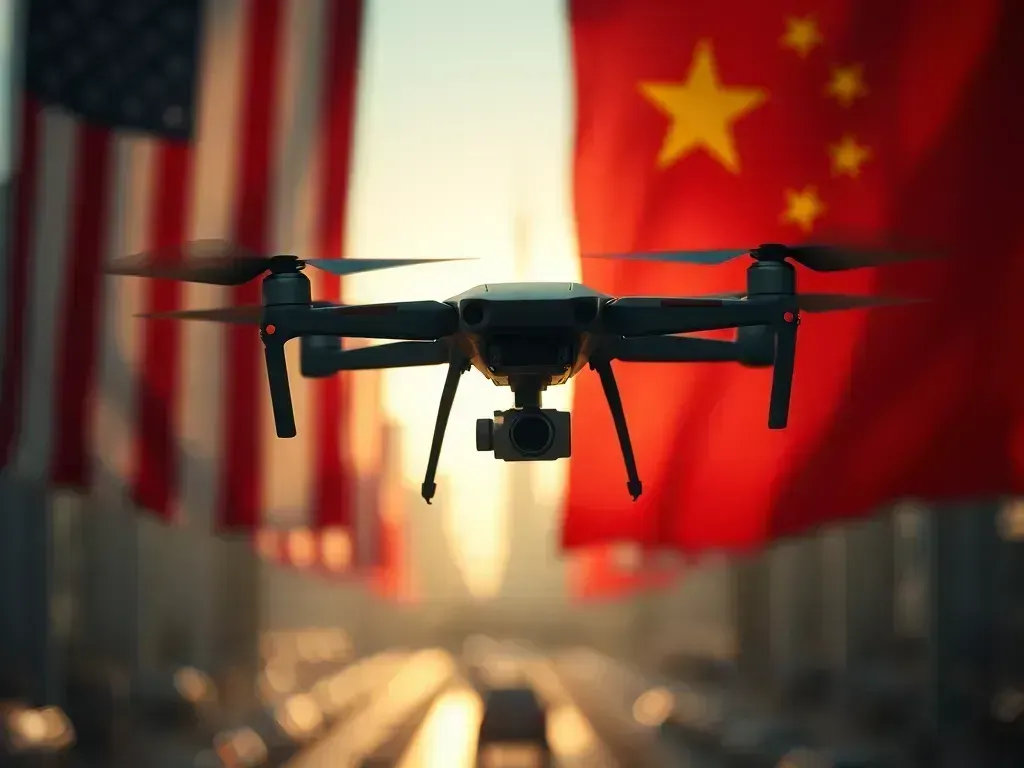
WASHINGTON, June 22, 2026 — A Federal Communications Commission order restricting the import, sale, and use of drones containing foreign-manufactured components has prompted warnings from five industry veterans that the policy's scope may delay the domestic aerial infrastructure buildout it is designed to accelerate.
The ruling initially targeted Da-Jiang Innovations, the Shenzhen-based drone manufacturer known as DJI that once held more than 80 percent of the U.S. market. It has since expanded to cover hardware and critical components from all non-American countries.
Panelists at a June 10 Broadband Breakfast Live Online discussion said the order has forced companies and public safety agencies alike to pause purchasing decisions and halt development timelines as they navigate an uncertain compliance pathway. The uncertainty, several said, is already chilling investment on the venture and private equity side.
The drone infrastructure needed for dominance
"Drone dominance is earned, not bestowed," said Mark Bathrick, president of Bathrick Aviation Consulting and former Interior Department aviation director. He argued that drone infrastructure could not be developed in isolation - drones, autonomous ground vehicles, and smart city systems all depend on the same digital backbone, and policy that treats them separately will produce gaps.

The stakes of getting infrastructure wrong extend beyond economics, Bathrick said. Without better identification systems, counter-drone technology risks misidentifying friendly aircraft, as happened in a 2023 incident in which the Department of Homeland Security shot down a Customs and Border Protection drone using a laser.
Spectrum and the national airspace
The ruling's expansion beyond DJI to cover all foreign-manufactured components was not the outcome the industry anticipated. Sean Cassidy, CEO of Airgyde and former Amazon Prime Air safety and flight operations director, said the FCC's action represented a significant departure from the agency's traditional telecommunications mandate. He compared the industry's position to the early railroad era, when incompatible track gauges made interoperability across lines impossible.
A dedicated radio spectrum allocation, Cassidy argued, is essential to integrating drones into the National Aerospace System, the regulatory framework governing all U.S. civilian aircraft.
Cassidy said the ruling reflected more than a security concern. In White House listening sessions he attended, he said, officials framed the action as a response to how far behind the U.S. had fallen in drone manufacturing and supply chain capacity. He compared the logic to the emergency retooling of American shipyards and aircraft manufacturing at the outset of World War II.
Proprietary systems vs. open collaboration
A small group of venture capitalists pushing proprietary systems is foreclosing the industry-wide cooperation the drone sector needs to compete globally, said Jeffrey DeCoux, founder and chairman of the Autonomy Institute, a consortium of more than 400 organizations from industry, government, and academia. "China is beating us at our own game," he said.
DeCoux pointed to the Citizens Broadband Radio Service, a shared spectrum band at 3.5 gigahertz managed by the FCC, as one potential avenue for expanding drone communications infrastructure. A dedicated spectrum allocation for autonomous systems has been under discussion since 2018, he said, but has yet to materialize.
The local policy handshake
Local governments must first define what drone operations should look like in their communities before federal infrastructure investment can take hold, said Steven Philpott, founder and CEO of Nelcielo Mobility Holdings, which focuses on city-grade policy frameworks for urban air mobility. Without that handshake between municipal policy and federal infrastructure investment, he argued, commercial operators face unresolvable ambiguity about where and under what conditions they can fly.
Philpott said the U.S. conversation on drone dominance has been shaped less by strategic planning than by competitive embarrassment. DJI built a product so intuitive it moved seamlessly from agricultural use to a Christmas gift for grandchildren, he said, and American manufacturers had no credible answer. "The United States was embarrassed by a 26-year-old kid who built a market share that looked just like what Apple was doing," he said.
Public safety at risk
The DJI ban threatens not only foreign manufacturers but the domestic third-party ecosystem built around those platforms, said Jason Day, deputy director of DRONERESPONDERS, a nonprofit representing approximately 15,000 public safety drone operators nationwide. He cited a small company that built payload release accessories for DJI aircraft, which became essential to hurricane response operations at the Texas Department of Public Safety - and now faces an uncertain future under the new restrictions.
Day previously oversaw that agency's drone program, the nation's largest, which logged more than 50,000 annual flights across a fleet of more than 400 aircraft. "When you take one piece and you ban it or hinder its adoption, it affects all of those other pieces," Day said, referring to the broader ecosystem of American software vendors and accessory makers that built their businesses around foreign drone platforms.