
FCC Pushes Satellite Modernization as Carr Warns of ‘Space Race 2.0’
Chairman Brendan Carr touted faster approvals and expanded spectrum access to sustain U.S. space leadership.

Akul Saxena
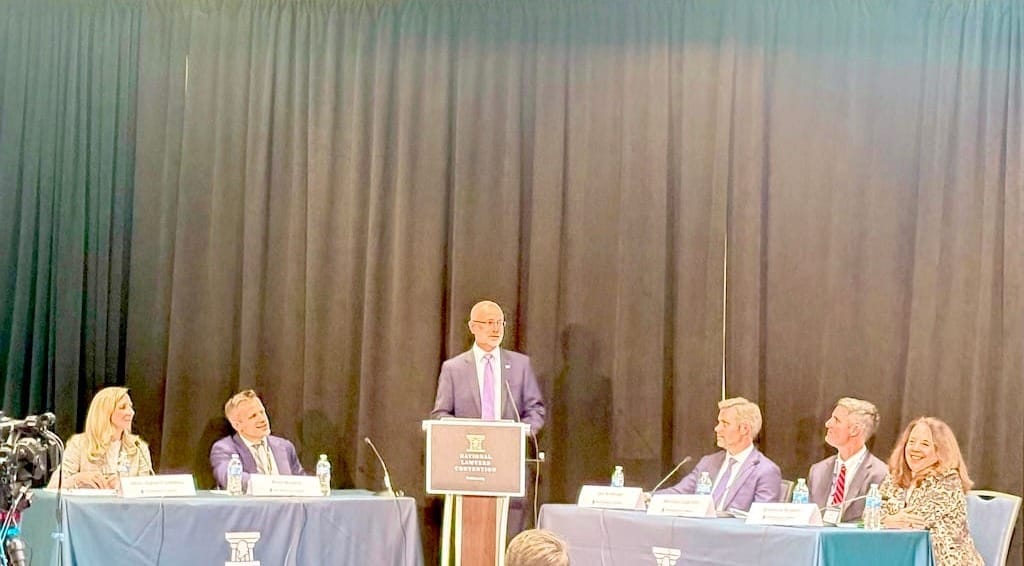
WASHINGTON, Nov. 7, 2025 — FCC Chairman Brendan Carr said the United States has entered a “Space Race 2.0,” and touted his efforts to accelerate space licensing and expand access to spectrum, in a speech at Federalist Society’s National Lawyers’ Conference here on Friday
Carr said the Federal Communications Commission's Space Bureau, created under his predecessor, former agency Chairwoman Jessica Rosenworcel, had accelerated licensing and expanded access to spectrum as part of his broader “Build America” infrastructure agenda linking broadband, wireless, and orbital networks.
“We’re working to make the U.S. the friendliest regulatory environment in the world for innovators to launch, grow, and scale space operations,” Carr said.
Carr described the U.S.’s new competitive phase with both China and the European Union, and said all three nations were seeking to set global technical standards.
The FCC had opened more than 20 gigahertz of spectrum for satellite services, simplified legacy sharing rules, and advanced proposals to strengthen GPS reliability.
“Every day matters,” Carr said, adding that delays in permitting and outdated rules could hand ground to Beijing’s state-backed networks.
How U.S. telecom and space regulations balance speed with security
Carr’s keynote speech framed a broader discussion about how U.S. telecom and space regulation can balance speed with security as more private capital enters orbital broadband and 6G infrastructure markets.
The panel, moderated by Tennessee Supreme Court Justice Sarah Campbell, brought together officials and industry leaders from the White House, FCC, Amazon’s Project Kuiper, and Lockheed Martin.
Jay Schwarz, chief of the FCC’s Space Bureau, said the agency’s new “licensing assembly line” would replace one-off satellite reviews with standardized, faster approvals. “We’re shifting from bespoke licensing to predictable, rules-based processing,” he said, adding that the goal is to remove the “paperwork, processes, and precautions that slow innovation down.”
Michael Carlson, senior corporate counsel for Amazon, said industry success would depend on how quickly federal coordination catches up to these reforms.
Faster interagency reviews and clearer spectrum sharing between commercial and government users are critical to ensuring new satellite networks launch on time, Carlson said. Aligning licensing timelines with manufacturing and launch schedules could help avoid costly bottlenecks as the next generation of constellations moves toward deployment, he said.
'No pipeline' for commercial use under Biden
Ryan Baasch, special assistant to the President for economic policy, said the administration rebuilt a spectrum strategy after inheriting from the Biden administration what he characterized as “no pipeline” for commercial use.
Baasch said the administration had, through an executive order, directed federal agencies to speed environmental approvals for launch and broadband projects. And it had stepped up its presence in international forums like the International Telecommunication Union, a UN agency, to ensure global spectrum standards reflect U.S. interests.
Panelists agreed that the international regulatory landscape now rivals launch capability as a test of U.S. leadership. They pointed to the upcoming 2027 World Radiocommunication Conference, where governments will debate modernizing Equivalent Power Flux Density (EPFD) limits, which set the technical standards for how satellite systems share frequencies and prevent harmful interference.
Jennifer Warren, vice president for global regulatory affairs at Lockheed Martin, said predictable and long-term regulatory frameworks would be critical as commercial missions extend to lunar and deep-space operations.
“We need longevity in spectrum allocations if we’re going to build sustainable systems,” she said. Coordination between defense, civil, and commercial users of the spectrum will be essential to avoid interference and ensure reliable communications for future space infrastructure, Warren added.




Member discussion