FCC Sets June 2026 Auction Date for AWS-3 Spectrum, Expands Robocall Rules
Carr said agency was not independent: 'Any FCC commissioner can be fired by the president for any reason, or no reason at all'

Jake Neenan
WASHINGTON, Dec. 18, 2025 – The Federal Communications Commission’s first spectrum auction since 2022 will begin on June 2, 2026, the agency announced Thursday.
The agency will be selling 200 licenses in the AWS-3 band used by wireless carriers. The large majority of which were returned by EchoStar after the FCC determined the company’s subsidiaries had improperly claimed bidding credits meant for smaller companies.
The FCC’s ability to sell off spectrum lapsed in March 2023 and was restored in July with the Republicans’ budget legislation. The AWS-3 auction was authorized as a one-off late last year in a bid to raise money for the agency’s Rip and Replace program, which was facing a funding shortfall.
If the auction doesn’t bring in about $3.3 billion, the value of the returned licenses, EchoStar would be on the hook for the difference.
The company had sued the FCC over parts of its proposed rules, which it stuck with for the final version released Thursday, arguing the new small business bidding credit rules were too restrictive and could reduce participation. EchoStar said it feared having to make a huge shortfall payment.
The parties have been in talks to settle the suit since October, and as of Dec. 15 those talks were still underway, according to a court filing.
A group of Democratic senators on Tuesday asked the agency to attach certain conditions to future spectrum auctions, like affordable plans and Tribal licensing windows. The agency declined to adopt a Tribal window for the AWS-3 re-auction, but said it would take comment on the issue for future auctions.
Adopted items on robocalls, low power TV
At the FCC’s open meeting Thursday, the agency unanimously adopted an order expanding robocall-related certifications. The order requires voice over internet protocol (VoIP) providers with existing authorizations to make the certifications about robocall mitigation, foreign ownership, and other things that have been required of new applicants since 2023.
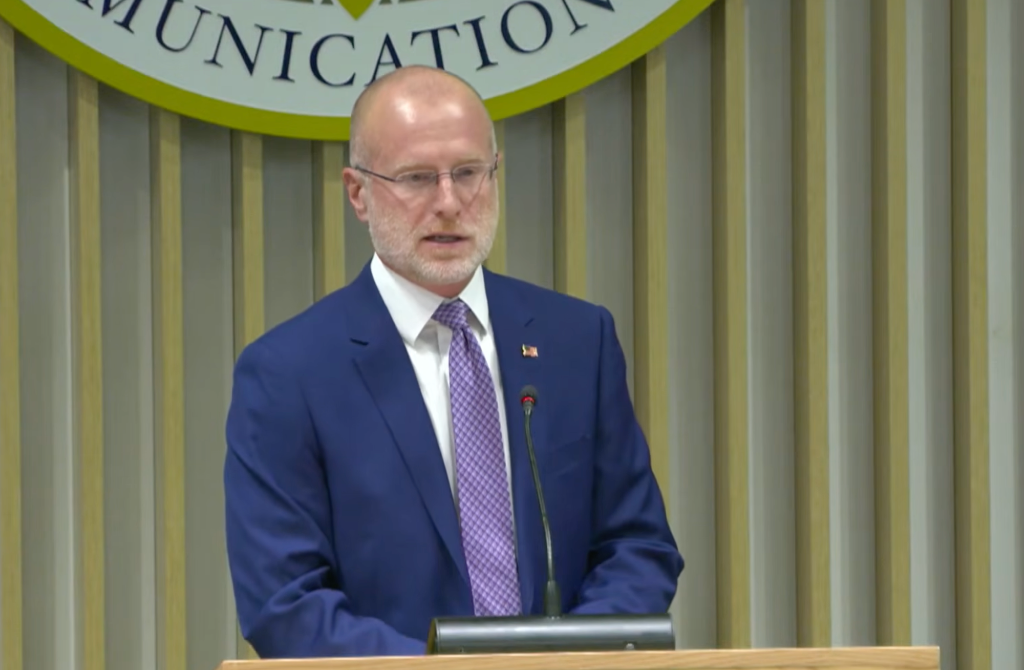
“We required a couple years ago that VoIP providers that seek direct access to numbers make robocall-related certifications to ensure they’re doing enough to combat these illegal calls,” FCC Chairman Brendan Carr said. “Today we take the next step in extending those requirements to all VoIP providers, not just new ones as we did back then.”
The item would also seek comment on other measures to prevent robocallers from accessing large swathes of U.S. phone numbers.
Wireline Competition bureau Chief Joseph Calascione said the agency made edits related to draft language that cited a robocall fine as an enforcement action. He said the edits clarified that a notice of apparent liability from the agency was not a “final adjudication.”
Major wireless carriers are arguing in court that the FCC’s process for issuing fines is unconstitutional, partly because they say NALs amount to an agency forcing them to pay fines without a jury trial. The agency has argued those technically compel payment, and a fined company could wait for a DOJ collection action.
The agency also adopted an item updating its low power TV rules and deleted 35 rule provisions overseen by the Office of Engineering and Technology. FCC Commissioner Anna Gomez concurred in part with the deletion, saying many of the rules were in fact obsolete but that she opposed repealing them without the usual notice and comment process.
Press conference
Carr reiterated he didn’t think the FCC was an independent agency at the press conference after the meeting. He said that the Communications Act of 1934 didn’t require the president to give a reason for firing a commissioner.
“Congress chose not to provide for-cause removal protections for FCC commissioners,” he said. “So any FCC commissioner can be fired by the president for any reason, or no reason at all.”
The FCC’s website had described the agency as independent from the president until Carr was asked about the issue Wednesday at a Senate hearing.
Asked Thursday whether he thought it was appropriate for President Donald Trump to press him to take action against networks Trump doesn’t like – Trump has repeatedly said licenses should be revoked over negative coverage of him – Carr said Trump “understands, unlike other officials in government, that broadcasters have licenses. They have a public interest obligation.”
“His position is that those broadcasters should comply with those public interest obligations,” Carr said. “That also happens to be my position as well.”
He emphasized his position that national programmers like Disney are exerting too much power over local TV stations. Many local stations are themselves owned by larger companies, and the agency is taking comments on whether it should loosen a national ownership cap on those local stations. There’s disagreement over whether the agency has the legal ability to do so.

Member discussion