FCC Splits On E-Rate Bidding Portal
The proposal passed despite pushback from stakeholders and commissioner Gomez.

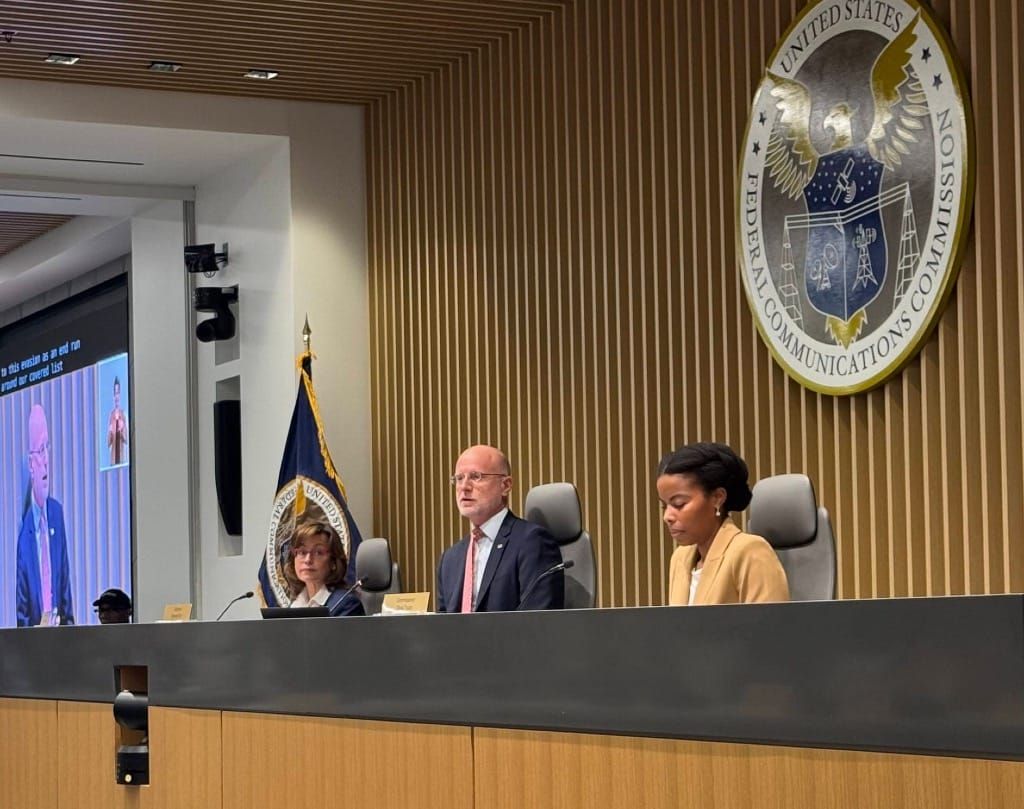
WASHINGTON, April 30, 2026 – The Federal Communications Commission showed internal divisions Thursday over a proposal to implement a competitive bidding portal in its E-Rate program.
At the agency’s April open meeting, Commissioner Anna Gomez dissented in part against the proposal, highlighting broader disagreements over how aggressively the FCC should overhaul the program’s applicant requirements.
Gomez had pushed to include a simplified document repository and extend the implementation timeline by an additional year to 2029. Both provisions, which she felt would have reduced the regulatory burden on affected institutions, did not make it into the final draft proposal.

Gomez, the sole Democrat on the Commission, criticized the bidding portal at the meeting saying the portal went “far beyond the IG’s [Inspector General] recommendation” which called for a simple bid repository.
The adopted proposal would require prospective service providers to submit bids responding to applicants’ requests for services and require applicants to upload all competitive bidding documentation, including bid evaluation and vendor selection documentation, and contracts, to the portal.
Gomez cited the Government Accountability Office, as well, which reviewed the E-Rate program in January, and found that it already had sufficient safeguards in place to prevent fraud and had adopted best practices to maintain program integrity. E-Rate was only one of five federal programs to do so.
The E-Rate program, which provides broadband subsidies to schools and libraries, is one of four initiatives funded through the FCC’s Universal Service Fund. Chairman Brendan Carr has made tackling fraud across those programs a central priority, arguing that stronger oversight is needed.
Gomez pushed back on that approach. “We should be going after the companies that perpetuate fraud,” she said. “We shouldn’t be making it harder for eligible subscribers to utilize the service.”
Stakeholders raised concerns about the FCC’s decision Thursday, saying the “unnecessary” overhaul will create new burdens for the schools and libraries.
"Today's vote represents a solution in search of a problem," said Joey Wender, executive director of the Schools, Health & Libraries Broadband Coalition, in a release. “We appreciate the Commission adopting some of our recommendations by directing the Universal Service Administrative Company to engage with stakeholders in developing the portal.”
The coalition's concerns include potential conflicts between the portal's framework and existing state and local procurement requirements, the costs of creating and managing the portal, and the risk of undermining ongoing efforts to streamline the E-Rate program. More than 80 groups wrote to the FCC opposing the order.
Republican Commissioner Olivia Trusty supported the changes, saying the bidding portal would bring “greater transparency and consistency” to the process and strengthen federal oversight.
Commission advances crack down on robocalls
While the commission was divided on E-Rate, it reached agreement on another major issue: expanding requirements to combat robocalls.
The proposal is part of a broader regulatory push to address fraud across the telecommunications ecosystem. Carr said the agency’s strategy is to target abuse “at every single portion of the life cycle of a call.”
The FCC is expected to continue that effort in May, when it will consider additional rules aimed at upstream providers in the call chain.
The FCC unanimously adopted additional items Thursday, including new satellite spectrum sharing rules and measures targeting Chinese testing labs and telecom providers.