FCC to Vote on Proposal for More Direct-to-Device Spectrum in August
The agency would consider 225 megahertz of unlicensed spectrum for the service

WASHINGTON, July 15, 2026 – The Federal Communications Commission is set to vote next month on a proposal to open up additional spectrum for direct-to-device satellite services, the agency announced Wednesday.
The item would propose opening up more than 225 megahertz of unlicensed spectrum for direct-to-device, the agency said in a release.
The agency didn’t specify which bands would be looked at for direct-to-device operation, just that they would be “some of the part 15 bands” and that they would “potentially support the capacity requirements and complement other bands for D2D services.”
The agency’s part 15 rules govern interference in certain unlicensed spectrum bands. One expert noted that that includes spectrum in the 2.4 GHz band, which is adjacent to Globalstar’s dedicated direct-to-device spectrum but does not itself total 225 megahertz.
“Permitting devices operating in the bands available for part 15 unlicensed devices to communicate with satellites could provide an opportunity for additional consumers to access direct-to-device services,” the agency wrote.
Satellite operators have been making an effort to scoop up airwaves set aside for direct-to-device, which have recently become a valuable commodity.
SpaceX is spending $19.6 billion on direct-to-device spectrum from EchoStar, and Amazon is buying Globalstar for $11.6 billion in a deal motivated by Globalstar’s similar spectrum holdings. Rocket Lab is also buying Iridium and it's spectrum for about $8 billion.
That spectrum is exclusive, where unlicensed spectrum can be used by anyone for free. It's used for Wi-Fi, Bluetooth, and hosts of connected devices.
The FCC has taken other steps to meet the demand for direct-to-device spectrum, approving Grain Management’s plan to lease 800 MegaHertz (MHz) spectrum for the service and allowing AST SpaceMobile to provide the service on AT&T and Verizon's terrestrial spectrum. It's still reviewing a request from AST to partner with Ligado and use the company's exclusive direct-to-device spectrum.
“This continues our efforts to supercharge American innovation in the D2D sector,” FCC Chairman Brendan Carr wrote in a Wednesday blog post. “Our recent FCC decisions on D2D have brought regulatory clarity and spurred nearly $50 billion in D2D spectrum deals over the last year alone.”
The agency said the draft of the item would be posted Thursday.
USF oversight
In Carr’s blog post, he said the agency would also be voting on a proposal to increase oversight of its $8 billion-per-year Universal Service Fund and its administrator, the Universal Service Administrative Company.
The proposal would “that would improve oversight, reduce administrative costs, and increase accountability of USAC and its Board of Directors,” Carr wrote. “Picking up on our efforts to conduct a top-to-bottom review of all aspects of USF, this NPRM reviews the structure and operating costs of USAC and USF administration for the first time since the FCC first selected the Administrator.”
The agency approved in May an inquiry into the program, which funds rural broadband networks as well as discounts for low income households and education and health care centers.
Among other things, that broader inquiry sought comment on the role fixed satellite broadband should play in the program.
Rural health care program
The agency will also vote on a proposal to update one of its USF programs that provides rural healthcare centers with broadband and telecom discounts.
“The item aims to cut red tape, reduce administrative burdens on program participants, and ensure that limited program funding reaches the rural hospitals and clinics that need it most, given increased program participation and service costs,” Carr wrote.
The program has increased spending in recent years, going from $470 million in 2023 to $600 million in 2025.
Broadcast ownership cap
The FCC will vote on an order that would eliminate its cap preventing broadcasters from amassing stations that reach more than 39 percent of TV households.
It’s become a hot-button issue in recent months. In approving the Nexstar-TEGNA merger on March 19, 2026, the FCC’s Media Bureau waived the 39% cap, triggering litigation in the U.S. Court of Appeals for the D.C. Circuit.
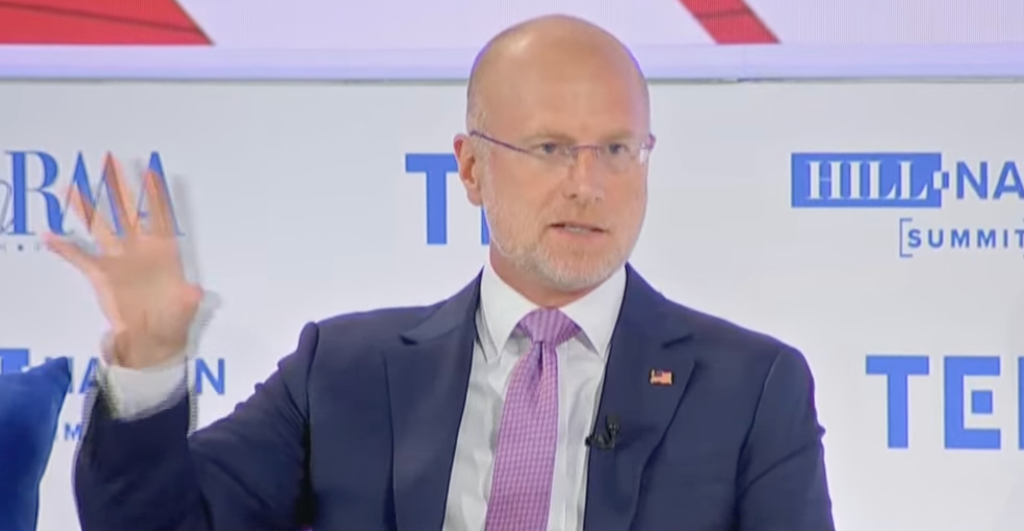
“This 39 percent rule, that was meant to constrain the power of the national programmers, has been doing the exact opposite,” Carr said at a Wednesday event hosted by The Hill, which is owned by Nexstar. “It’s really been holding back local broadcasters from reaching the scale necessary to invest in local news and journalism.”
Some Republican lawmakers have signaled they approve of Carr’s position that the agency can change the cap without approval from Congress. Their Democratic colleagues have maintained the FCC lacks the authority to alter the cap, which was first set out in 1996 and increased by Congress in 2004.
“Congress set the 39 percent national ownership cap in federal law, and only Congress has the authority to raise or eliminate it,” FCC Commissioner Anna Gomez, the agency’s lone Democrat, said in a statement. “The Commission cannot waive away that limit simply because these corporate behemoths want to get out from under it.”