SpaceX Planning Terrestrial Deployments to Support Direct-to-Device
The company added 1.7 million broadband subscribers in the second quarter

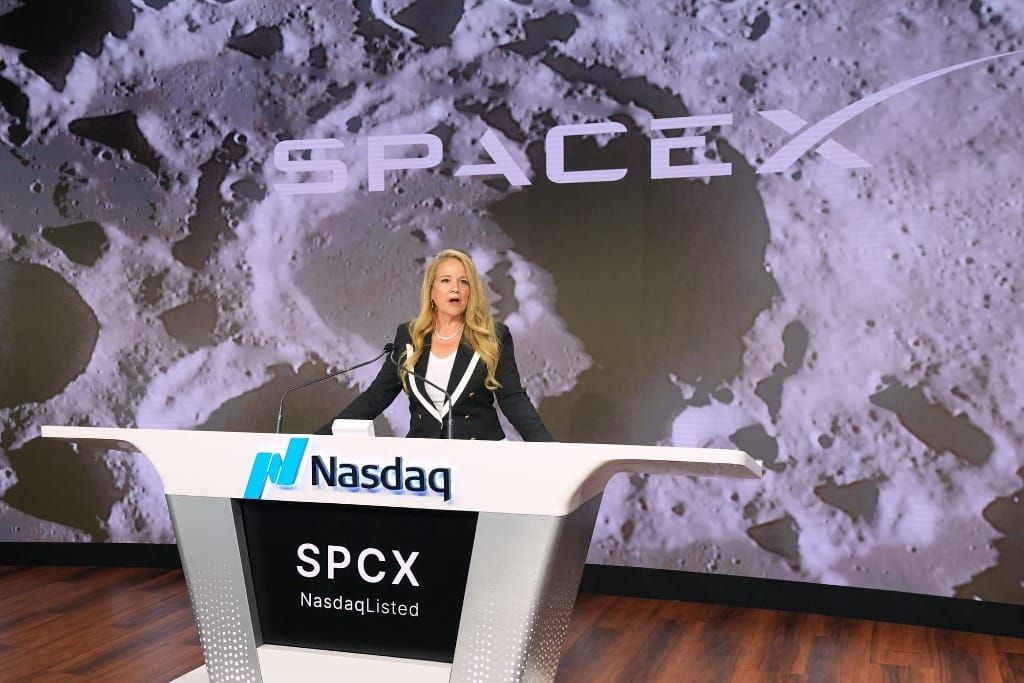
WASHINGTON, AUG. 4, 2026 – SpaceX reported 12 million consumer Starlink subscribers at the end of the second quarter, slightly below analyst expectations.
The metric increased by 1.7 million from the previous quarter and doubled over the course of the year.


The rocket company released its first quarterly report as a public company Tuesday afternoon. Its stock fell more than 7 percent in after-market trading.
Average revenue per user (ARPU) was $66, the same as the previous quarter and down from $85 a year ago.
Bret Johnsen, SpaceX’s CFO, said that as Starlink continued to roll out globally ARPU might be pushed down due to local offers. The company expected enough new subscribers would sign on that revenue would still increase.
Connectivity was SpaceX’s only profitable segment, posting $1.66 billion in operating income. The company did not disclose revenues or other metrics related to its nascent direct-to-device business.
The company was awarded $6 billion in government contracts in the quarter, which Chief Operating Officer Gwynne Shotwell said were “beginnings of additional capacity that we will bring online.”
The space unit, focused on developing and launching rockets, had $542 million in operating losses, and the AI division lost $1.26 billion.
Overall, the company reported $7.8 billion in revenues, ahead of expectations, and a net loss of $541 million. That’s down from $1 billion in net losses the same time last year.
Direct-to-device
Shotwell said the company expected to build out terrestrial infrastructure to support its direct-to-device service.
“We definitely intend to build out terrestrial components,” she said.
She and Musk described deploying Starlink dishes using the spectrum across the country, rather than larger radios.
“We feel reasonably confident that we can deploy a large number of small stations — they’re essentially just Starlink dishes that also provide connectivity in the mobile spectrum bands — and have them be all over the place,” Musk said.
The wireless industry, along with industry analysts, has repeatedly cast direct-to-device as a complement to terrestrial networks rather than a direct threat. Carrier and tower executives have cited SpaceX’s comparatively scant spectrum resources and the brutal physics of serving dense areas with signals from space.
Still, Shotwell said that SpaceX had ambitions to take some market share from the major wireless carriers.
“I anticipate us to be able to acquire quite a few of their customers, because I think our service will be better,” she said.
Starship
CEO Elon Musk said on the company’s earnings call that the company’s next test launch of its Starship rocket, set for later this month, would for the first time deliver Starlink V3 satellites into operational orbit.
Assuming the company gets regulatory approvals, the plan is to catch the Starship unit after that next launch, rather than have it splash down into the ocean. Catching the rocket out of the air is important for the company’s plans of reusability.
SpaceX says those V3 satellites have 10 times the downlink capacity of its V2 satellites and expects them to provide a big performance and capacity boost.
A Starship test last month took 20 V3 satellites into orbit, but they were only used to do some tests before being sent to burn up in the atmosphere.
Launching large Starlink V3 and next-generation direct-to-device constellations will require the massive Starship rocket to become reusable. SpaceX is aiming to accomplish that this year, but MoffettNathanson analysts have put it further in the future.
Musk said the Starship unit launched last month was still floating in the ocean after it landed. The company has retrieved it yet, but based on data from the rocket he said he considered the longstanding problem of withstanding the immense heat of reentering the atmosphere “solved.”