Federal Trade Commission Chairman Sees AI Antitrust Risks Upstream
FTC Chairman Andrew Ferguson calls competition among large language model developers ‘pretty ferocious.’

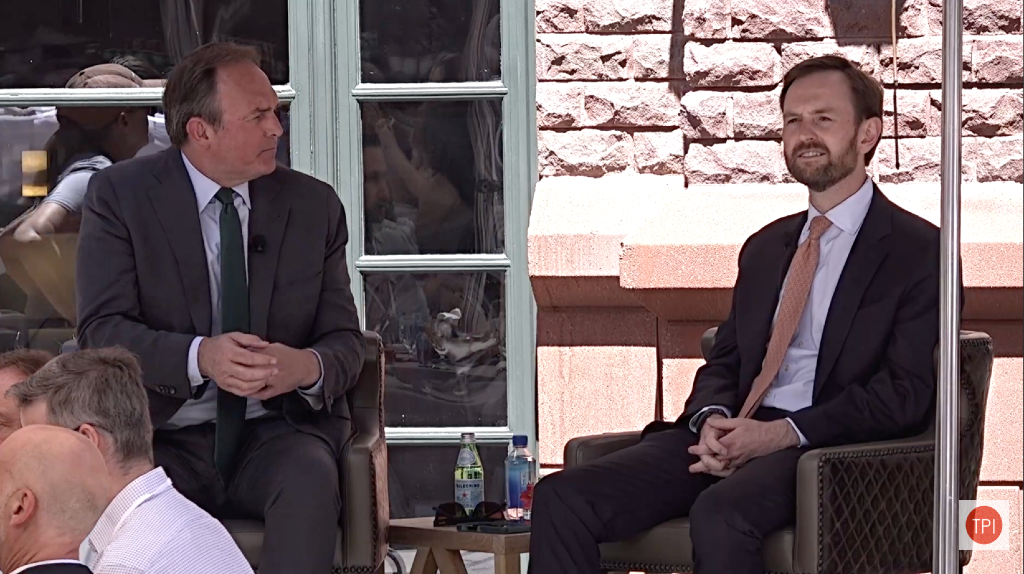
August 19, 2026 – FTC Chairman Andrew Ferguson sees the biggest competitive risks in artificial intelligence not among AI models, but in the chips, power and construction needed to build them.
Speaking during a fireside chat with CNBC’s news anchor and business journalist Brian Sullivan at the Technology Policy Institute’s Aspen Forum, Ferguson said competition among large language model developers already looks healthy, pointing to near weekly model releases from the likes of Anthropic, OpenAI, Google and Meta as evidence.

His concern, he said, is that existing monopolies in inputs like chips, energy and construction could use their market power to squeeze downstream AI developers, or that companies could acquire their way into controlling a chokepoint in that supply chain.
“I don't want either existing monopolies to use their monopoly power to maintain their monopolies in illegal ways,” Ferguson said, adding that he doesn’t want companies buying up rivals to create monopolies “somewhere in the supply chain.”
Pressed on whether four or five major AI labs represent enough competition, Ferguson declined to put a number on it, saying only that the cost of building a competitive model appears to be falling, a trend he called a good sign for competition regardless of how many players remain.
On the consumer protection side, Ferguson said FTC enforcement in the AI space has focused on companies whose marketing promises exceed what their products actually deliver, comparing it to enforcement against any other industry that misrepresents its products.
He drew a contrast with the prior administration's approach, which he said targeted AI applications simply because they had a “potentially illegal” use, a standard he said his FTC has abandoned in favor of policing false claims specifically.
Ferguson also defended the FTC’s scrutiny of tech platforms’ content moderation practices, an issue that has occupied much of his tenure since a February 2025 inquiry into what he called platform's censorship of others' speach.