FTC Warns of Rising Robocall Threat Driven by AI, Foreign Scammers
Officials highlight enforcement efforts at Senate oversight hearing.

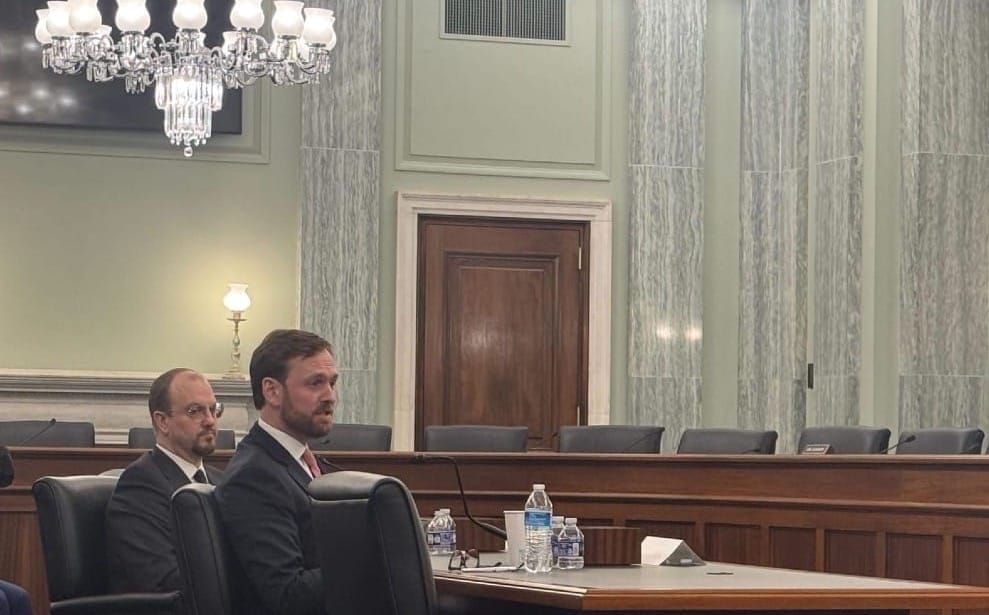
WASHINGTON, April 15, 2026 – Officials from the Federal Trade Commission warned lawmakers Wednesday that robocalls remain a growing threat to consumers, fueled by artificial intelligence and overseas scam operations.
Testifying before the Senate Commerce Science, and Transportation Committee, FTC Chairman Andrew Ferguson (R) said the scale of the problem has intensified in recent years, with foreign-based actors playing a major role. He emphasized coordination with the Federal Communications Commission.
“We cannot overstate how big an overseas problem this is for us,” Ferguson said. “How many of these scams are lobbed in by foreigners in call centers and other operations, in parts of the world where they don’t bat an eye at the risk of civil enforcement from the FTC.”

Robocalls, automated, pre-recorded calls often used by telemarketers, have long been a source of consumer complaints. The FTC has taken enforcement action since establishing the National Do Not Call Registry in 2003, filing 173 lawsuits against hundreds of companies and individuals, and collecting nearly $400 million in penalties.
Still, complaints remain high with the agency receiving more than 2.6 million complaints, while 4.8 million new numbers were added to the registry in fiscal year 2025 alone.
Ferguson said emerging technologies are making the problem worse. “AI is definitely contributing to it,” he said, noting that it allows scammers to target victims more precisely and create more convincing schemes, including voice cloning.
To address those risks, the FTC has launched new initiatives, including a “Voice Cloning Challenge” aimed at developing tools to detect AI-generated voices and prevent fraud. The contest encouraged solutions that use artificial intelligence to identify synthetic speech patterns and flag potential scams.
“That same technology can be used to help identify when voice cloning is happening,” Ferguson said, adding that “one of the most important ways to identify when AI is involved in a scam is other AI tools.”
Much of the challenge, he said, lies in stopping fraudulent calls before they reach consumers, particularly when they originate overseas.
FTC Commissioner Mark Meador (R) also participated in the hearing, as lawmakers pressed the agency on whether additional authority may be needed.
Ferguson said the FTC is evaluating its current tools but did not rule out seeking new powers from Congress, signaling that further action could be on the horizon as robocall threats continue to evolve.