GOP Senators Want Phone Unlocking Mandate
The cable industry and SpaceX have also pushed for the policy

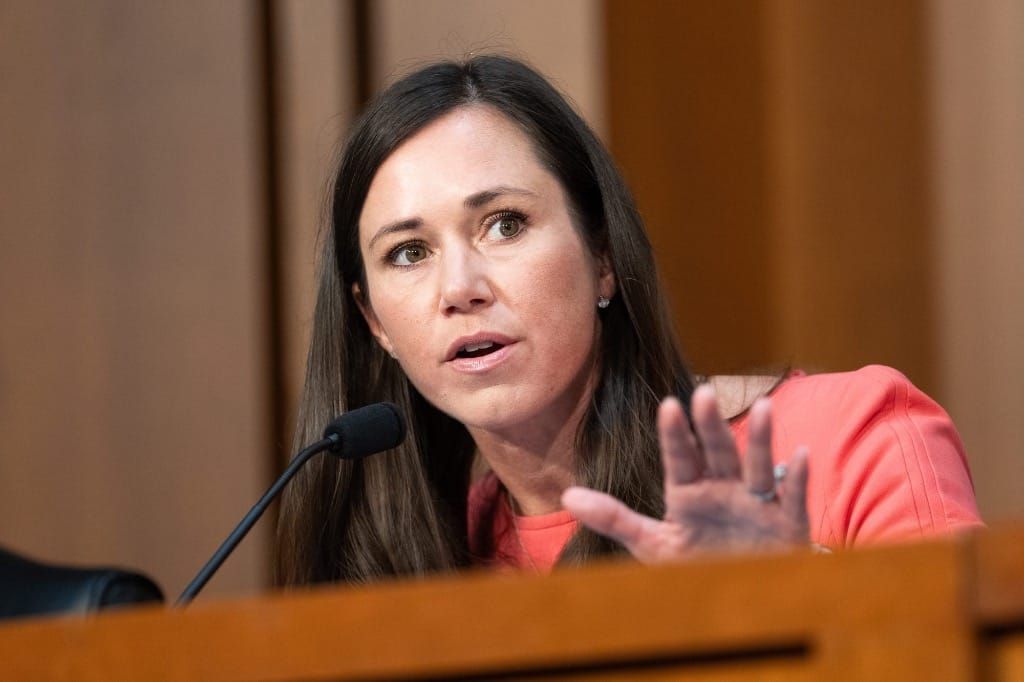
WASHINGTON, Aug. 3, 2026 – Five Republican senators want the Federal Communications Commission to adopt a phone unlocking requirement.
Sen. Katie Britt, R-Ala., wrote a letter to FCC Chairman Brendan Carr Thursday asking for the move. It came weeks after two letters from House Republicans making the same request.
The agency has an open rulemaking on the issue. In 2024 the FCC sought comment on requiring mobile carriers to make phones usable on other networks after 60 days. By default, carriers largely require customers to pay off devices before unlocking them.
“These ‘locked’ phones create artificial restrictions for consumers that hinder competition and keep familiar in overpriced plans even when far more affordable options are readily available,” Britt wrote. “The inconsistency among carrier practices functions as a barrier that restricts consumer freedom and limits competition.”
Britt and her colleagues said the agency should adopt a 180-day unlocking mandate. That’s what Rep. Scott Fitzgerald, R-Wis., argued for last month.
It’s also what the cable industry has argued for. NCTA, the industry’s main trade group, has told the FCC that an unlocking requirement would spur competition by making switching easier.
Cable giants Charter and Comcast have been winning over wireless customers with one-year free lines and cheap bundles with fixed broadband. They count more than 22 million mobile subscribers between them.
The carriers have opposed an unlocking mandate on the grounds that it would make handset fraud much easier. NCTA agreed to an extent, which is why it pushed fro 180 days rather than the FCC-proposed 60 days.
Carr, a commissioner at the time, voted in favor of seeking comment on a universal 60-day unlocking proposal, saying it “might allow us to create a more level playing field” given a patchwork of provider-specific obligations.
Under his chairmanship, the agency has made another move to address the patchwork. In January, the agency granted Verizon’s request to ditch its obligation to unlock phones within 60 days.
The requirement was a condition of a 2007 spectrum purchase and did not apply to the other national carriers.
“By waiving a regulation that incentivized bad actors to target one particular carrier’s handsets for theft, we now have a uniform industry standard that can help stem the flow of handsets into the black market,” Carr said in a statement at the time.
SpaceX also signed on to a May 28 letter arguing for a 180-day unlocking rule, again saying locked phones reduced competition by making switching more difficult.
The satellite company has big plans for its Starlink Mobile direct-to-device service, aiming for speeds comparable to terrestrial networks. Investors predict the company is looking to directly compete with the national carriers.
Indeed, Semafor reported last week that SpaceX was considering competing in the FCC’s upper C-band auction next year or even buying a mobile carrier to compete.
Telecom analysts at MoffettNathanson think it’s more likely SpaceX will try to secure a mobile virtual network operator (MVNO) deal to provide service partially on one of the carrier’s infrastructure. The carriers have repeatedly shot the idea down — it’s how the cable companies provide service, and they’re the carrier’s biggest competitors.
SpaceX could potentially angle for an MVNO by hoovering up enough spectrum assets to trade, the group has noted. But buying a telecom carrier or building out a network could likely be too much of a headache.
Satellite industry analyst Tim Farrar noted on X last week that upper C-band spectrum has strict deployment deadlines under the FCC’s recently adopted rules, which for now can’t be satisfied by satellite service. That would make the auction unappealing, he wrote, even as a means of driving up prices in retaliation for carriers’ MVNO refusal.