Guthrie, Pallone Introduce Bill to Increase Oversight of FCC Covered List
The agency recently granted extensions to participants in its Rip and Replace program

WASHINGTON, Sept. 24, 2026 – Bipartisan House members want more control over the process for banning new Chinese tech equipment from the U.S.
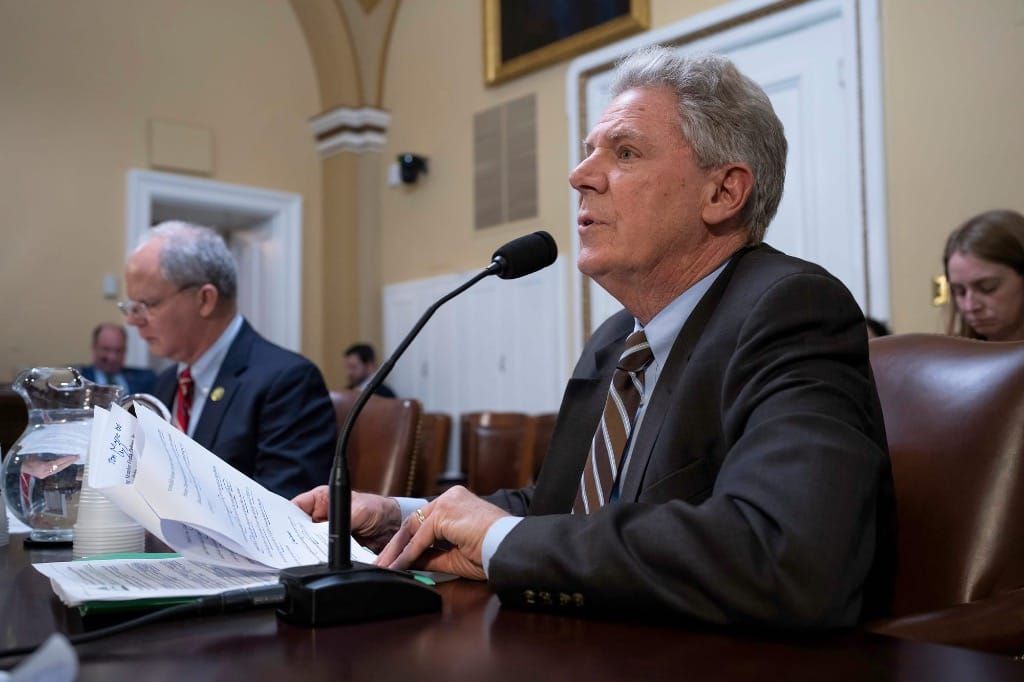
House Commerce Committee leaders filed Wednesday a new bill that would give them additional oversight of the Federal Communications Commission’s list of banned products.

Gear produced by Chinese firms like Huawei and ZTE have been chief targets of bans since U.S. lawmakers deemed them a national security risk in a 2019 law. They feared the companies’ products could be used for espionage given Chinese laws requiring cooperation with intelligence services, something the companies have denied.
U.S. President Donald Trump hosted Chinese President Xi Jinping at the White House Thursday.
The bill would expand the kinds of technology that could be added to the FCC’s Covered List — the list of banned gear — and limit inclusion on the list to equipment made by companies controlled by a foreign adversary. It would also increase Congress’s oversight of the process.
“The current process for identifying and barring malicious foreign technology has worked in many cases, but lacks the transparency, consistency, and clarity needed to meet our long-term national security needs as technology rapidly advances,” Reps. Brett Guthrie, R-Ky., and Frank Pallone, D-N.J., the committee’s chairman and ranking member, said in a joint statement.
Recently, the FCC has added routers, drones, and certain robots produced in any country outside the U.S. to its Covered List. The agency cited national security determinations made by other federal agencies.
The FCC has been granting temporary exemptions from those bans, most recently to router suppliers for two broadband trade groups, USTelecom and CTIA. The groups said their companies’ suppliers needed to make changes to already approved gear to avoid disruptions given global component shortages.
Guthrie and Pallone’s bill would require the FCC to notify Congress before anything was included on the Covered List, and allow Congress to nullify any additions it didn’t agree with.
The lawmakers’ committee recently advanced a set of five telecom bills. A sixth one that cleared the Communications and Technology Subcommittee at the same time as the others was not included.
That bill, the GUARD Act, would have effectively loosened the Trump administration’s ban on foreign-made robots and limited restrictions to units made by officially designated foreign adversaries like China and Iran.
“I appreciate the administration’s recognition of this threat,” Guthrie said during the subcommittee markup on Sept. 1. “I do have some questions, however, about how an overly broad approach could hurt American supply chains and our ability to compete against China in the long term.”
Rip and Replace extensions
The bill made updates to the 2019 Secure and Trusted Communications Act. That law also set up an FCC program that reimbursed smaller providers for swapping Chinese gear out of their networks.
Earlier this month the FCC granted additional deadline extensions to four providers participating in the program. Removal work was generally supposed to be done May 8, after a $3 billion shortfall in the program was addressed and companies started receiving full reimbursements.
The providers that got more extensions this month were supposed to complete work by early August or September, deadlines that were pushed as far as March 2027 in one case. They each cited supply chain delays and, in one case, a ransomware attack.
The FCC granted 30 similar extensions earlier this summer. The agency had granted repeated extensions over the past few years because of the lack of funds, but has been saying it’s less interested in doing that now.
For companies seeking an extension, “Providing adequate explanation and support is imperative given that recipients were granted full funding well over a year ago. The Bureau will deny requests that lack adequate support,” the agency wrote.
At least six other providers have submitted extension requests since the latest batch of approvals.
In the FCC’s semiannual status report on the program, it told Congress in June that 53 of the 126 approved projects had been completed.