
‘How Do We Call for Help?’ Rural Residents Push Back on FCC’s Copper Retirement
Wildfire survivors, first responders, seniors and rural residents warn that landlines remain essential.

Jericho Casper
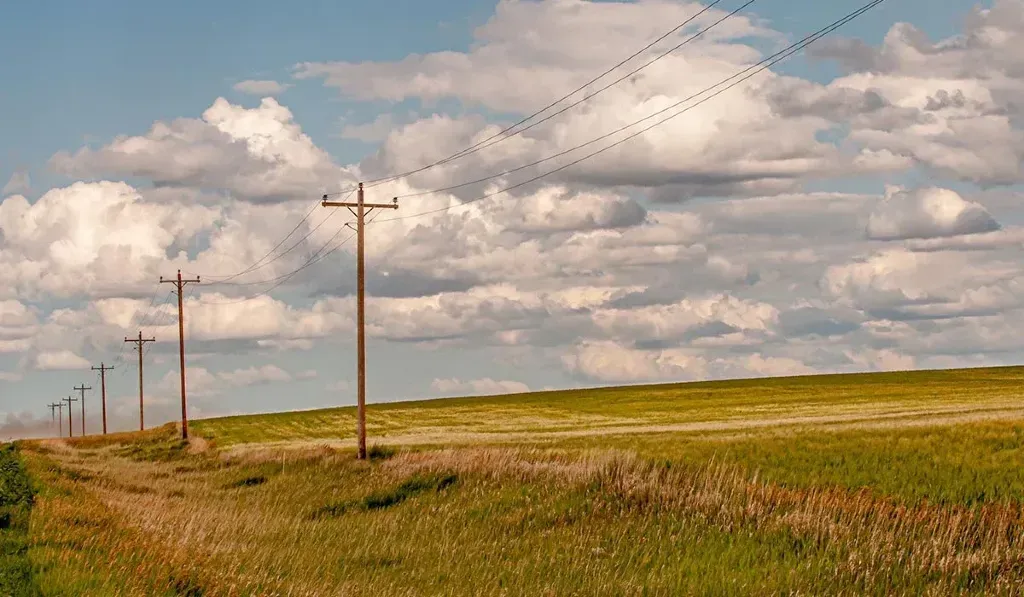
WASHINGTON, Oct. 2, 2025 – When flames reached the edge of her property last fall, Alison Denning’s cell phone stopped working. Her copper landline didn’t, and it may have saved her life.
Denning was one of nearly two hundred Americans who filed personal stories with the Federal Communications Commission this week, urging regulators not to allow carriers to shut off traditional landline service. Many said they depend on copper connections during emergencies, power outages, or because they cannot safely use wireless technology.
The comments come as the FCC weighs a proposal to overhaul its rules on copper retirement. In a July rulemaking, the Commission suggested eliminating the agency’s filing requirements for network changes and for grandfathering legacy services to speed service discontinuance.
In her appeal to the FCC, Alison Denning recounted a more recent scare when wildfires swept through her community.
“Tragically last fall many homes were lost to fire where I live. The power was turned off as a precaution, and cell phones stopped working. But, my landline continued to be reliable,” Denning recalled.
“The fire came up to my property, but I was able to make calls, receive fire alerts and evacuate safely. In other fires lives were lost because alert systems failed on cell phone systems,” Denning wrote. “For decades I have been paying an extra fee on my phone bill to help maintain copper lines. Where has that money gone?”
Denning’s story was echoed by other rural residents who said copper lines remain their only lifeline in emergencies.
“There are several crucial reasons to keep copper landlines. First and foremost: In emergencies, often there is no power,” wrote California resident Janet Tache, in comments. “I have lived through multiple emergencies when there was no power and only my landline worked – tornadoes, fires, earthquakes, landslides, heavy winds.”
“We live in a remote area where cell service is poor,” Tache said. “We customers have paid high prices for years to get and maintain landlines. It is wrong to try to remove them. We really need them.”
According to the U.S. Chamber of Commerce, approximately 69 million Americans still live in households with a landline phone as of July 2024, nearly 20 percent of the population.
Consumer advocates and unions backed rural residents
Public Knowledge and the Communications Workers of America, a union representing roughly 700,000 telecom and media workers, warned that the FCC risked violating the Communications Act if it accelerates copper retirement in ways that disconnect rural, low-income, and vulnerable populations.
They pointed to Congress’ 2017 Improving Rural Call Quality and Reliability Act requiring the FCC to “ensure voice communications to all customers in the United States” and “prevent unjust or unreasonable discrimination in the delivery.”
The groups rejected blanket streamlining of discontinuance applications, and urged the FCC to preserve the existing Adequate Replacement Test – a safeguard requiring carriers to demonstrate that replacement services are just as reliable and affordable as copper.
AARP, representing nearly 38 million Americans over age 50, told the FCC that older adults disproportionately rely on landlines and urged the FCC to maintain copper networks until consumers have access to reliable and affordable substitute services.
Other groups split sharply
Industry groups countered that maintaining copper was both costly and unnecessary.
The Fiber Broadband Association said every dollar spent on outdated copper was a dollar not invested in fiber. The U.S. Chamber of Commerce pressed the FCC to go further, identifying obstacles to network modernization at the state and local levels.
USTelecom asked the FCC to grant conditional forbearance, meaning if carriers meet certain conditions they wouldn’t need to go through the full-blown Section 214 discontinuance approval process.
NTCA – The Rural Broadband Association echoed that small rural providers face high costs maintaining aging copper, and streamlining would help them expand fiber. But they urged caution to ensure 911 access and consumer protections aren’t lost.
INCOMPAS supported easing some burdens, such as notice requirements for grandfathered services, but said modernization must proceed in a manner that “safeguards critical public safety functions, and ensures that consumers do not lose access to reliable and affordable services during the transition.”
Residents said their safety was on the line
As the FCC weighs how quickly to move away from copper, many commenters pressed the agency not to forget why universal service rules were created in the first place.
“Without a cell phone, our lives, literally, depend on internet-based communication which is then dependent on three things: 1) electrical power, 2) cable power AND 3) internet modems, all of which are unstable and unreliable,” wrote rural Wisconsin resident Carol Seibert.
“Weather patterns are becoming more violent, taking out power and disrupting cable connections for longer periods of time. This leaves aging, vulnerable people with NO WAY to contact help in case of an emergency. What if someone has a life-threatening event such as a heart attack or stroke? What if there’s a fire? How do we call for help?” she posed.
Responses to stakeholders are due Oct. 27, after which the FCC will begin weighing whether to finalize the copper retirement plant.





Member discussion