Indian Minister Said Country Grew Broadband Subscribers From 60 Million to 1 Billion in a Decade

Mobile data prices fell 97 percent over 10 years, dropping from $3 per gigabyte to nine cents

Indian Minister Said Country Grew Broadband Subscribers From 60 Million to 1 Billion in a Decade
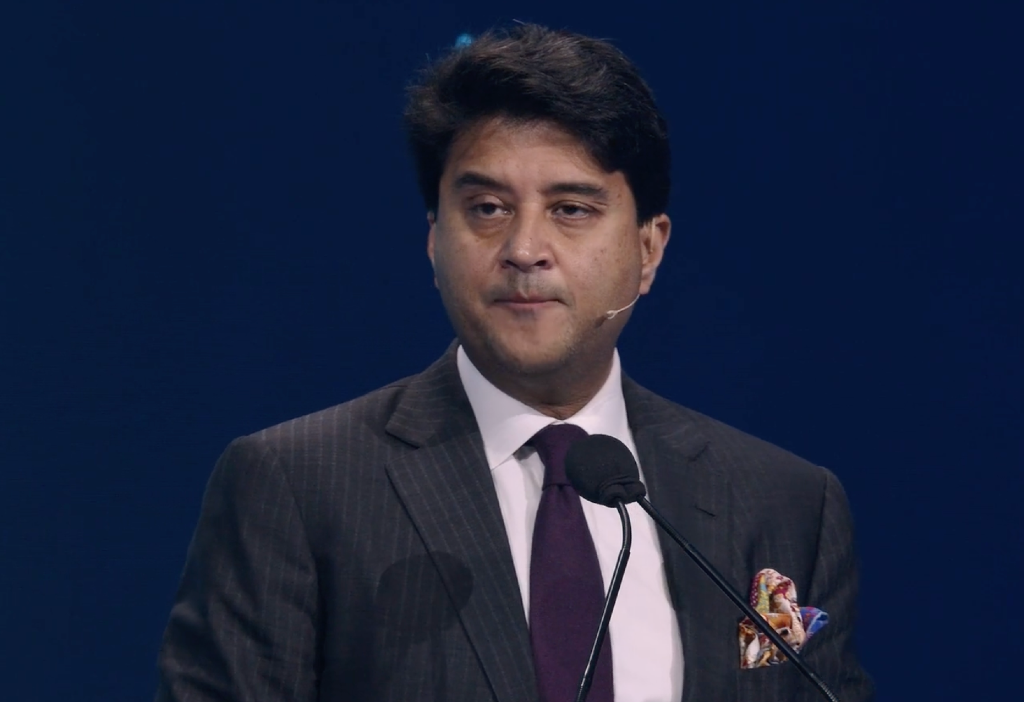
Photo of H.E. Jyotiraditya M. Scindia, India's Minister of Communications, speaking at Mobile World Congress in Barcelona

BARCELONA, March 7, 2026 — India has executed one of the fastest 5G expansions in the world, its communications minister said Tuesday at Mobile World Congress, describing a decade of connectivity investment that has reshaped how more than a billion people access the internet.

Jyotiraditya Scindia, India's minister of communications for the northeastern region, said the country deployed 500,000 base stations at a cost of $4 billion, covering 99.9 percent of its districts.

Some 400 million of India's 1.2 billion mobile subscribers are already on 5G networks, a figure he projected would surpass 1 billion by 2030, he said.

The rollout reflects a broader decade-long transformation, Scindia said. Mobile data prices fell 97 percent over ten years, dropping from $3 per gigabyte to nine U.S. cents, and broadband subscribers grew from 60 million to over 1 billion in the same period. Average monthly data consumption per user reached 32 gigabytes, among the highest in the world, he said.

India's digital payments infrastructure has scaled alongside its connectivity gains, Scindia said. The country's Unified Payments Interface, a state-built digital transactions platform, processes 20 billion transactions per month and moves nearly $4 trillion annually.

Those transactions reach deep into India's 650,000 villages, primarily through small retailers and low-value purchases, he added.

On fiber, Scindia outlined BharatNet, a $17 billion government program connecting 256,000 clusters of three to four villages each via broadband optical fiber, reaching 380,000 villages in total. He pointed to research stating that every 10 percent increase in broadband penetration lifts GDP by 1.5 percent.

Scindia said India is already positioning for sixth-generation wireless technology through the Bharat 6G Alliance, a government-backed research initiative focused on open and interoperable network architecture and connectivity for rural and remote areas. India's ambition is to be a partner in shaping global 6G standards rather than adopt them after the fact, he said.

He framed India's connectivity expansion as an AI enablement strategy, saying intelligent networks capable of predictive maintenance, real-time fraud prevention and adaptive service quality depend on the broad infrastructure base India has built over the past decade.

Member discussion

Popular Tags