Is the FCC an Independent Agency? Legal Experts Say Yes

Experts dispute FCC Chairman Brendan Carr's denial of agency independence

Is the FCC an Independent Agency? Legal Experts Say Yes
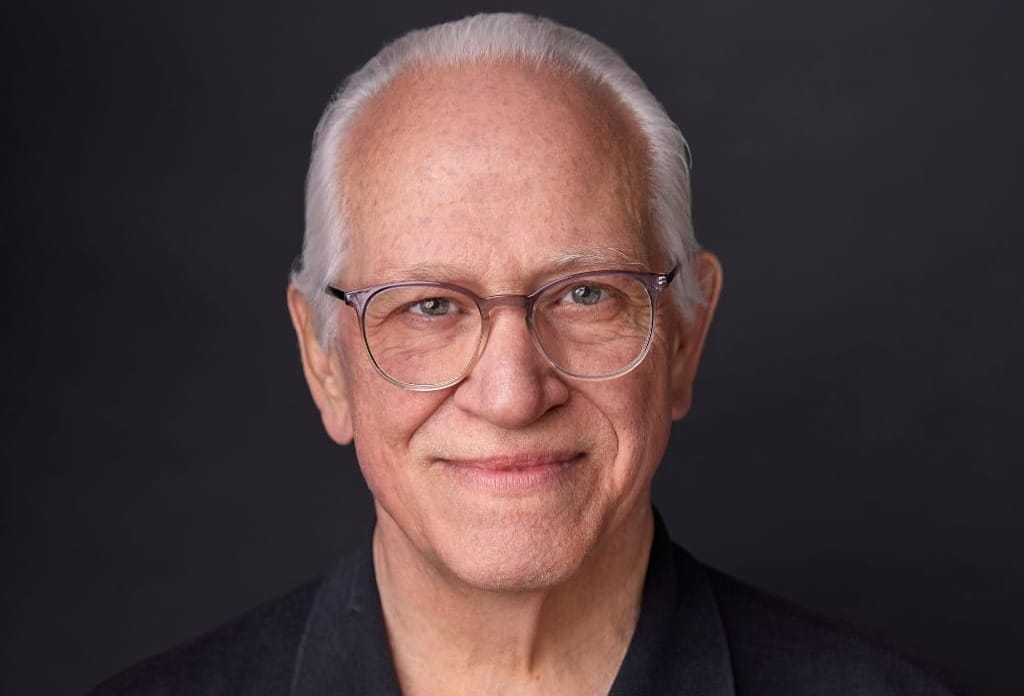
Photo of Bob Corn-Revere, chief counsel at the Foundation for Individual Rights and Expression, from FIRE.

WASHINGTON, Dec. 18, 2025 – Communications law experts pushed back Thursday after FCC Chairman Brendan Carr and Republican Commissioner Olivia Trusty asserted the Federal Communications Commission is not an independent regulatory agency.

Citing Supreme Court precedent in Wiener vs. United States and the commission structure Congress established in the Radio Act of 1927 and the Communications Act of 1934, former FCC chief counsel Bob Corn-Revere and Public Knowledge senior vice president Harold Feld said Congress deliberately designed the FCC to operate independent from executive influence.

“Congress made it very, very clear: we want this to be an independent commission, to exercise independent judgment and to be insulated from political influence to the greatest extent possible,” Feld told Broadband Breakfast

“Applying the law as it exists today, I would say that Chairman Carr is wrong in his legal interpretation,” Feld said. “I understand the theory,” but “until such time as the Supreme Court overrules Humphrey's Executor, they are wrong,” he responded to Carr and Trusty.

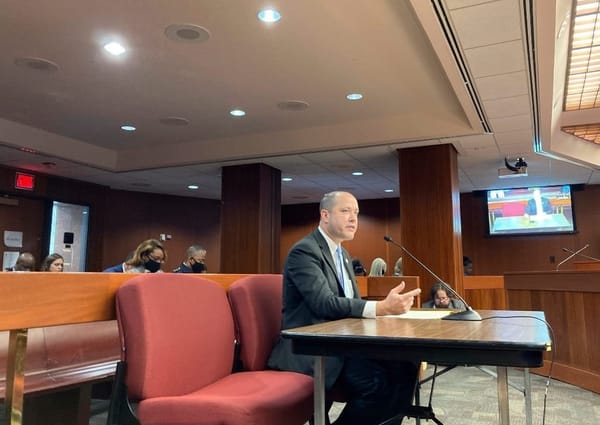
The pushback followed a contentious Senate Commerce Committee oversight hearing Wednesday in which Carr and Trusty denied the FCC’s independence. Shortly after, the FCC removed a reference describing itself as an ‘independent’ U.S. government agency from its website.

Trusty cited the absence of explicit “for-cause” removal protections for FCC commissioners as a justification for characterizing the FCC as not independent. Legal experts, however, say that historical precedent and protections implied by Congress when establishing the agency demonstrate otherwise.

Citing Wiener v. United States, a 1958 Supreme Court decision that built on the precedent set in Humphrey’s Executor v. United States, Feld said the decision solidified the distinction between purely executive officers, and officials in agencies with quasi-legislative or quasi-judicial functions, whose independence Congress may protect.

He said the key was Congress’s intent: If Congress clearly structured the agency to be independent, through fixed terms and balanced partisan membership, then independence is implied.

“Congress intended these guys to be independent,” Feld said. “They're an independent commission, despite the fact that the statute does not explicitly provide for-cause removal.”

Feld also noted the legislative history of the Federal Radio Commission, the FCC’s predecessor, which Congress initially considered placing under the Secretary of Commerce but ultimately established as an independent body.

FCC called ‘the definition’ of an independent agency  

Building on Feld’s perspective, Bob Corn-Revere, chief counsel at the Foundation for Individual Rights and Expression, and former FCC chief counsel, weighed in.

“The FCC is the definition of what is commonly understood as an ‘independent’ regulatory agency, and is structured accordingly in the Communications Act,” Corn-Revere told Broadband Breakfast

He highlighted that the FCC’s structure mirrors that of other independent agencies: Commissioners require Senate confirmation, no more than a bare majority can be from the same political party, the agency reports to Congress rather than the President, and Congress provides oversight.

Corn-Revere noted that the FCC and other New Deal era regulatory agencies have always occupied an uncertain status in the law. “Are they part of the executive branch? Are they part of the legislative? Are they somewhere in between?” he posed. 

He also addressed a point Carr raised during the hearing: That the FCC was created three years before Humphrey’s Executor, the landmark Federal Trade Commission decision establishing limits on presidential removal of commissioners. “Carr was trying to make a point about that, but he was cut off,” Corn-Revere said.

Corn-Revere was critical of the Senate oversight hearing itself, calling it a “missed opportunity” for substantive review. He argued that questioning the current FCC about actions taken by previous administrations was “not oversight for the current FCC,” and said the hearing largely failed to examine whether the FCC’s public interest mandate ever gave Carr such “granular control over programming.”

FCC’s denial of independence ‘a significant departure’

As the FCC publicly challenges its own independence, the consequences for press freedom have grown more immediate and severe, said Clayton Weimers, executive director of Reporters Without Borders.

“A full-throated denial of the FCC’s independence is what we got, and that is quite a departure for many of us and our understanding of how the FCC should operate,” Weimers told Broadband Breakfast.  “It stands to reason from Carr’s logic that the FCC is a political instrument of the White House, and that is how he intends to wield it.”

In an op-ed published in the Guardian, Weimers argued: If Carr believes the FCC is subservient to the president, then he is the last person who should be claiming the power to regulate journalists’ editorial decisions under the FCC’s “public interest” standard. By his own admission, he has every incentive to define the “public interest” in whatever manner pleases his boss.

“It sends a pretty clear message to the news media that there is an attack dog in Washington who will come after you if you don't toe the party line,” Weimer said. “The result is already manifesting itself in the form of self censorship. Journalists are going to be a little more careful about pursuing controversial stories.”

He pointed to recent events at California radio station KCBS, where one anchor's reporting on local ICE activity triggered an FCC investigation, resulting in demotion of the anchor. “It’s censorship, plain and simple,” Weimer said.

Member discussion

Popular Tags