Judge Expects Trump Administration to Reinstate Digital Equity Funding
A federal judge struck down one part of the law standing up the program, which a government lawyer has said would allow the program to move forward

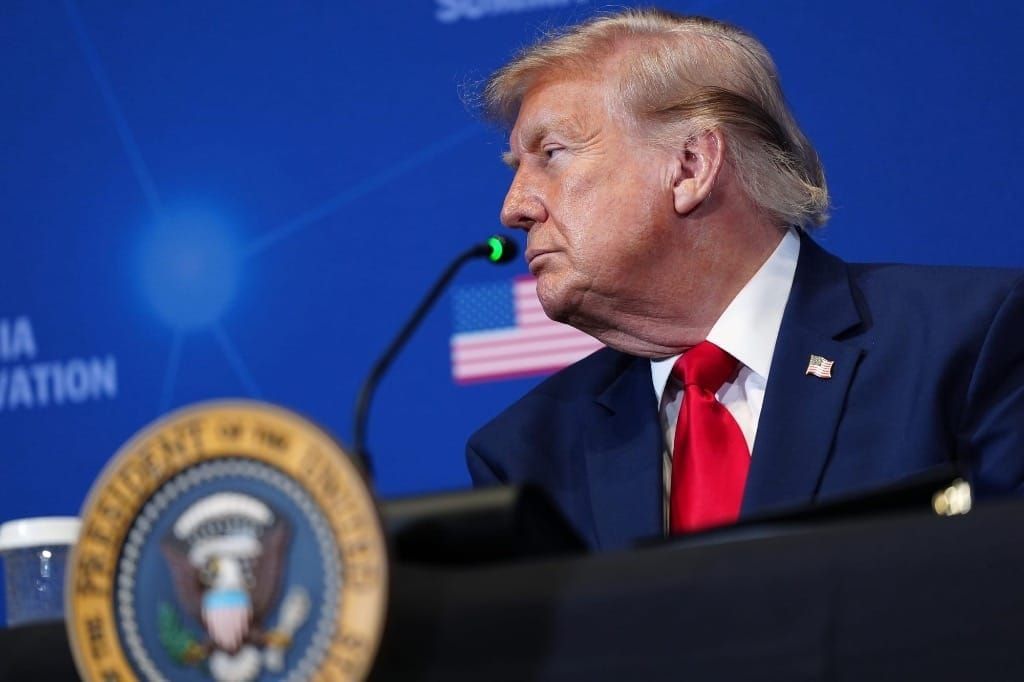
WASHINGTON, July 16, 2026 – A federal judge said Wednesday he expects the Commerce Department to reinstate at least $1.25 billion in canceled digital equity grant funding.
U.S. District Judge John Bates denied the Trump administration’s motion to dismiss a lawsuit against the administration over its cancellation of the grant funding last year.

In the same opinion, he said the government was correct that a provision of the Digital Equity Act was unconstitutional because it directed funding to projects targeted at racial minority communities.
During a hearing in the case last month, Commerce Department attorney Patrick Butler said if that provision were severed, the program at issue would be able to move forward.
“Because the government’s only objection to the Digital Equity Act is this singular unconstitutional provision, it has now committed to restoring the Competitive Grant Program upon receiving this judicial determination,” Bates wrote in the Wednesday opinion.
The National Digital Inclusion Alliance, a grant winner that sued after the funding was rescinded, said it was still determining how to proceed with the case and did not know what the administration would do.
Commerce’s National Telecommunications and Information Administration, which administered the funding, did not say whether the agency would reinstate the program.
In response to an inquiry, an NTIA spokesperson simply said: “We are pleased the court has agreed with President Trump and Secretary Lutnick that the Digital Equity Act discriminated on the basis of race and therefore violates the Constitution.”
The law provided $2.75 billion in funding for projects aimed at increasing broadband adoption, like digital skills training and device subsidies. It stood up two main programs, a $1.44 billion pot for state governments and $1.25 billion for cities and nonprofits — the latter was the focus of this case, but both were canceled due to the provision Bates struck down Wednesday.
The law also had a Tribal set aside of $250 million that was not canceled.
The two main programs were supposed to be targeted at “covered populations” in which broadband adoption is below average. That included the elderly, veterans, low-income households, and racial minorities, among others.
The Trump administration took issue with that and canceled grants issued to states and nonprofits last year. On May 8, 2025, President Donald Trump posted on his Truth Social platform that the program was “a RACIST and ILLEGAL $2.5 BILLION DOLLAR giveaway” that he was ending “IMMEDIATELY.”
The next day, NTIA sent out cancellation notices to grant winners.
NDIA later sued in the U.S. District Court for the District of Columbia, arguing the White House lacked the authority to cancel the nonprofit program it participated in. The Trump administration sought to have the case thrown out of court, an effort Bates denied Wednesday.
But given what Bates took as Commerce’s commitment to restart at least the nonprofit program if he severed the racial provision, Bates wrote he would have to consider whether NDIA’s complaints about executive power were moot going forward.
He said in a separate order both sides would have to file a status report by Aug. 1 and propose a schedule for “any further proceedings in this matter,” given the government’s claim it would reinstate the program.
“We are proud to have pushed to keep the Digital Equity Competitive Grant Program alive,” NDIA executive director Angela Siefer said in an email. “We fundamentally object to the government’s position that empowering Black and Brown communities is unconstitutional. This is why NDIA will continue to do what we have always done: fight for a future of full inclusion, ensuring that digital equity is a reality for all.”
In a statement, Benton Institute for Broadband & Society executive Director Revati Prasad urged NTIA Administrator Arielle Roth to reinstate the law’s programs. She added that Benton also disagreed with Bates’s move to strike down the race-related provision.
“The Administration committed to restarting the program, and we call on Administrator Roth to act quickly,” she said. “There has been far too much delay, which has meant fewer digital navigators supporting seniors, fewer skills programs for veterans or returning citizens, fewer devices for low-income families, fewer opportunities, and more Americans left behind.”
The Trump administration had argued the part of the law setting out racial minorities as a cover population was unconstitutional race-based discrimination. NDIA countered that race was one factor among many and that the law was aimed at generally closing the digital divide, which is more acute in minority communities at the population level.
“Addressing that gap is a laudable goal, but the Supreme Court has admonished that ameliorating general societal inequalities — as opposed to specific instances of past discrimination — ‘does not constitute a compelling interest that justifies race-based state action,’” Bates wrote.
Update: This story was updated to include comment from NTIA