
Libraries and Schools Urge FCC to Restore Off-Campus Wi-Fi Support
Backing petitions for reconsideration, advocates say E-Rate rollback threatens students’ connectivity.


WASHINGTON, Dec. 30, 2025 – Library and education advocates urged the Federal Communications Commission Tuesday to reconsider its rollback of federal support for off-campus Wi-Fi hotspots and school bus connectivity.
The filings respond to petitions for reconsideration of the FCC’s Sept. 30 order rescinding earlier decisions that had allowed schools and libraries to use E-Rate funds for hotspot lending and Wi-Fi on school buses.
Two petitions for reconsideration are before the Commission. One was filed in October by American e-Rate Solutions, and a second was submitted in November by the California Public Utilities Commission. Both of which have drawn support from major library and education advocates.
In reply comments, the American Library Association and the Schools, Health & Libraries Broadband Coalition backed the petitions from American and the CPUC, saying the FCC’s reversal “harms the public by eliminating essential connectivity resources” from communities the Universal Service Fund was created to serve.
The library and education groups amplified arguments raised in the underlying petitions, arguing the FCC’s action rolls back years of policy progress that helped students without home broadband, and would disproportionately affect low-income households, minority communities, and rural areas.
“We thus support the American petition and the CPUC petition that ask the Commission to reconsider the 2025 Hotspot Order and 2025 Bus Ruling,” the groups told the FCC.
Industry groups urged FCC to stand by reversal
Industry group, NCTA – the Internet and Television Association, representing major cable companies and smaller regional internet service providers, meanwhile, urged the FCC to stand by its reversal.
In reply comments, the group argued the FCC lacked legal authority to extend E-Rate support beyond school and library premises when it did in July 2024.
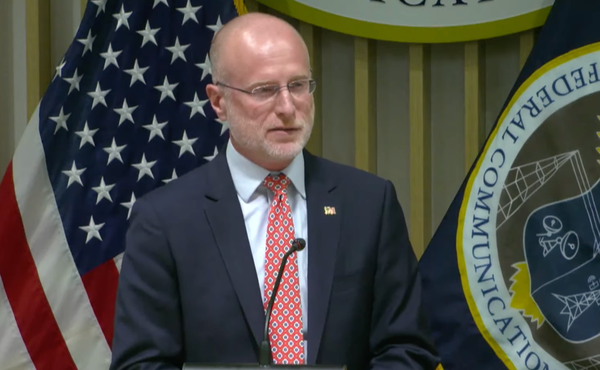
NCTA echoed argument's made by FCC Chairman Brendan Carr in pushing for the reversal: that Section 254 of the Communications Act limits E-Rate support to services provided at eligible schools and libraries.
The group also pointed to Congress’s creation of programs which explicitly authorized off-campus connectivity, such as the Emergency Connectivity Fund in 2021, as evidence that E-Rate itself never included such authority.
“The CPUC Petition should be denied because its legal argument is incorrect and therefore its policy arguments are irrelevant,” NCTA told the FCC. Balancing the need for home internet access against statutory limits is ultimately a question for Congress, not the FCC, the group argued.
In its petition, the CPUC said the FCC’s statutory analysis was flawed, arguing Congress has already authorized off-campus connectivity under Section 254 through the American Rescue Plan, which directed the FCC to provide support for student and library connections “in locations other than the school” using existing E-Rate authority.
ALA and SHLB have warned the rollback could hit libraries and schools hard.
In Los Angeles County, the public library system began winding down its digital hotspot lending program, which cost roughly $40,500 per month, citing unsustainable expenses without federal support. Across the country, the 1,762 libraries that applied for E-Rate hotspot funding in 2025 may face similar cutbacks.


Member discussion