Libraries Warn Federal Cuts Could Undo Digital Inclusion Gains
Officials say agency funding underpins broadband and workforce access.

ARLINGTON, Va., Oct. 31, 2025 — National and state library officials warned that federal efforts to eliminate the Institute of Museum and Library Services could unravel hard-won progress in digital inclusion, leaving libraries without stable funding for broadband, devices, and workforce training.
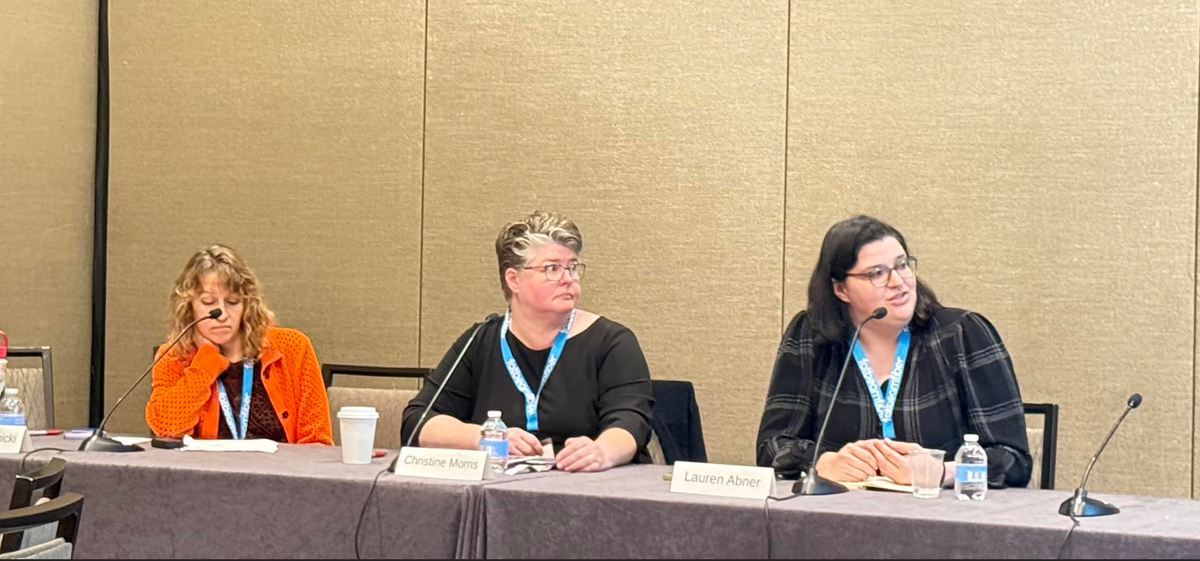
At a Schools, Health & Libraries Broadband (SHLB) Coalition panel here, speakers said libraries remained the nation’s most reliable digital access points, providing Wi-Fi, computers, and guidance in communities still outside commercial broadband reach.
Megan Janicki, deputy director of public policy and advocacy at the American Library Association, said the IMLS’s Library Services and Technology Act delivered more than $200 million annually to state agencies that sustain local technology programs. She said the White House’s proposal to abolish the agency had created “an atmosphere of uncertainty” for libraries that depended on those grants for connectivity and staff support.
Christine Morris, digital resources manager at the Ohio Public Library Information Network, said her agency manages broadband for 251 library systems, using consortia bidding and E-Rate discounts to expand capacity. “Seventy-five percent of our library sites now reach a gig or more,” she said, “but the smallest rural branches still struggle to get online.”
Lauren Abner, state E-Rate coordinator for the Kentucky Department for Libraries and Archives, said fiber now reached 83 percent of Kentucky’s libraries, with more than 100 branches operating at gigabit speeds. She said libraries often act as the first customer for new fiber builds, “paving the way for homes and businesses to follow.”
Panelists said programs such as Ohio’s Guiding Ohio Online and Kentucky’s Digital Toolbox, which pair laptops, hotspots, and training for job seekers, showed how IMLS and E-Rate funding work together to close access and skills gaps. Without that support, they warned, smaller libraries could face rising costs and staff losses.
“Libraries have done this work on a shoestring for decades,” Janicki said. “Without stable federal funding, the country risks losing the most trusted digital lifeline many communities have.”
Lawmakers and advocates said emerging satellite networks are strengthening remote economies.
Virginia Supreme Court ruled that private, for-profit providers may not use advantageous broadband law, that would constitute a takings
Broadband carriers, meanwhile, push the FCC for 60 to 90 day shot clocks, citing months long permitting delays.
The congress gathered global vendors and telecom regulators.
Member discussion