
Missouri Lawmakers Fear AI BIll Could Jeopardize Non-Deployment Funds: Report
States with ‘onerous’ AI laws are set to be ineligible for the funding – $900 million in Missouri’s case.

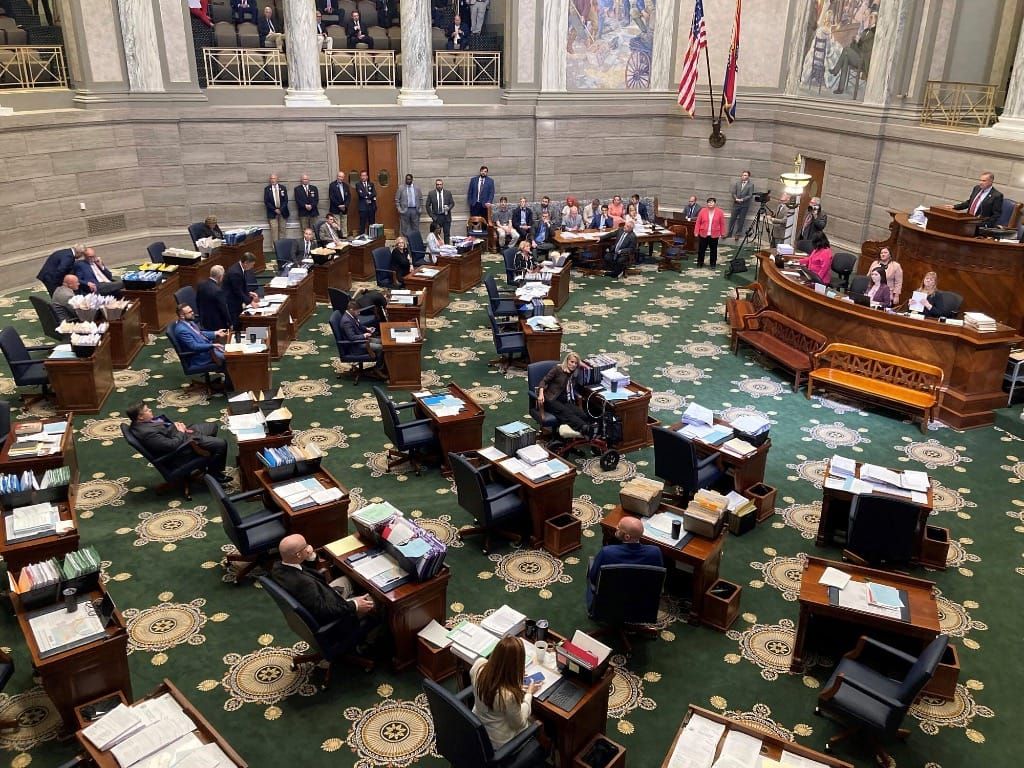
WASHINGTON, April 8, 2026 – Some Missouri lawmakers are hesitant to move forward with an AI bill, fearing it would jeopardize the state’s access to $900 million in broadband funding, the Missouri Independent reported.
Under a December executive order, states with “onerous” laws on AI companies are ineligible for part of their Broadband Equity, Access, and Deployment program allocations, whatever isn’t going to be spent on deployment projects. That makes up more than $22 billion of the program’s $42.45 billion budget, according to a recent analysis from Broadband Marketers founder Doug Adams, thanks in part to cost-cutting measures by the Trump administration.
The National Telecommunications and Information Administration was supposed to define last month which laws would be considered “onerous,” as well as what the non-deployment funds could be used for, but delayed the guidance.

NTIA Chief of Staff Brooke Donilon said last month that the agency was only looking to target a “handful” of state AI laws.
“It’s not about a law tangentially, maybe impacts AI,” she said. “It’s about a law that directly impacts the development and success of AI.”
Missouri is not the only state in which the prospect of losing hundreds of millions in broadband funding is making lawmakers think twice about legislation. Louisiana representatives told Nola.com that they pulled or stopped work on four bills after hearing from the office of Gov. Jeff Landry, R, that the White House opposed them.
California lawmakers also ditched a bill that would put price caps on broadband for low-income households after hearing from NTIA that BEAD participants would have to be exempt to avoid putting the state’s funding at risk.
Missouri is planning to spend $800 million of its $1.7 billion allocation on deployment projects. Colleagues told Missouri Sen. Joe Nicola, R-Grain Valley, during debate last week that they worried a bill he was sponsoring would jeopardize the state’s access to its remaining $900 million in BEAD funding, the Missouri Independent reported.
“I think this would be very, very concerning if we put at risk our federal funding,” Missouri Sen. Jason Bean, R-Holcomb, said, according to the outlet.
Bill would ensure person or company liable for AI harms
Nicola’s bill would ensure a person or company was always ultimately held liable for harms caused by an AI model. Other lawmakers have sponsored amendments restricting the use of AI in prescribing medication and restricting minors’ access to AI.
“It will literally cost us $900 million in non-deployment funds,” the Independent quoted Louisiana Rep. Louis Riggs, R-Hannibal, as saying.
Nicola told the outlet he would seek feedback from the White House in an effort to ease opposition to his bill.
Riggs last April led a group of state lawmakers asking the Trump administration not to dramatically alter BEAD rules. Two months later NTIA required states to conduct additional rounds of bidding under new criteria that favored fiber less and made it easier for other technologies to participate.
Riggs is currently pushing a Missouri House resolution that would urge NTIA to allow the state to use its non-deployment funding as it had previously planned, which previous state plans said included broadband adoption efforts. NTIA rescinded approval for any allowed non-deployment uses when it updated the program’s rules.
A number of potential uses for the non-deployment money have been proposed, including at multiple listening sessions in recent months. NTIA Administrator Arielle Roth has spoken positively about using money to speed local permitting processes. State broadband officers have suggested improving public safety networks or additional deployments to patch BEAD defaults or reach areas the program won’t.





Member discussion