
No More IXPs Means No More AI Development
Panelists at Mountain Connect argued that IXPs are key for delivering ultra-low latencies for AI

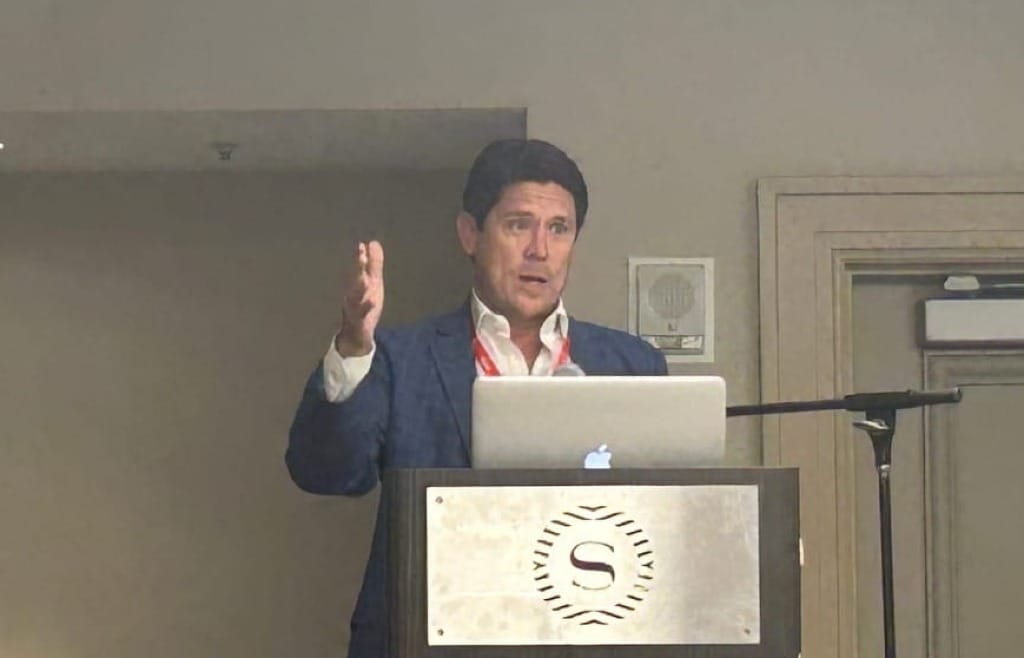
DENVER, August 4, 2025 – Developing better artificial intelligence systems boils down to one word: Latency.
“Latency is what AI is all about,” Peter Cresse, founder and principal at Entropy Inc., told participants Monday afternoon during a Mountain Connect 2025 panel. Latency is the time it takes for information to travel from one point to another, and is measured in milliseconds. AI applications need symmetrical speeds and ultra-low latency to operate.
One way to reduce latency is by building more internet Exchange Points. IXPs are hubs where multiple networks connect and exchange information. Because these networks exchange information directly with each other, IXPs can dramatically reduce latency. According to Hunter Newby, CEO and owner of Newby Ventures, connection points generally experience one additional millisecond of latency for every 50 optical miles they are from an IXP.

Though IXPs have been around since the early 1990s, they are still a rarity in many parts of the country. There are roughly 200 IXPs in the U.S., and 14 states don’t have any IXPs at all. Newby has been building IXPs in more remote regions of the country, and warned attendees that states without the exchanges would lose out on the AI race.
“The bottom line is that real-time inference AI will not work in the states that don’t have an internet exchange,” Newby said. “...You’ll never get to sub three millisecond latency in a state that doesn’t have a local point of interconnection. If it has to get backhauled out of the state, you’re gonna be well above three milliseconds and real time is not gonna happen.”
As AI continues to rapidly develop, the need for exchanges will continue to grow. David Eckard, vice president of broadband partners at Nokia, marveled at how far AI has come.
“You can start kind of imagining how you can actually have networks and systems that are being reprogrammed by themselves,” Eckard said. “You can imagine how when faults and errors are happening you can see how it’s actually diagnosing it by itself, fixing itself…this isn’t science fiction, this is actually happening today.”







Member discussion