Ookla: D2D Working in Venezuela After Double Earthquakes
Venezuela earthquakes provide clear case study that direct-to-device satellite can serve as a disaster communications backup.

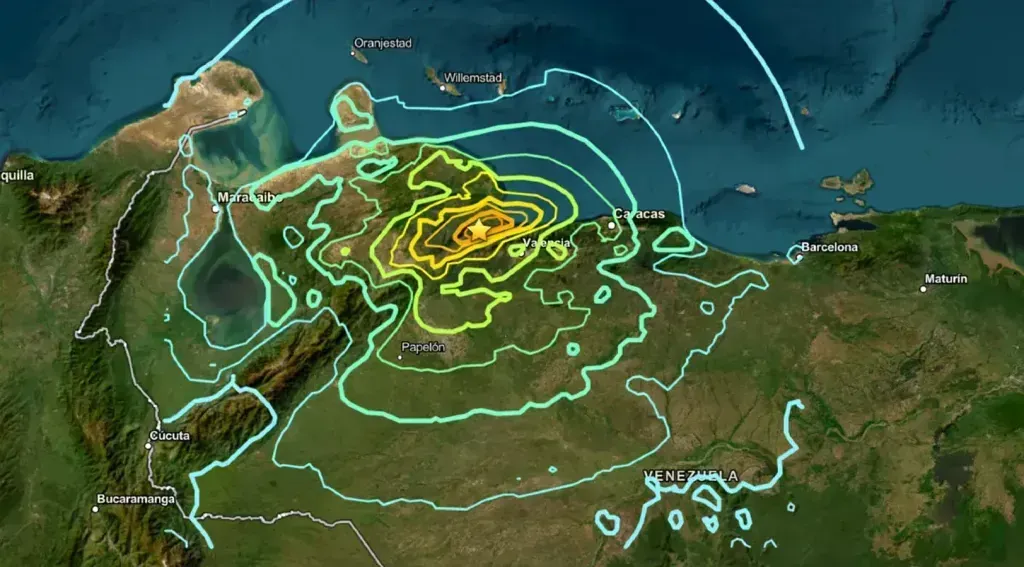
WASHINGTON, July 14, 2026 – When terrestrial networks experienced near total collapse following twin earthquakes that struck Venezuela's La Guaira state, both fixed broadband and mobile markets shifted to satellite connectivity in a matter of days.
Two days after the 7.2- and 7.5-magnitude earthquakes struck the region on June 24, Movistar, one of Venezuela’s largest mobile operators, received temporary authorization to provide emergency satellite direct-to-device (D2D) mobile services in partnership with Starlink. Usage went from zero to peak usage in five days.

As a condition of the authorization issued by the country’s telecom regulator Conatel, Movistar was required to allow its competitors, Movilnet and Digitel, to use the same portion of 1900 MegaHertz (MHz) spectrum to support their customers in the affected area, allowing subscribers across Venezuela’s three major mobile networks to access the satellite fallback layer in the affected region.
“Connections from Movistar SIMs jumped roughly ninefold on June 28, the day of its announcement. Digitel connections ramped after its June 30 launch and overtook Movistar by July 2. Movilnet devices appeared from July 1,” lead analyst Luke Kehoe reported for Ookla Tuesday. “Connections increased with each operator activation and peaked on July 2.”
The authorization is valid for three consecutive months and allows those with compatible devices - certain mid-range and high-end Android phones, as well as iPhone 14 and newer models - to connect directly to low Earth orbit (LEO) satellites.
The natural disaster destroyed 190 buildings and damaged over 850, ravaging critical infrastructure providing electricity, clean water and sanitation. As of July 12, the official death toll had risen to 4,490, with 16,740 people injured and 17,907 left homeless.
“Infrastructure failed in layers,” Kehoe reports. “The electricity grid dropped across the affected states, and national internet connectivity fell to 66% of normal within hours, meaning roughly one-third of the country’s normally observable network connections were unreachable. A subsea cable serving Venezuela broke 1,800 meters offshore from its La Guaira landing station.”
Ookla's Speedtest data found that Starlink usage surged in La Guaira after the earthquakes.
Ookla’s analysis shows Starlink’s share of fixed network activity jumped from about 3% before the quakes to more than 40%, making it the state’s most-tested ISP for eight days. Nationally, first-time Starlink devices doubled in volume for over a week.
Starlink’s network maintained relatively consistent download speeds of about 34 to 35 Megabits per second (Mbps). Connection delays were higher than those typically seen on terrestrial broadband, with latency rising from about 277 milliseconds to a peak of 396 milliseconds shortly after the earthquakes before returning to previous levels within days – “a visible but temporary capacity strain,” Kehoe states.
Kehoe found that terrestrial coverage recovered faster than residents returned to using it.
Power in La Guaira was officially 90% restored by June 30 and declared complete by July 4, while coverage areas had recovered to about 85%. Yet overall network activity remained at roughly two-thirds of baseline through July 5, a gap he attributes to widespread displacement and tens of thousands of buildings left uninhabitable.
Relief organizations say the impact of the earthquakes will extend well beyond the immediate emergency response.
The United Nations launched a $296 million emergency funding appeal on July 8 to support recovery efforts, including restoring livelihoods, repairing infrastructure and reopening schools.