Panel Flags Regulatory Gaps as Cable Vulnerabilities Increase
Experts cite fragmented U.S. oversight amid growing physical and geopolitical threats.

Akul Saxena
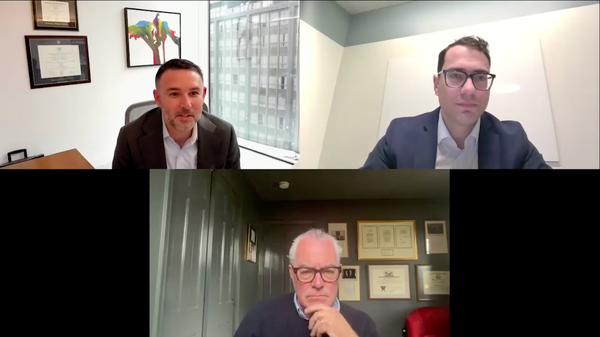
WASHINGTON, Nov. 21, 2025 – Security analysts and industry officials said Friday that subsea fiber-optic cables faced mounting physical and geopolitical risks while the United States continued operating under a fragmented regulatory system that has not kept pace with modern digital infrastructure.
The event at the Center for Strategic and International Studies, a bipartisan Washington-based think-thank, preempts the release of a report on global subsea cable resiliency.
Speakers from government, industry and research groups described how accidental damage, natural hazards and state-backed interference had intensified as cable routes expanded and AI-driven demand increased.
Thomas Bryja, program manager and research associate at CSIS, said accidental strikes remained the dominant source of outages. He said roughly 70 percent of cable damage came from fishing, anchoring and trawling, illustrating how easily critical lines can be severed across thousands of miles of underwater routes.
Researchers said natural hazards also continued to generate widespread disruptions. Bryja pointed to undersea landslides along the American Pacific Coast and other fault zones that have forced operators to reroute traffic during extended repair windows.
Geopolitical tensions added a separate layer of risk. Tim Stronge, chief research officer at TeleGeography, a telecom market research firm, said intentional interference had become more visible as state actors tested chokepoints in Northern Europe and the Middle East. He said several recent incidents showed how quickly outages could escalate from technical failures to strategic vulnerabilities.
Diplomats highlighted increased exposure in the Indo-Pacific. Nakamura Tomohiro, counsellor for cyber and digital policy at the Embassy of Japan, said cable cuts near Taiwan and the Luzon Strait underscored the region’s strategic importance and the need for stronger coordination among partners.
U.S. lacks a coherent regulatory structure, panelists said
Policy analysts said the United States lacked a coherent regulatory structure to match the scale of the threat environment.
Matt Pearl, director of the Strategic Technologies Program at CSIS, said authority for subsea cables remained dispersed across multiple agencies, creating a “patchwork” that complicated repair approvals, incident response and long-term planning. He said the framework governing cable oversight had grown increasingly outdated as cable capacity expanded and undersea routes assumed greater geopolitical importance.
Industry officials echoed those concerns. Grace Koh, vice president for government relations at Ciena, a leading networking equipment developer, said operators had taken cable security seriously but needed clearer federal direction to align private investment with national-security expectations. She said the absence of defined federal leadership left companies uncertain about permitting timelines, coordination roles and regulatory obligations during outages.
The CSIS report recommended a unified federal approach to cable resiliency, updated permitting processes, stronger information-sharing and new financing tools to support redundancy. It also urged closer coordination between federal and state authorities, particularly in regions with limited landing points or high strategic value.
Panelists said stronger oversight would be essential as demand rises and AI workloads place further pressure on global networks.
The discussion was moderated by Erin Murphy, senior fellow of Emerging Asia economics at CSIS.
Member discussion