
Pennsylvania Prevailing Wage Board Affirms No Separate Broadband Classification
Trade groups have said the 'electric lineman' classification for broadband workers drives up project costs.


WASHINGTON, Sept. 24, 2025 – Prevailing wages for state-funded broadband projects in Pennsylvania will continue to be tethered to electric linemen for now, a state board ruled Monday.
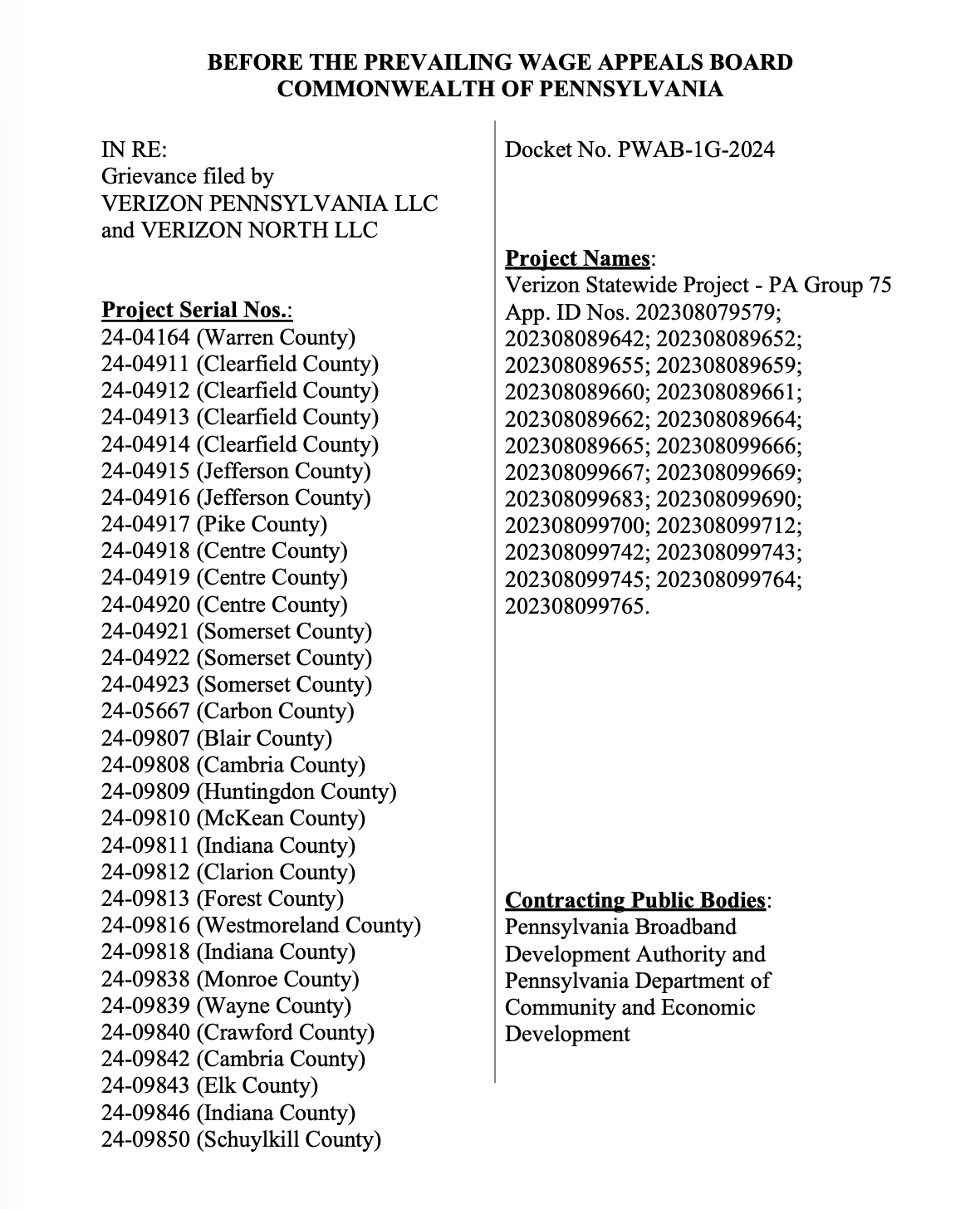
Document available for Breakfast Club Members
Because the work can be very risky, electric linemen get paid more than is typical for workers deploying fiber. That’s led trade groups to recently start pushing the state to make a new classification for broadband workers to push down the cost of state-funded broadband projects.
Last year Verizon had filed a complaint with Pennsylvania's Prevailing Wage Appeals Board related to 22 projects supported by more than $78 million in grant funding, arguing the state should have made new worker classifications for the projects at issue. That decision rests with Pennsylvania Secretary of Labor and Industry Nancy Walker.
“This matter comes down to whether the Secretary abused her discretion in determining that the proper rate for the work contemplated for the Projects falls under the ‘Electric Lineman’ classification,” the board wrote in its decision. “In this matter, the record contains no indication of a flagrant abuse of discretion, fraud, or bad faith by the Secretary. Furthermore, the Secretary has a logically based, rational basis for her determination.”
The board said that in anticipation of large amounts of Capital Projects Fund and Broadband Equity, Access, and Deployment program funding, Walker and other officials have in recent years been talking frequently with industry about the prevailing wage issue and have declined so far to make any changes.
The state first issued a notice in 2018 clarifying that installing cable fell under the “electric lineman” category.
“While there may be disagreement on what the Secretary should have decided, there is no doubt that she considered the submitted information on several occasions and each time chose to continue recognizing that the proper classification for this work is the ‘Electric Lineman,’ based on her understanding of the custom and usage of the industry in the localities of the Projects,” the board wrote.
The Broadband Communications Association of Pennsylvania, a trade group of ISPs in the state, had joined Verizon’s case. It had submitted its own complaint in July asking for new categories, which a spokesperson said in an email ended up being denied “pretty quickly.”
“BCAP is disappointed in the ruling,” BCAP President Todd Eachus said in a statement on the Verizon case. “The real losers in this case are the taxpayers of Pennsylvania. Broadband deployment will now be significantly more expensive to deploy to these rural, unserved and underserved areas than it should be by all facts in the real world.”
Verizon’s grant funding for the projects at issue came from the Capital Projects Fund, a $10 billion federal effort that gave Pennsylvania $200 million for broadband expansion. The state is planning to spend nearly $800 million in BEAD funding on broadband deployment.
Much of that will go to fiber projects, which are set to serve nearly 65 percent of its 130,000 eligible BEAD locations.
State Rep. Tina Pickett, a Republican, introduced a bill in March that would make new categories of “teledata” employees that required lower pay for public projects. It hasn’t made it out of the Pennsylvania House Labor and Industry Committee.








Member discussion