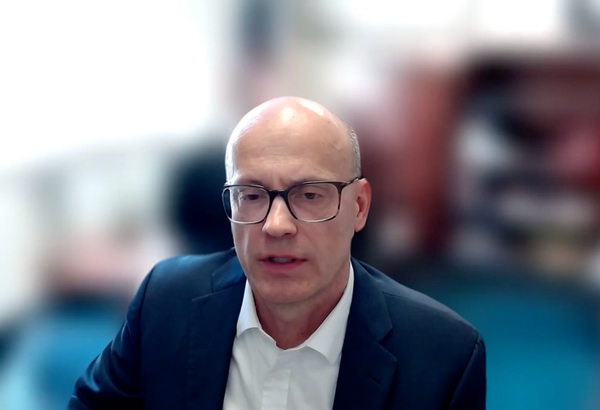
Ray Diaz: How Broadband Connects Tribal Communities to Broader Opportunities
Despite federal funding efforts, 24 percent of Americans on Tribal lands still lack broadband access, limiting economic opportunity and essential services.

Ray Diaz

With heightened awareness of the U.S. digital divide, Tribal broadband has begun to advance from aspiration to implementation in recent years. Much of this progress is due to programs like the National Telecommunications and Information Administration’s (NTIA) $3 billion Tribal Broadband Connectivity Program designed to improve quality of life, spur economic development and create opportunities for Native American communities. In fact, since the program’s inception in 2021, more than $1.7 billion has been distributed across 223 projects.
A new broadband build in California is the most recent evidence that government programs are taking root. Plus, this momentum is strengthened by Tribal Nations collaborating with states to participate in NTIA’s $42.45 billion Broadband Equity, Access and Deployment (BEAD) program to fund broadband in largely rural areas.
Despite those efforts, however, broadband speed gaps remain. This raises the question: Is connectivity being fully enabled for Tribal communities? And are these communities able to take advantage of the full potential of broadband for economic enhancement and societal enrichment?
The connectivity gap
Even when broadband funds are available, Tribal entities are faced with navigating a maze of those federal programs, some of which pose bureaucratic obstacles just to apply. Meanwhile, the geographic hurdles posed by some Tribal land, ranging from rugged mountains to vast expanses, demand resilient, robust networks, presenting deployment challenges for broadband operators.
The most recent data from the Federal Communications Commission (FCC) shows that approximately 24 percent of Americans living on Tribal lands lack broadband access, in contrast to about 7 percent of Americans broadly. Tribal broadband remains hamstrung by a persistent “connectivity gap” that limits potential for civic participation, health care, education and prosperity.
Without consistent funding and comprehensive solutions for broadband, Tribal communities face the risk of being without not just a basic utility, but a real foundation for new opportunity and progress.
Bridging the digital sovereignty divide
On Tribal lands, broadband can be a highly effective tool for economic advancement. Tribal Nations understandably want to participate fully in broadband network planning and deployment, to ensure fair pricing, protect their stake in the benefits and protect cultural sites as well as the environment. Broadband, when owned and managed locally through Tribal open-access networks, has been identified as a driver of both higher paying jobs and economic resilience, paving the way to a better quality of life, stronger community bonds and prosperity through new businesses and jobs.
High-speed internet can help free artisans and small businesses from geographic isolation, bringing beadwork, crafts and other goods to global e-commerce platforms. Instead of selling only at local markets, entrepreneurs can reach buyers globally, expanding revenue streams and sharing their cultural heritage with a wider audience.
As with many rural areas, the ability to telecommute adds another layer of opportunity. For decades, brain drain siphoned talent away from Tribal communities as young professionals left for jobs in urban areas. With reliable broadband, remote work could reverse that trend by enabling Tribal members to work for companies anywhere in the world in roles ranging from IT support to graphic design, professional services and data analytics. These remote roles would not only provide income but also strengthen community ties by allowing skilled workers to contribute to their local economies.
Likewise, broadband also can open doors to entrepreneurship. Tribal innovators are launching startups in fields ranging from coding and web design, to digital marketing and content creation. These ventures have the potential to both provide jobs and foster a culture of innovation, ensuring that economic growth is driven from within the community.
Connecting to life-changing opportunities
On Tribal lands, broadband is increasingly seen as a potentially transformational lifeline that can link residents to education and healthcare. Distance learning, for example, now offers students of all ages access to online curricula and virtual tutoring without leaving their communities.
In healthcare, broadband enables remote consultations with specialists, mental health support and real-time monitoring, bridging long distances and dramatically improving outcomes. One study found that telemedicine significantly enhances access, quality and cost effectiveness for rural Native American communities.
Broadband also can play a pivotal role in cultural preservation by enabling Tribal communities to archive and share oral histories, language and traditional knowledge for future generations. Tribal leaders emphasize internet-based storytelling as essential for preserving their identity and fostering intergenerational cultural exchange.
Moreover, having fiber broadband infrastructure in place also facilitates adoption of next-generation technologies to benefit the entire community. For example, leveraging smart automation to improve efficiency in Tribal-owned water or electric utility operations helps reduce overall operating costs.
The path forward
Realizing the full promise of Tribal broadband requires ongoing, coordinated investment from Tribal governments, the broadband industry and federal agencies. Public-private collaborations like California’s Tribal Resource Center, which equips Tribes with the tools to design and manage their infrastructure and strategy effectively, can help sustain these networks long-term. In the end, broadband’s true success is in the opportunities created.
When Tribal communities lead broadband efforts, when members learn new digital skills and when partnerships invest in network infrastructure, broadband becomes a potentially transformative tool that can fuel economic growth, preserve culture and reinforce Tribal sovereignty.
Ray Diaz is the Broadband Engagement and Analytics Leader for 1Finity, a Fujitsu company. His role is focused on delivering broadband network solutions and insights for customers entering into or expanding a broadband network business. Ray’s expertise includes telecommunications market assessments, financial analytics and strategic planning. He holds a Master of Science degree in Business Analytics from Arizona State University and a Bachelor of Science degree in Business from Purdue University. This Expert Opinion is exclusive to Broadband Breakfast.
Broadband Breakfast accepts commentary from informed observers of the broadband scene. Please send pieces to commentary@breakfast.media. The views expressed in Expert Opinion pieces do not necessarily reflect the views of Broadband Breakfast and Breakfast Media LLC.