Rep. Andy Barr Introduces House Companion to Senate Non-Deployment Bill
Allows states to use BEAD funds on workforce, wholesale fiber, IXPs, and wireless infrastructure

Jake Neenan
WASHINGTON, Dec. 29, 2025 – A bill requiring that states be able to use their non-deployment funding under the Broadband Equity, Access, and Deployment program has now been introduced in both chambers of Congress.
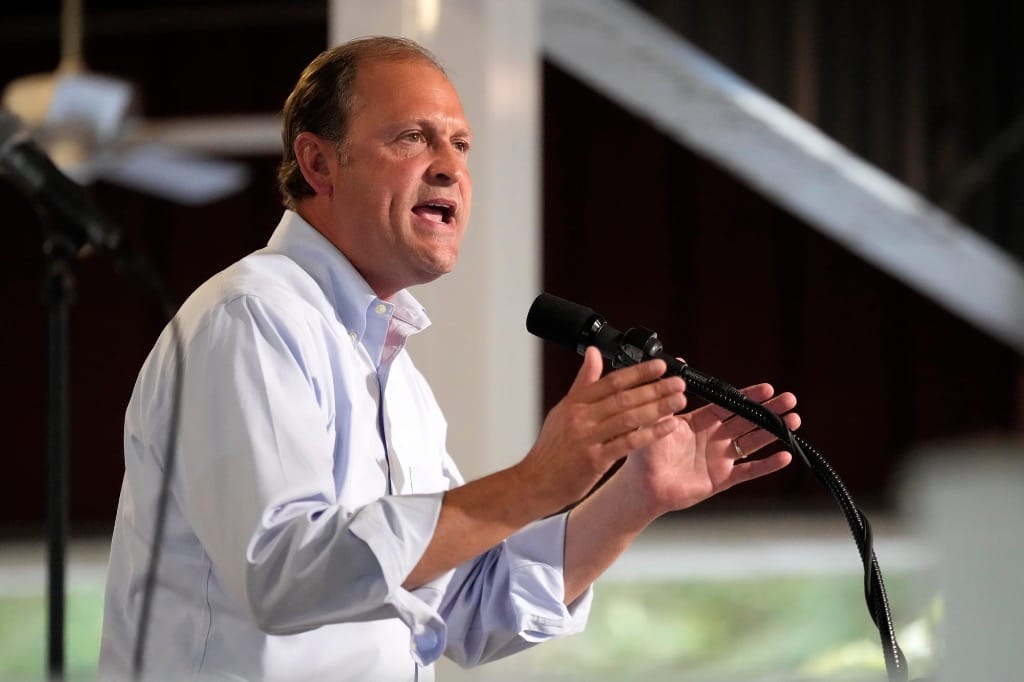
A House companion to the Senate’s SUCCESS for BEAD Act was introduced Tuesday, Dec. 23, by Rep. Andy Barr, R-Ky., and was co-sponsored by Rep. Hal Rogers, R-Ky.
Rogers is chairman of the House Appropriations subcommittee that handles the budget of the National Telecommunications and Information Administration, which is administering BEAD on the federal level.

“This bill ensures America, not Communist China, sets the pace by strengthening the broadband and network backbone that AI, public safety, and our national security depend on,” Barr said in a statement to Broadband Breakfast. “If we fail to build, harden, and modernize this infrastructure now, we risk ceding technological leadership to our greatest strategic competitor.”
Barr’s bill was identical to the senate version introduced earlier this month by Sens. Roger Wicker, R-Miss., and Shelley Moore Capito, R-W. Va.
Allows states to use BEAD on workforce, wholesale fiber, IXPs, wireless infrastructure
The bill would allow states to use BEAD money not needed for infrastructure grants – estimated to be about $21 billion of the program’s $42.45 billion, partially due to Trump administration efforts to reduce spending – on telecom workforce development programs, wholesale fiber, internet exchange points, and mobile wireless infrastructure, among other things.
States had already been planning on using their remaining BEAD allocations for workforce development programs, in addition to efforts to boost broadband adoption like digital skills trainings or device discounts. The adoption and affordability were not included in the SUCCESS for BEAD Act’s list.
The Trump administration rescinded approval for any non-deployment activities in June and said more guidance would be forthcoming. That has left state broadband offices and others unsure about the money’s future as NTIA continues reviewing and approving state spending plans.
Wicker and Capito were some of the first Republican lawmakers to publicly say they wanted their states to hold on to their full BEAD allocations, but more joined in this month and signed on to letters pushing NTIA not to claw back the funding and allow it to be used for precision agriculture.
That also wasn’t on the list of allowed uses in the SUCCESS for BEAD Act, but the bill would allow NTIA to specify other uses it sees fit.
The bill tied its focus on funding additional infrastructure to boosting the country’s AI competitiveness, calling it “critical for maintaining United States leadership in emerging technologies.” Data centers, however,
President Donald Trump signed an executive order this month directing NTIA Administrator Arielle Roth to produce a policy notice telling states they will be ineligible for non-deployment funds if they have “onerous” laws on AI companies. Experts said at the time the move could be open to legal challenges from states, but it’s not clear they’ll be eager to litigate and delay their access to hundreds of millions of dollars in many cases.
Industry approves
Major broadband industry groups are supportive of the bill. USTelecom and the Wireless Infrastructure Association joined Wicker and Capito’s release announcing the bill with praise from their CEOs.
INCOMPAS, the Fiber Broadband Association, and the Competitive Carriers Association also praised the bill.
“Once a state completes its deployment plan, any remaining funds should be put to work advancing the security, resilience, and long-term performance of our communications networks – especially as connectivity becomes more central to public safety, economic growth, and U.S. technology leadership,” USTelecom CEO Jonathan Spalter said in his statement. “We look forward to working with Senators Wicker and Capito and all of Congress to advance this important legislation and ensure non-deployment BEAD dollars result in more secure, resilient, and reliable networks for decades to come.”
The Information Technology & Innovation Foundation and the Benton Institute for Broadband & Society said earlier this month they were disappointed not to see affordability programs specified in the bill.
“All of the stated uses for the non-deployment funds in the bill are worthy goals that we support,” Ellis Scherer, a policy analyst at ITIF, said in an interview. “But I think ultimately we’re disappointed that there was no language specific to affordability in the bill.”
He noted that in an NTIA survey from 2023, 15 percent of households without internet access said that was simply because the service was too expensive.

Member discussion