Robert Corn-Revere: Fact Checking Without Facts
FCC Chairman Brendan Carr's threats to revoke broadcast licenses over 'fake news' distort the public interest standard, the author writes
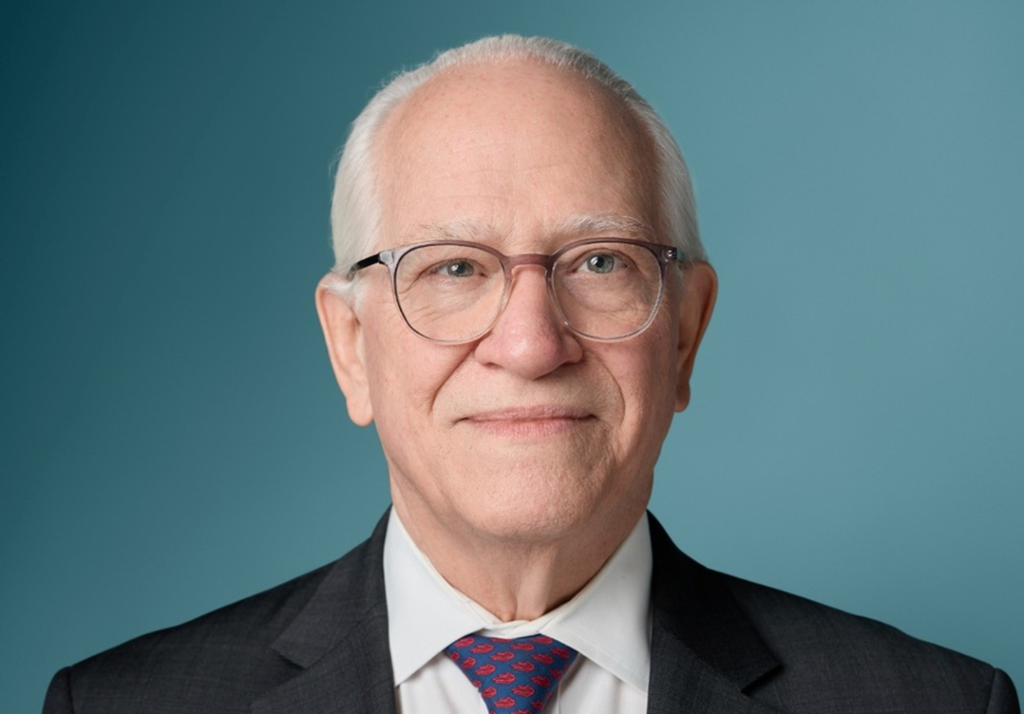
Robert Corn-Revere
With FCC Chairman Brendan Carr it is difficult to tell which is more stark—the irony of this one-time “free speech warrior” claiming the Communications Act’s public interest standard empowers him to act as the broadcast speech police, or his hypocrisy in embracing censorship as a virtue.
Personally, I’ll go with irony, since hypocrisy implies Carr ever actually believed anything he said about the First Amendment.
He has come a long way from the days (in 2021) when he used to write that “[a] newsroom’s decision about what stories to cover and how to frame them should be beyond the reach of any government official,” and that any effort “to inject partisan politics into our licensing process” is “a deeply troubling transgression of free speech and the FCC’s status as an independent agency.”
But that was then, this is now. On March 14, after the President railed against what he claimed was unfair newspaper coverage of his war in Iran, Chairman Carr posted on X that “[b]roadcasters that are running hoaxes and news distortions – otherwise known as fake news – have a chance to course correct before their license renewals come up.” He added “[t]he law is clear” that “[b]roadcasters must operate in the public interest, and they will lose their license if they do not.”
This is just one in a long series of statements Carr has made over the past 14 months—mostly in social media posts and other informal venues—threatening various actions against broadcasters if they fail to modify their editorial policies, including the jokes told by comedians on late night talk shows. He has proclaimed that the public interest is going to be enforced “on his watch” and that this means making sure neither news nor entertainment programs displease the President.
This is a perversion of the public interest standard, which the Supreme Court has held requires reference to First Amendment principles. Even when the FCC’s assumed authority to regulate content was at its zenith, the Commission observed in 1960 that “the First Amendment forbids governmental interference asserted in aid of free speech, as well as governmental action repressive of it” and it cannot “condition the grant, denial or revocation of a broadcast license upon its own subjective determination of what is or is not a good program.”
In short, the FCC’s licensing authority has never included the power to regulate broadcast content in the ways Carr now asserts. This is why a bipartisan group of seven former FCC commissioners (including three who had served as chairman), along with senior staff members, petitioned the Commission last November to end the news distortion policy. This unlikely coalition of former FCC officials, that included five Republican and two Democratic-appointed commissioners, were concerned that Carr had “weaponized” the FCC’s processes “for political purposes.”
Chairman Carr summarily rejected the petition, and asserted falsely that “the opposition to holding broadcasters accountable to the public interest comes increasingly from those unfamiliar with longstanding FCC precedent.” This is obvious hogwash, as Carr well knows.
As with most things with this Bizarro World FCC, the opposite is true: Those supporting Brendan Carr’s newfound enthusiasm for broadcast content regulation are those who know the least about broadcast law.
Case in point: a group of political operatives that masquerades as a civil liberties organization—the Center for American Rights (CAR)—has rallied to Chairman Carr’s defense. This is hardly surprising, since CAR is behind the recent spate of “news distortion complaints” as well as the demand that CBS install a “news bias ombudsman” as a condition of the Paramount Global-Skydance merger that the FCC approved last year.
CAR’s President, Daniel Suhr, who describes himself as a “leading constitutional litigator,” offered what he called a “broadcast license revocation fact check” to support the proposition that broadcast licenses can be revoked for substandard news reporting. Unfortunately, neither Suhr nor his organization has any discernable experience in broadcast law, and it shows. What he offers is fact checking without the facts.
Suhr’s research, based on his reading a couple of law review articles, suggests that news distortion can “contribute to a license action” including license revocation, and he points to four cases over the past 77 years that he claims prove his point. They don’t. What these cases from the distant past show is that FCC licensing actions that raise issues regarding news coverage are extremely rare and are never predicated solely on editorial judgment (as Brendan Carr now claims).
The primary case Suhr cites, Star Stations of Indiana, 51 F.C.C. 2d 95 (1975), in which the Commission denied license renewals to the owner of several radio stations, illustrates the problem. Suhr cites this case as an example of where licenses were purportedly lost because “the station owner ordered his staff to ‘slant’ news broadcasts in favor of his preferred public officials.” Suhr acknowledges that the station owner had also engaged in “other misconduct,” but misses the point that the host of other violations are what explain that decision.
As the Commission stated, the record in the license renewal proceeding was extensive and complex, filling more than 30 volumes. Charges against the licensee included bilking advertisers with manipulated ratings data, broadcast contest improprieties, lying to the Commission, witness intimidation, illegal campaign contributions, bribing local officials, and attempting to bribe a U.S. Senator to fix the station’s FCC problem. Yes, the FCC was concerned with news slanting in this case, but only as part of a much larger pattern of corruption and FCC rule violations.
Suhr tries to bolster Carr’s position by citing what he calls a more recent case (from 1985) that he claims raised questions of news slanting or news distortion. And he writes that “Commissioner Blumenthal, writing separately, was quite clear” that using a broadcast station for “improper political purposes” was a serious offense.
But there are several problems with Suhr’s analysis: The case he cites has nothing at all to do with a license revocation or “news slanting,” but was a comparative licensing proceeding to decide which applicant should get the license for a new FM radio station. This was not a decision by the full Commission (as he claims), but was a ruling by the FCC Review Board, which until the mid-1990s provided an intermediate avenue of appeal from decisions of administrative law judges. And there was never a “Commissioner Blumenthal.”
Norm Blumenthal was a longtime and valued member of the FCC staff, but he was not a commissioner. He served in various positions, including legal advisor to Commissioner Benjamin Hooks, and, eventually, the Review Board. Norm was a good friend of mine, and we shared many lunches during my time at the FCC. I am certain he would have appreciated the posthumous promotion Suhr is now trying to bestow upon him, but he would have had no patience for this kind of ignorance.
Bottom line, nothing in any FCC decision remotely supports Chairman Carr’s current view that broadcast journalism can be labelled “fake news” and that station licenses threatened because the FCC thinks newscasts are biased or insufficiently supportive of the President’s agenda.
Robert Corn-Revere has been a First Amendment litigator for more than four decades. In 2023, he joined FIRE from the law firm of Davis Wright Tremaine, where he was a partner for 20 years. Before his time at DWT, he was a partner at Hogan & Hartson and served as legal advisor and later chief counsel to Federal Communications Commission Chairman James H. Quello. This Expert Opinion is exclusive to Broadband Breakfast.
Broadband Breakfast accepts commentary from informed observers of the broadband scene. Please send pieces to commentary@breakfast.media. The views expressed in Expert Opinion pieces do not necessarily reflect the views of Broadband Breakfast and Breakfast Media LLC.